


Not Quite Dead Media


In a recent post about One Dead Media I poked around the demise of edge punched cards as a possible exception to my rule that technologies don’t go extinct. I wrote: “It is hard to find an old technology that is not available in any form any where on earth. But today I may have found one.” I then unrolled plenty of pictures of this punched card system in use only a few decades ago but seemingly completely displaced by computers since then.
To my delight reader Bill Hunt recalled another use of the cards:
When I was a kid (30 years ago), I had the strange hobby of collecting fingerprints of friends. There were companies that made “fingerprint kits” consisting of ink, powders for lifting prints, cards for collecting prints on, etc. The cards you put prints on typically used this “edge-notched” technology, so you would classify prints, then cut out the appropriate notches along the top of the card. You could then use a pencil to filter through your deck. A quick search shows there’s at least one commercial “kids fingerprinting kit” out there, and if you look close at the picture, you can see they continue to take advantage of edge-notching.
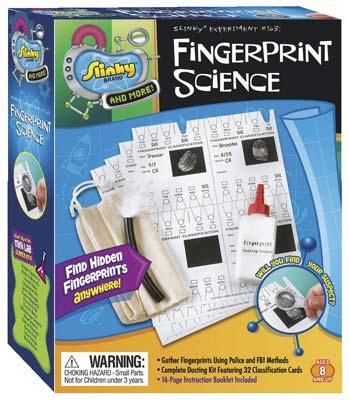
Indeed they do. You can get a brand new set of edge-punch cards from Slinky Toys for $10.19 here. Note the drawing on the cover of the box.
What this means is that this technology is not yet extinct. Endangered, yes. But still being manufactured. It really never ceases to amaze me how persistent technologies are. They just won’t die.
