
The Technium

Humanity's Identity Crises

A major theme of this present century will be the pursuit of our collective identity.  We are on a search for who we are. What does it mean to be a human? Can there be more than one kind of human? In fact, what exactly is a human?

On average science unveils a new invention every day, and almost without fail these days, that daily invention disrupts the notion of ourselves. Every day we are getting news that challenges our identity. Stem cell therapy, genetic sequencing, artificial intelligence, operational robots, new animal clones, trans-species hybrids, brain implants, memory enhancing drugs, limb prosthetics, social networks -- each of these tools blurs the boundaries between us as individuals and among us as a species. Who are we and who do we want to be?
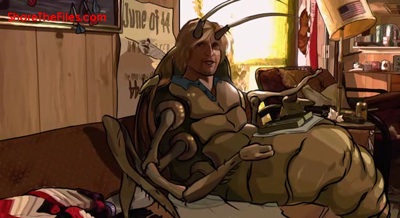
Bugdarkly

We get to play with answers to these questions online. In Second Life, or in chat rooms, we can chose who we want to be, our gender, our genetics, even our species. Technologies gives us the means to switch genders, inhabit new forms, modify our own bodies.

At the same moment, we have the rise of hyper-realities. These are simulations so complex, convincing, and coherent that they have their own reality force. A fake so good, it is sold and bought as a fabulous fake. A Disneyland so enticing, that it spawns its own "fakes." There must be something there to fake. Or Photoshopped images so obviously unreal that they have their own reality. Synthetic materials more desirable than natural ones. Originals inferior to their reproductions. Who cares what is real and what is memorex?

These hyper-realities launch questions such as whether a assault in virtual space counts as an actual violent assault or mere virtual assault.  How much of our real lives is mental? How much of reality is a consensual hallucination? Where do our minds end and outside begin? What if it -- everything outside of us -- is all mind?

The faster and greater our lives become mediated -- the more time we spend communicating through technology -- the more urgent this question of "what is real" becomes. How do we tell the difference, if any, between realities and simulations? How do these redefine humans?

I get much satisfaction from the free-thinking, nearly insane investigations by the legendary science fiction author Philip K. Dick. I am a big fan of Dick. His large body of work is now in ascendence because the two themes he nurtured are the two themes our culture will nurture in the next 100 years: What is a human and what is the nature of not-human, or reality.
120706Darkly3
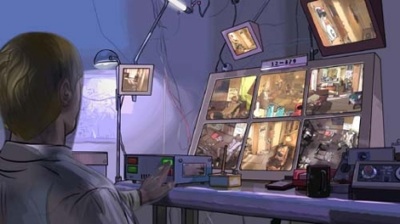
Two images from A Scanner Darkly, adapted from Philip K. Dick.

In an amazing (and amazingly weird) address Dick gave in 1978, he lays out his themes:

The two basic topics which fascinate me are "What is reality?" and "What constitutes the authentic human being?" Over the twenty-seven years in which I have published novels and stories I have investigated these two interrelated topics over and over again. I consider them important topics. What are we? What is it which surrounds us, that we call the not-me, or the empirical or phenomenal world?

Dick's themes are becoming our themes. The question of "Who are we?," "What is reality?" will move from the edges of science fiction and into the center of our culture. I can imagine these questions occupying the front seat of our societal consciousness. The question of human identity will be the headlined in USA TODAY and CNN. They will be addressed by Supreme Court. They will be the topic of dinner conversations.

In a few decades when the realities the Dick only dreamed of become concrete, when we have daily experience with better AI, with grown up genetically modified babies, with mind enhancement drugs that work, with routine virtual realities, with always-on social hive minds, the conundrums that Dick wrestled with will be our conundrums.  Think The Matrix, but on the 11 o'clock news. There will be senators and business men and solid Republicans saying, " Dude, what if reality is really another level? What if being a human is a choice?"

We can expect great uncertainty about our species identity and the nature of what we should count as real. It will be an anxious time. This deep anxiety and uncertainty will breed many weird cults and strange beliefs -- as it did within Philip K. Dick (just read that address!). There will be psychosis and wars built on the uncertainty of what is a human. The abortion war and the war over slavery are only two hints of the degree to which this question can provoke mortal conflict.

Yet even those who escape the violence -- the mass of ordinary citizens and net surfers -- will be pressed by a blanket of unresolved doubt. Who am I? Can there be more than one species of human? Can a robot be a child of God? Is slavery among intelligent machines acceptable? Should we extend the circle of empathy beyond animals and living things to made things? If it hurts, is it real?

You know how it is when a friend gets consumed by these unanswerable questions? They may flip out, or become paralyzed by the unrelenting weight. Now image a whole world waylaid by these Dickian obsessions. An entire species afflicted with an identity crises. It's coming.

Posted on March 14, 2008 at 12:06 PM

Comments

It is just unabashed racism. A return to tribal thought. “You” can be only be part of WE if you look like us, dance like us & quack like us. Tell that to an autistic! Will we treat robots, mermaids and whatever as social disorder? If I were God, I would be so disappointed.

What do you want? Tribe (1): white & male only, tribe (2): say, catholicism or (3) something like The Culture? I would say that game, unleashed on the planet, which apparently any group can play, however violent this particular game, represents more of a step forward than Plato, Nietzsche and Heidegger. Last but not least, it’s more fun.

Posted by Jamisia on May 9, 2008 at 5:57 AM

Imagin this, a virus is released into the ecosphere, it causes DESIRE to direct mutation, a dog wants to run faster, its DNA mutates toward longer stronger legs, a person wants to eat more but not gain wieght, it happens, a mosquito wants a longer harder proboscus, that becomes reality, a plant wants to soak in more water, its roots grow. Evolution is only secondarily about competition, it is mainly a cooperative venture engaged in by the ecoshere as a whole, evolution is only secondarilly about individual fitness, it is mainly about the fitness of divrerse populations. Consider that the employment of extra biological means is comon in evolution so eventually machines would be “discovered” by the bioshere through other species. What we think of as “Human” is really common to all life…all living things are “Human”. If the kind of genetic freedom I’m describing ever comes about the grass blades under our feet may exceed us in advancment!Then we will realize there is no “other”!

Posted by bill wesley on April 17, 2008 at 9:11 AM

For a current examination of this issue, see Battlestar Galactica, whose fourth and final season opened last week (Sci-fi channel). Though gripped in a life and death struggle with human-like machines (the cylons), humans are having a tough time (on many levels!) telling them apart.

Posted by Andy Breeding on April 9, 2008 at 11:57 AM

Just for fun, during the course of a simple mental exercise I got to thinking that perhaps we truly are nothing more than “clockwork oranges”, and the Monolith was the patch which encoded our genes to direct our actions toward inevitable self-destruction.

Posted by csven on March 22, 2008 at 11:50 AM

“The twentieth century was marked by the politics of ideology. The twenty-first century will be marked by the politics of identity.” - Rabbi Jonathan Sacks

Thanks, Mike S. That’s a keeper.

Posted by Kevin Kelly on March 21, 2008 at 10:21 AM

I read Donna’s Cyborg Menifesto when it first came out, but I should re-read it. The others you suggest Darren, I haven’t seen yet. Thanks.

Posted by Kevin Kelly on March 21, 2008 at 10:07 AM

Ana, I don’t know of Thomas de Zengotita’s book Mediated, so I’ll have to check it out. Thanks for the tip.

Posted by Kevin Kelly on March 21, 2008 at 10:04 AM

There is a huge difference between asking “Who am I”? And asking “What am I”?

And what is that huge difference?

Posted by Kevin Kelly on March 21, 2008 at 9:59 AM

There is a huge difference between asking “Who am I”? And asking “What am I”?

Posted by Tarlach on March 20, 2008 at 10:25 PM

Kudos for Linklater, “Waking Life” is great too. “How To Build A Universe…” is indeed an amazing document. I must’ve read it four or five times over recent years. In a similar vein, I recommend an essay which appeared on the SubGenius website, “Travels of the Zion Froptic.” Somehow it has the same flavor, even though the author is some guy you never heard of. http://www.subgenius.com/bigfist/FIST2003-1/misc.a-s/X0038travelsofthezion_.html

P.K. Dick (along with other such seers as Stanislaw Lem, Jorge Luis Borges and Robert Anton Wilson) got way underneath surface appearances, identifying nagging questions now thrown into our faces by the computer age. Everything really is information, or information-like. In physics and cosmology we have Max Tegmark acting as a Linnaeus of possible universes, categorized by mathematical structure, and we have Julian Barbour positing that time does not exist, instead each moment being an information structure like a frame of film.

And does that make us patterns of information within larger patterns? I think so. We ask: what kinds of universes can contain life. But we could also ask: what kinds of universe can a pattern of information like me inhabit? We know that the solidity of objects is an illusion; we are told that a solid chair is almost all empty space, but we don’t fall through it. And it certainly appears that, even if our reality is ultimately a fuzz of mathematical probabilities, it’s still the realest game in town.

It’s like I once read in a book on existential ethics: even if we could, for instance, read each other’s minds, it would change our existential situation one bit. And let’s paraphrase John Lennon while we’re at it: I once had a dream, or should I say, it once had me?

Posted by Tom Buckner on March 19, 2008 at 4:29 PM

Answering these kinds of questions about our identity is going to require some very, very deep digging. Since others have already commented on the ethical and philisophical aspects, allow me to add science to the mix…

Recent advances like String Theory and Quantum Mechanics’ double-slit experiment are actually forcing us to question the foundations of reality in a very literal, physical sense. Even without future-tech, are we even real today? Or are we only real when we are observed? Even then, aren’t we just a series of movements, the current position of a bunch of vibrating waves?

Whatever our conclusions, one gets the impression that these many complex questions are waiting only for a few simple answers. The will to implement them is another matter.

Posted by Eyal Sivan on March 17, 2008 at 11:33 PM

Just reading Thomas de Zengotita’s book Mediated and I really like the way he’s trying to frame this same issue but in terms of how our mediated selves are changing and have changed our construction/conception of the real.

Posted by Ana Serrano on March 17, 2008 at 3:39 PM

I’d really recommend reading Donna Haraway’s Cyborg Manifesto, which talks about the blending of borders between human/animal, biological/mechanical, and signal/noise. This essay was written in 2001, but it’s just as relevant today, especially in terms of this blog post. Haraway is an interesting in to this discussion, because she started her academic career as a primatologist.

N. Katherine Hayles’ is another good read for this. Check out How we became Posthuman, which talks about the mind/body connection, and how it extends into the electronic. I found “Virtual Bodies and Flickering Signifiers” to be an excellent article for this discussion.

Posted by Darren James Harkness on March 17, 2008 at 11:27 AM

As one who wrestles with these questions — and particularly as one who can see a blurring of gender along with the possibility of many genders — I share your fascination with the subject.

At the same time, it occurs to me that a large chunk of the world’s population is living a life not unlike that of their hunter-gatherer or early agriculture ancestors. And many of the people who are aware that changes are happening are responding to it by latching on to various fundamental religions that disparage scientific explanations and preach apocalypse.

Not being one to think that this new version of evolution should belong only to an educated elite, I throw out for more consideration the question of how we include all of current humanity in the discussion of what it means to be human.

Posted by Nancy Jane Moore on March 17, 2008 at 9:25 AM

I have always questioned the theory of building a sentient machine, what is sentient? How would we ever know if we had? There is no test, we would simply have to believe the machine that it was self aware. I have no proof whatsoever anyone else is sentient, they could just all be clever dumb machines. Obviously being self aware can come from simple building materials, the brain manages it we presume without tapping into some ‘other existance’ to achieve it. The two basic emotions of life, pleasure and pain. How on Earth could you create ‘pain’ , only something self aware can ‘feel’ it but it would be very simple to fake the emotion, the same for pleasure, these are the two driving forces of life and we have no idea and no clue how to get the idea to create it or any proof that we have.

The two un-answerable questions for me, what is self awareness and where did the space for the Universe to exist come from, everything else is just a sideshow.

Posted by Chris on March 17, 2008 at 5:55 AM

I strongly agree with much of what you say, so much so that I am in fact devoting much of my life to investigate these very issues. I’m a philosophy Ph.D. candidate at a university in Nashville, and I’m currently teaching a class on this very set of issues that you raise.

A lot of my background is in the history of philosophy, and these identity questions go back a long time. I begin my class with a survey of thinkers like Plato, Aristotle, Augustine, Descartes, Kant, Nietzsche, and others who write on the question of what is human in two ways: one is an ethical approach (what is an ideal life for a human being? how much does this differ between people? what is our purpose? is it just the ones we give ourselves or is there something larger? how do we distinguish persons, i.e., those deserving full moral and legal rights, from non-persons? should individuals be defined by the groups they are members of? etc.).

The other is a descriptive or metaphysical approach, which seems to be what you emphasize here (what is the self? what is consciousness? how do we know if other beings have it? do human beings possess free will even as it seems their actions are determined by natural laws? when does a person come into being, e.g., conception, birth, the age of reason, and end, e.g., death, senility, a vegetative state?).

What’s interesting about issues of human identity is how they underlie so many of the controversial issues today: abortion, stem cell research, euthanasia, animal rights, race/gender/identity politics, human evolution (or design), the status of mental illness (real disease, social construct, or something else?), and above all concerns about the permissibility of enhancement technologies.

This last question is my particular focus, and coupled with issues about artificial intelligence, I imagine it to be the biggest philosophical and practical issue of the 21st century. Should people be allowed to take psychopharmoceuticals (Prozac and other SSRIs, beta-blockers, Ritalin and other ADHD drugs, etc.) when they’re not diagnosed with a mental disorder? Should we be able to choose the genes of our children? Should artificial intelligences be granted rights? Should people be allowed to have sex with robots? (The last is one of my favorite to discuss in class. :-) )

Anyway, if you’re at all curious about sources that I use and so forth, I’d be more than happy to share them. There are tons of directions here and it’s a really exciting topic.

Posted by Dom E. on March 17, 2008 at 3:33 AM

I’ve enjoyed that phrase “consensual hallucination” many times since Gibson first used it. Glad to hear that you enjoy Dick, though. You’re one of a large but exclusive club that understands how important Dick is.

Posted by Rob on March 17, 2008 at 2:22 AM

The questioning of reality has always been there. Philosophies and religions have always provided alternate explanations of the world. What about Plato’s allegory of the cave? What might have been happening, is that the questioning has been growing in detail and complexity every speeding moment. Or it might not have been happening. In pure questioning train of thought, the past might just be a back-projection of the present… If there is only now. Who knows. Anyway, it seems as there is a coalescence of philosophy, religion and science. A quest for balance in our minds. Maybe we have been feeling separate and alienated long enough.

http://www.telegraph.co.uk/earth/main.jhtml?xml=/earth/2007/11/21/scicosmos121.xml

http://www.nytimes.com/2007/11/18/magazine/18wwln-lede-t.html?_r=3&ex=1353042000&en=b65c28295f8d0f28&ei=5090&partner=rssuserland&emc=rss&oref=slogin&oref=slogin&oref=slogin

http://www.nytimes.com/2008/01/15/science/15brain.html?_r=3&oref=slogin&pagewanted=all&oref=slogin

http://www.salon.com/books/review/2008/01/11/calculatingconsciousness/indexnp.html

http://sprott.physics.wisc.edu/PICKOVER/sdee-book.html

http://www.wired.com/science/discoveries/news/2008/02/qa_turok

http://www.gamecritics.com/fps-players-feel-better-after-dying-than-after-killing-others-say-researchers

http://www.peterrussell.com/SG/index.php

http://www.youtube.com/watch?v=cuuKBInwQRU&feature=related

http://www.ted.com/index.php/talks/view/id/229

Posted by Harlequin on March 17, 2008 at 1:30 AM

As true now as when it was written eighty-three years ago:

“Modern science has imposed upon humanity the necessity for wandering. Its progressive thought and its progressive technology make the transition through time, from generation to generation, a true migration into uncharted seas of adventure. The very benefit of wandering is that it is dangerous and needs skill to avert evils. We must expect, therefore, that the future will disclose dangers. It is the business of the future to be dangerous; and it is among the merits of science that it equips the future for its duties. The prosperous middle classes, who ruled the nineteenth century, placed an excessive value upon the placidity of existence. They refused to face the necessities for social reform imposed by the new industrial system, and they are now refusing to face the necessities for intellectual reform imposed by the new knowledge. The middle class pessimism over the future of the world comes from a confusion between civilization and security. In the immediate future there will be less security than in the immediate past, less stability. It must be admitted that there is a degree of instability which is inconsistent with civilization. But, on the whole, the great ages have been unstable ages.”

—Alfred North Whitehead,”Science and the Modern World,” 1925.

Posted by Stefan Jones on March 16, 2008 at 9:07 PM

Excellent article on digital mechanics.

Apropos of the recent post Nietzche’s essay, “On truth and lie in an extra-moral sense” is a delightful romp through the meaning of reality. Warning: not for the faint of heart!

Posted by Max Cherney on March 16, 2008 at 6:41 PM

The evolution of virtual reality poses an ethical dilemma for the marketing industry. Do we build on the current trends and perpetuate identity issues for the sake of income? Or, do we look for new ways to use technology to perpetuate noncyber relationships that will benefit sales?

Marketing dictates behavior. We need to remember that when choosing media channels and while creating ads and other collateral.

Posted by Gary on March 16, 2008 at 10:20 AM

Those uestions are as old as humanity. Technology challenges more and more our identity since is substituting our identifications with technological artifacts. For instance, if we are identified with our body our identification is being challenged by prosthesis and genetic engineering. If we are identified with our mind we are challenged by drugs, neurotechnology and by artificial intelligence software.

This is a double edged sword: on one side not knowing anymore who we are can be a source of anxiety. On the other side we are induced to find deeper identifications than our bodies and mind, as countless sages and spiritual teachers preached.

I hypotesized on http://www.indranet.org/virtual-worlds-and-maya-20/ that through technology we are creating a “double Maya”, a further layer of illusion on reality which, as a “double negation”, could pierce through the first layer of the ordinary illusory-Maya reality perceived by our senses. However, becoming aware of both layers of illusions can happen if we don’t lose ourselves in the medium and become again masters of our attention. We might turn back our attention 180 degrees from the computer screen to our inner awareness, as Bertold Brecht suggested long time ago with the medium of his time: theatre.

Posted by Ivo Quartiroli on March 16, 2008 at 6:02 AM

A while back I had a thought about how things go from simple to complex, hopping to the next layer of complexity and then complexifying once more (the basic emergence thinking). It’s similar to SBJohnson’s Long Zoom and comments from Alex Wright on information architecture.

One thing that struck me was some sort of subservience to the network above - best exemplified by ants, who seemingly have subsumed their lives to the network at the hive-organism level.

Logically, I concluded that humans (who are clearly a network of individual cells who have subsumed their existence to the human-organism) must at some level subsume their existence to the network above them - society.

Sure we do that, sort of. But I get a feeling that current society is like the volvox to multi-cellular creatures. Or isn’t it?

And consequently, what is the network next up that societies must be subsumed under?

But, in all this, I see what gives us humans the anxiety of identity is that we think we must be individuals with free will. But as the network above us gets more complex (indeed mobile phones and the intarwebs are part of this) we refuse to turn ourselves into subsumed parts of a greater network. We try to have a global view or control of that network a layer up.

In summary, our identity was simply a construct as we solidified the strength of the organismal network. Now as we become ‘cells’ in the next network up, that network will force us to subsume our global views as we become parts in a network.

One more thing: Arthur C Clarke’s ‘Childhood’s End’ sort of is a story of humans stepping up into the next level and subsuming their identity.

Posted by charlie on March 16, 2008 at 4:16 AM

“The twentieth century was marked by the politics of ideology. The twenty-first century will be marked by the politics of identity.” - Rabbi Jonathan Sacks, http://mitworld.mit.edu/video/502/

Fiction will continue to be our way of exploring identity in the 21st century. Alberto Manguel gave the Massey Lectures last year, speaking directly to the role of language and story as a renewed source of identity. http://www.cbc.ca/ideas/massey.html

Posted by Mike S on March 15, 2008 at 1:02 PM

I certainly agree that a major theme for this century will be the pursuit of our collective identity. I also agree that technology adds impetus to the pursuit. I also think that both things have been true of at least the last forty or fifty centuries.

Here is a definition of technolgoy that I plucked from the home page for the New York State Office of Technology Policy:

Technology - 1. Human innovation in action that involves the generation of knowledge and processes to develop systems that solve problems and extend human capabilities. 2. The innovation, change, or modification of the natural environment to satisfy perceived human needs and wants.

Conisder one of the earliest technologies: agriculture. Hunter gathers have been known to disdain those who dig in the dirt and eat seeds for their survival. While those who practice agriculture have often thought of hunter gatherers as mere beasts.

Being consumed by unanswerable questions seems to be a malady (or is it a blessing?) as old as is our species Perhaps the malady may even serve as an operational indication of those who are members of our species.

Thank you for a very thought provoking post!

Posted by Kent Schnake on March 15, 2008 at 12:34 PM

Today, there are so many more choices available for what it is to be.

Also, watch China’s first ‘one-child policy’ generation carefully. How these young adults socialize and identify themselves and their realities might provide some indications of what’s in store.

Posted by John M. on March 15, 2008 at 2:26 AM

Perhaps Marshall McLuhan was right when he said:

“Despite our self-protective escape mechanisms, the total-field awareness engendered by electronic media is enabling us—indeed, compelling us—to grope toward a consciousness of the unconscious, toward a realization that technology is an extension of our own bodies.”

The medium is the message indeed.

Posted by T. Barnes on March 15, 2008 at 1:13 AM

Ah, it can’t get here fast enough. The sooner it arrives, the better the chance I’ll have of living to see what we become on the other side.

In another conversation that took place not far from here, we were asked: What is the most fundamental question to mankind in your opinion?

To which I wrote: “As we reach this apogee in human technological achievement, will we capitalize on the moment by instigating our own evolutionary leap, or will we squander it and cause our own demise?”

Very truly, Chris

Posted by Chris Grayson - GigantiCo on March 14, 2008 at 11:41 PM

Well, We still are what we eat, and that seems to define “humanity”;)

Everthing has a cost. everything has some effect. It just the viewer that places a value on them.

Posted by LarryR on March 14, 2008 at 1:37 PM

Reminds me of an episode of Star Trek TNG. The question is raised to whether Data is deserving of the same rights as a biological creature. very insightful and helpful into what choices we will have to make in the future.

Posted by J Johnston on March 14, 2008 at 1:18 PM

“Lo, this only have I found, that God hath made man upright; but they have sought out many inventions” (Ecclesiastes 7:29 KJV).

Posted by Michael on March 14, 2008 at 12:40 PM


Post a Comment


Remember personal info?


Type the characters you see in the picture above.