The Technium

Better Than Free

The internet is a copy machine. At its most foundational level, it copies every action, every character, every thought we make while we ride upon it. In order to send a message from one corner of the internet to another, the protocols of communication demand that the whole message be copied along the way several times. IT companies make a lot of money selling equipment that facilitates this ceaseless copying. Every bit of data ever produced on any computer is copied somewhere. The digital economy is thus run on a river of copies. Unlike the mass-produced reproductions of the machine age, these copies are not just cheap, they are free.

Our digital communication network has been engineered so that copies flow with as little friction as possible. Indeed, copies flow so freely we could think of the internet as a super-distribution system, where once a copy is introduced it will continue to flow through the network forever, much like electricity in a superconductive wire. We see evidence of this in real life. Once anything that can be copied is brought into contact with internet, it will be copied, and those copies never leave. Even a dog knows you can't erase something once it's flowed on the internet.

Copy-Transmission

This super-distribution system has become the foundation of our economy and wealth. The instant reduplication of data, ideas, and media underpins all the major economic sectors in our economy, particularly those involved with exports -- that is, those industries where the US has a competitive advantage. Our wealth sits upon a very large device that copies promiscuously and constantly.

Yet the previous round of wealth in this economy was built on selling precious copies, so the free flow of free copies tends to undermine the established order. If reproductions of our best efforts are free, how can we keep going? To put it simply, how does one make money selling free copies?

I have an answer. The simplest way I can put it is thus:

When copies are super abundant, they become worthless.
When copies are super abundant, stuff which can't be copied becomes scarce and valuable.

When copies are free, you need to sell things which can not be copied.

Well, what can't be copied?

There are a number of qualities that can't be copied. Consider "trust." Trust cannot be copied. You can't purchase it. Trust must be earned, over time. It cannot be downloaded. Or faked. Or counterfeited (at least for long). If everything else is equal, you'll always prefer to deal with someone you can trust. So trust is an intangible that has increasing value in a copy saturated world.

There are a number of other qualities similar to trust that are difficult to copy, and thus become valuable in this network economy.  I think the best way to examine them is not from the eye of the producer, manufacturer, or creator, but from the eye of the user. We can start with a simple user question:  why would we ever pay for anything that we could get for free? When anyone buys a version of something they could get for free, what are they purchasing?

From my study of the network economy I see roughly eight categories of intangible value that we buy when we pay for something that could be free.

In a real sense, these are eight things that are better than free. Eight uncopyable values.  I call them "generatives." A generative value is a quality or attribute that must be generated, grown, cultivated, nurtured. A generative thing can not be copied, cloned, faked, replicated, counterfeited, or reproduced. It is generated uniquely, in place, over time. In the digital arena, generative qualities add value to free copies, and therefore are something that can be sold.

Eight Generatives Better Than Free

Immediacy -- Sooner or later you can find a free copy of whatever you want, but getting a copy delivered to your inbox the moment it is released -- or even better, produced -- by its creators is a generative asset. Many people go to movie theaters to see films on the opening night, where they will pay a hefty price to see a film that later will be available for free, or almost free, via rental or download. Hardcover books command a premium for their immediacy, disguised as a harder cover. First in line often commands an extra price for the same good. As a sellable quality, immediacy has many levels, including access to beta versions. Fans are brought into the generative process itself. Beta versions are often de-valued because they are incomplete, but they also possess generative qualities that can be sold. Immediacy is a relative term, which is why it is generative. It has to fit with the product and the audience. A blog has a different sense of time than a movie, or a car. But immediacy can be found in any media.

Personalization -- A generic version of a concert recording may be free, but if you want a copy that has been tweaked to sound perfect in your particular living room -- as if it were preformed in your room -- you may be willing to pay a lot.  The free copy of a book can be custom edited by the publishers to reflect your own previous reading background. A free movie you buy may be cut to reflect the rating you desire (no violence, dirty language okay). Aspirin is free, but aspirin tailored to your DNA is very expensive. As many have noted, personalization requires an ongoing conversation between the creator and consumer, artist and fan, producer and user. It is deeply generative because it is iterative and time consuming. You can't copy the personalization that a relationship represents. Marketers call that "stickiness" because it means both sides of the relationship are stuck (invested) in this generative asset, and will be reluctant to switch and start over.

Interpretation -- As the old joke goes: software, free. The manual, $10,000. But it's no joke. A couple of high profile companies, like Red Hat, Apache, and others make their living doing exactly that. They provide paid support for free software. The copy of code, being mere bits, is free -- and becomes valuable to you only through the support and guidance. I suspect a lot of genetic information will go this route. Right now getting your copy of your DNA is very expensive, but soon it won't be. In fact, soon pharmaceutical companies will PAY you to get your genes sequence. So the copy of your sequence will be free, but the interpretation of what it means, what you can do about it, and how to use it -- the manual for your genes so to speak -- will be expensive.

Authenticity -- You might be able to grab a key software application for free, but even if you don't need a manual, you might like to be sure it is bug free, reliable, and warranted. You'll pay for authenticity. There are nearly an infinite number of variations of the Grateful Dead jams around; buying an authentic version from the band itself will ensure you get the one you wanted. Or that it was indeed actually performed by the Dead. Artists have dealt with this problem for a long time. Graphic reproductions such as photographs and lithographs often come with the artist's stamp of authenticity -- a signature -- to raise the price of the copy. Digital watermarks and other signature technology will not work as copy-protection schemes (copies are super-conducting liquids, remember?) but they can serve up the generative quality of authenticity for those who care.

Accessibility -- Ownership often sucks. You have to keep your things tidy, up-to-date, and in the case of digital material, backed up. And in this mobile world, you have to carry it along with you. Many people, me included, will be happy to have others tend our "possessions" by subscribing to them. We'll pay Acme Digital Warehouse to serve us any musical tune in the world, when and where we want it, as well as any movie, photo (ours or other photographers). Ditto for books and blogs.  Acme backs everything up, pays the creators, and delivers us our desires. We can sip it from our phones, PDAs, laptops, big screens from where-ever. The fact that most of this material will be available free, if we want to tend it, back it up, keep adding to it, and organize it, will be less and less appealing as time goes on.

Embodiment -- At its core the digital copy is without a body. You can take a free copy of a work and throw it on a screen. But perhaps you'd like to see it in hi-res on a huge screen? Maybe in 3D? PDFs are fine, but sometimes it is delicious to have the same words printed on bright white cottony paper, bound in leather. Feels so good. What about dwelling in your favorite (free) game with 35 others in the same room? There is no end to greater embodiment. Sure, the hi-res of today -- which may draw ticket holders to a big theater -- may migrate to your home theater tomorrow, but there will always be new insanely great display technology that consumers won't have. Laser projection, holographic display, the holodeck itself! And nothing gets embodied as much as music in a live performance, with real bodies. The music is free; the bodily performance expensive. This formula is quickly becoming a common one for not only musicians, but even authors. The book is free; the bodily talk is expensive.

Patronage -- It is my belief that audiences WANT to pay creators. Fans like to reward artists, musicians, authors and the like with the tokens of their appreciation, because it allows them to connect. But they will only pay if it is very easy to do, a reasonable amount, and they feel certain the money will directly benefit the creators. Radiohead's recent high-profile experiment in letting fans pay them whatever they wished for a free copy is an excellent illustration of the power of patronage. The elusive, intangible connection that flows between appreciative fans and the artist is worth something. In Radiohead's case it was about $5 per download. There are many other examples of the audience paying simply because it feels good.

Findability -- Where as the previous generative qualities reside within creative digital works, findability is an asset that occurs at a higher level in the aggregate of many works. A zero price does not help direct attention to a work, and in fact may sometimes hinder it. But no matter what its price, a work has no value unless it is seen; unfound masterpieces are worthless. When there are millions of books, millions of songs, millions of films, millions of applications, millions of everything requesting our attention -- and most of it free -- being found is valuable. 

The giant aggregators such as Amazon and Netflix make their living in part by helping the audience find works they love. They bring out the good news of the "long tail" phenomenon, which we all know, connects niche audiences with niche productions. But sadly, the long tail is only good news for the giant aggregators, and larger mid-level aggregators such as publishers, studios, and labels. The "long tail" is only lukewarm news to creators themselves. But since findability can really only happen at the systems level, creators need aggregators. This is why publishers, studios, and labels (PSL)will never disappear. They are not needed for distribution of the copies (the internet machine does that). Rather the PSL are needed for the distribution of the users' attention back to the works. From an ocean of possibilities the PSL find, nurture and refine the work of creators that they believe fans will connect with. Other intermediates such as critics and reviewers also channel attention. Fans rely on this multi-level apparatus of findability to discover the works of worth out of the zillions produced. There is money to be made (indirectly for the creatives) by finding talent. For many years the paper publication TV Guide made more money than all of the 3 major TV networks it "guided" combined. The magazine guided and pointed viewers to the good stuff on the tube that week. Stuff, it is worth noting, that was free to the viewers.  There is little doubt that besides the mega-aggregators, in the world of the free many PDLs will make money selling findability -- in addition to the other generative qualities.

These eight qualities require a new skill set. Success in the free-copy world is not derived from the skills of distribution since the Great Copy Machine in the Sky takes care of that. Nor are legal skills surrounding Intellectual Property and Copyright very useful anymore. Nor are the skills of hoarding and scarcity. Rather, these new eight generatives demand an understanding of how abundance breeds a sharing mindset, how generosity is a business model, how vital it has become to cultivate and nurture qualities that can't be replicated with a click of the mouse.

In short, the money in this networked economy does not follow the path of the copies. Rather it follows the path of attention, and attention has its own circuits. 

Careful readers will note one conspicuous absence so far. I have said nothing about advertising. Ads are widely regarded as the solution, almost the ONLY solution, to the paradox of the free. Most of the suggested solutions I've seen for overcoming the free involve some measure of advertising. I think ads are only one of the paths that attention takes, and in the long-run, they will only be part of the new ways money is made selling the free.

But that's another story.

Beneath the frothy layer of advertising, these eight generatives will supply the value to ubiquitous free copies, and make them worth advertising for. These generatives apply to all digital copies, but also to any kind of copy where the marginal cost of that copy approaches zero. (See my essay on Technology Wants to Be Free.) Even material industries are finding that the costs of duplication near zero, so they too will behave like digital copies. Maps just crossed that threshold. Genetics is about to. Gadgets and small appliances (like cell phones) are sliding that way. Pharmaceuticals are already there, but they don't want anyone to know. It costs nothing to make a pill. We pay for Authenticity and Immediacy in drugs. Someday we'll pay for Personalization.

Maintaining generatives is a lot harder than duplicating copies in a factory. There is still a lot to learn. A lot to figure out. Write to me if you do.

[Translations: Chinese, French, Italian]
Posted on January 31, 2008 at 6:21 PM

Comments

@Brian re: advertising Think of advertising as the current iteration of “Findability” and “Personalization”, only driven by the producer, not the consumer. The 2 primary functions of advertising are 1) inform you of what’s available (Findability), and 2) tell you how the product relates to your needs and/or interests (Personalization). The issue you and many other have with advertising is it’s intrusiveness. But that’s changing as advertising becomes more and more personalized, (driven in large part by digital media that can track individual’s behaviors and activity over time) and delivers personalized messages that relate specifically to your interests and needs. As that model becomes more refined, advertising will become less intrusive and annoying and more useful and “enlightening” in terms of just delivering content your are interested in. Think of movie “trailers” (ads). Trailers for movies you really like don’t feel like intrusive advertising - primarily because it’s something entertaining to you so you enjoy watching it. Trailers for movies that don’t interest you are simply another ad. The more advertising becomes personalized, the more entertaining and useful it will become. That model is still evolving.

Posted by Steve on May 6, 2008 at 7:55 AM

It costs nothing to make the second pill, but the first one is very expensive indeed. Manufacturing, even in places like China, requires a great deal more capital investment than it takes to unleash an mp3 on the Net. In the latter case, the Net requires some capital in the form of hardware, but most of it is commoditized and the cost of connecting it is distributed among the backbone providers, ISPs and end users. Almost none of that is true for pharmaceutical manufacturing (or cell phone manufacturing either).

Posted by wow gold on May 1, 2008 at 3:53 AM

When copies are super abundant, they become worthless. When copies are super abundant, stuff which can’t be copied becomes scarce and valuable.”

Posted by wow gold on May 1, 2008 at 3:49 AM

You rock. Your blog rocks. I like your focus on intangibles. I think you’re on to something. I saw a lot of comments about how “it can’t be free! it can’t be free!”, but I think when we go down that road we loose sight of the ways that a 2.0 (or 3.0) environment will actually make money. Saying, “we have to make money,” is blocking people from seeing the patterns and trends already out there. When they can’t see what is actually happening in this environment, they can’t see how eventually they will make money from it. And to make money in this environment, I think you have to be willing to experiment in ways that may not make money, but will certainly, at the very least, create very interested and dedicated customers.

Again, you rock. Thanks for this blog. Annie

Posted by Annie McQuade on April 17, 2008 at 7:41 AM

There isn’t much I can say that hasn’t been said already. All I know is that this is best single piece of writing I have come across from looking at academic journal articles, magazines, newspapers that actually fits perfectly with my research on sustainable business models in the Creative Industries, I wish I could bring you to the UK to speak at all of my workshops! And to top it all you are a spiritual person which makes me believe that if you follow your bliss, you end up with a brilliant blog!

I will be reading anything you publish on paper or online or on whatever medium comes next. All the best

Posted by Danielly Netto on April 11, 2008 at 12:49 AM

This is brilliant. I have to much to ponder on and take in - thank you so much for writing this! As an entrepreneur and multiple small=business owner, this has given me some serious food for thought about the direction for my businesses and my personal and financial life in the next 1, 2, 5, 10, and 20 years. You are a particularly eloquent writer, and I am so happy that you provided the article in Italian too!

Posted by Shanti @ Antishay on April 8, 2008 at 2:07 AM

Great post!! I just have to copy it :)

Posted by Steve on April 7, 2008 at 7:42 PM

Unfortunately, the US courts don’t feel the same way.

Posted by Bookie on April 7, 2008 at 5:00 PM

If all these services for personalization and findability were really doing their jobs effectively, there would be no need for advertising. Instead, people would pay for these services rather than paying money to vendors who have to buy ads in order to find audiences. It would be a much more pleasant model.

I personally can’t stand advertising and use AdBlockPlus and DVRs to block it out as much as possible. I would definitely pay to rid the world of advertising.

Posted by Brian on April 7, 2008 at 4:34 PM

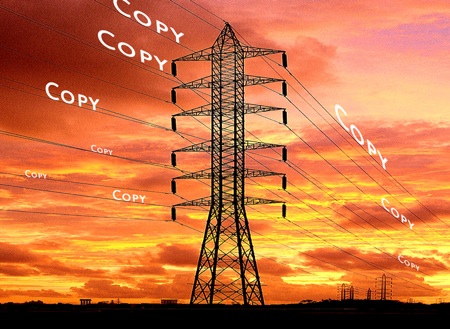
Is the use of power lines in your picture on purpose? It seems an unlikely (although vivid) way for “copies” to move through the network. I know there have been advances in power line networking but mainline power transmission towers are not what people think of when they think of copying data. On the other hand, we now know that the energy cost of information technology is non-trivial and a factor in global warming, so perhaps this is a comment on the cost of “free?”

Posted by Richard Smith on April 7, 2008 at 12:11 PM

Thought provoking, as always.

I suspect that two of your generative categories (findability and accessibility) are actually two expressions of the same issue: where’s that ‘thing’ I need? Accessibility refers to a ‘thing’ that I’ve already bought or used; findability refers to a ‘thing’ that I have not yet bought or used. Perhaps you can combine the two as “locatability”?

And this is where it connects (in part) to the function of advertising - letting me know where to locate the right thing when I’ve already decided I need it. (As opposed to the other part of advertising, telling me about something I didn’t know I needed yet.)

The weakness of the advertising model is that, as a consumer, I really need an agent working for me (not for the producer) to have confidence that I have found the best ‘thing’ at the best price.

Posted by Matthew Jansen on April 6, 2008 at 6:39 PM

I’d like to ask Major Bong about the book he mentioned - the Thiaboha Prophesy - I couldn’t find any details - do you know the author’s name or full title?

Posted by den on March 31, 2008 at 5:55 AM

You rock. World needs more souls like you.

Posted by Alicia Mann on March 25, 2008 at 6:30 PM

I found this blog to be very interesting and relevant. Kevin lists 8 categories of “attributes of things, ideas, or people” which cause them to be worth something —- in the sense that while certain elements of said categories can be had for free (usually due to electronic distribution and access), there exists something about these elements which many people will be willing to pay for.

As an example, one of the categories is “Accessibility”, and the example he gives is of a fictitious Acme Music Company, similar to an iTunes server. As consumers of music, we may be interested in keeping some of our favorite tunes around, but it’s even nicer if we can have access to any music we want, whenever we want, without necessarily having to store it locally. We also want to easily be able to see what other music is available, and to sample it. This is only possible through the combination of a large, central storehouse and the software to access it, and by extension, the ability of the storehouse to afford to provide the service. To do so, they need to make money —- so if users are willing to pay for the ease of access and the breadth of selection, such arrangements can survive even in a world where much of the actual CONTENT is available for free elsewhere.

The parallels with many other kinds of information are clear, and for those of us in education, quite relevant: gone are the days of massive bookshelves and card catalogs, since no matter how many physical materials one might have (or have ready access to) there is no possible way to compare with electronic access (which provides access to ALL information available, provided it can be found and is available for free or for a reasonable cost). Do we really want to store all this information locally?

Add to this massive list (of the obvious resources like journals and books) a second massive list of the new forms of media and communication (like blogs or podcasts), and the possibilities are truly endless. No longer will information gather dust on a shelf simply because it was not deemed “publishable”; it can be put out there virtually free. Additionally, no longer will some available information never be read by anyone because it’s tucked away on the top shelf; its searchable text and “meta tags” are stored for ready access by the right keywords.

The nature of copy-and-paste literacy may be frightening to some and a godsend to others, but it is here to stay and brings with it a completely new take on what it means to be educated or to be smart. As educators and learners, we must keep hammering away at these ideas and be willing to change our traditional thinking, or we will rapidly lose ground to progress. Copying is a double-edged sword in that while one gets ready access to information or answers, the process of discovery has been essentially sidestepped, and to fully understand what one has, more time needs to be spent with it. Whether one takes this time will depend on a number of factors, and indeed, many times it simply is not worth it for one reason or another. I have seen this time and time again when learning specific technicalities with computers (programming in particular), both with myself and with my peers. This is a rather special case, but the overall idea still holds: understanding new information requires a “place to put it”—-a context—-or it won’t have the meaning that it could. And with the vast amounts of new information available anytime, this issue will be important for the foreseeable future.

Posted by seejay james on March 20, 2008 at 1:59 PM

Thoughtful article that generated many “provocations” in the Edward de Bono sense. When we pay for an iPod and load it with tunes from ITMS aren’t we buying into the knowledge created by Apple’s people? They have over the years learned a design aesthetic that defines an authentic product (all others are copies of little value); they have learned how to dealmake with the movie and music moguls, and individual bands; they have learned how to put the pieces of a system together that delivers value for the customer; they have recognised consumer/customer/user needs at various levels and recognise our aspirations…. which makes other people in the industr(y)(ies) struggle to reproduce. We pay a lot (but the price is reducing) to get the box but ongoing membership of the ‘crowd’ is not too prohibitive and there is payback in terms of our own ‘authentic’ playlists which are discussed in pubs, clubs, radio programmes and used for real-time adaptation of live programmes and performances… now which bits are free and how do we (developers) cover our investment in them?

Posted by Jim Rait on March 20, 2008 at 3:08 AM

Beautiful prose, but where is the way you can make money you promised?

Posted by wendy on March 14, 2008 at 10:53 PM

Don’t everyone quit your day job. If service is your product, you’d better get paid for it. Advertising is only a valuble commodity right now because it’s relatively scarce. At what point do consumers get so overwhelmed with adds that they no longer have any value? Someone has to actually produce something somewhere down the road, and they’d better not be trying to do it for free. This isn’t “Star Trek”. Why is everyone so eager to abandon tested principles of economics? Nothing is free. Absolutely nothing. A nation’s wealth is measured by what it produces, not by what it consumes. A company’s wealth is determined by what it sells, not by what it gives away. I’m afraid a lot of people are going to be left chasing their long tails. It’s right up there with the dot.com collapse. There has to be some substance somewhere.

Posted by Keith on March 14, 2008 at 10:31 AM

Late to the dance but just as fascinated by your wonderful piece, Kelly. It just confirms to me 2 things:

  1. Reality: Tech is caught between push and pull of economics
  2. Behind the facade: Tech isn’t the cold-blooded and devil-may-care, rampaging elephant it appears to be but an idea still looking for a way towards not just being valuable but a cup-holder of ‘values’.

Oh well, free is surreal as it is about putting money in a world that struggles with the word ‘fair’.

Posted by friarminor on March 10, 2008 at 8:05 PM

Very interesting article. Your points are valid but as a graduate student in the biological sciences I have to take issue with your use of DNA as an example. I assure you that both cases in which you use DNA you are not presenting logical thoughts.

  1. First of all, aspirin is not free; there are production costs involved and no company gives away aspirin. Aspirin is a specific molecule that binds to a specific receptor and there is no need to tailor it to anyone’s DNA, which doesn’t make sense in the context of aspirin. If you change aspirin it’s no longer aspirin. So you’re not “personalizing” aspirin. You’re just making a different drug.

  2. Sequencing a genome is indeed expensive but you say it soon won’t be and that’s definitely wrong. In the next 20 years we hope to have genome sequencing down to $1,000 per person and I wouldn’t call that cheap by any measure. Also you will not find a single pharmaceutical company interested in paying you to sequence your genome. More likely it will be to your advantage to get your genome sequenced for predicting and treating diseases you have or will have. This will become a common medical practice that you and your insurance company pay for. As for future use of the genetic code there won’t be any more “interpretation” of your genome to you now than the interpretation you get when someone looks at your cancer biopsy and tells you how advanced your disease is.

Posted by Jeff on March 6, 2008 at 3:17 PM

The money is in the scrapbooking of the copies :-))

Posted by Pierre-Tubbydev on March 6, 2008 at 10:29 AM

Interesting read, but at some point those deciding to support through their patronage a Radiohead song had to generate the money for that patronage from either selling a product themselves (that someone at some point had to pay for) or selling their labour to produce a product for someone else (that someone had to pay for). ‘Free’ is all well and good, but at some point people have to pay for it. Consumers may be willing to pay for qualities that you describe as “generatives” and not other stuff that is freely available online, however at some point a consumer still has to pay a creator for their work else the creator starves! The creator, say a writer sitting at a computer, still has production costs of food, electricity, rent etc, etc. If those paying one creator for their work, are also creators themselves dependent on patronage alone then the whole virtual economy is propped up in a circular fashion. Your argument in this sense seems syllogism.

Posted by Ed on March 5, 2008 at 4:05 PM

Great article!

I’m loving your website; first, i read your “1000 True Fans” following a link on Just Plain Folks forum and now i’m checking out other posts, i like what you’re saying :)

Posted by Natalie on March 5, 2008 at 2:59 PM

Fantastic. I just came across this blog today and am already an addict.

This is providing great inspiration and direction for current business plans we are working on. I hope to be able to point to this one day and say “This article drove that decision and is why it worked.”

Posted by Conor Neu on March 5, 2008 at 1:02 AM

Ah, the criminal hacker mind at work. I find this post to be counterproductive to building a viable and civilized Metaverse, and I find it to be representative of a tiny, sectarian coders’ mentality that doesn’t represent even the mainstream thinking of all computer programmers, let alone Internet users. Let’s get over all our ga-ga infantile belief that this concept represents some future of work and a solution to the problems of online economies, please, so as not to live in delusion.

It needs to been for what it is: an extremist school of thought, a variant of Lessigism or Stallmanism, but not “the truth”. Only one possible but only one sectarian take on the potentials and pitfalls of the Internet. Not a road we have to take.

No, not everything on the Internet has to be copied; people’s intellectual property in digital form should be protected, and in a place like Second Life, in fact it is is protected to a point with a permissions system and a TOS. And that’s ok. We need more robust forms of that. It’s perfectly fine. Napster doesn’t exist anymore; you have to pay per tune. And that’s good. We need to pay per tune because my God, making tunes and producing them is work.

Copying and distribution of ideas and information and commentary — that’s all good. That need not be impeded. But there are laws defining this, such as “fair use”. It’s not copying that is the foundation of wealth, no, that would be like saying “the foundation of wealth is my wallet because it holds my money.” Infantile!

No, content is the foundation of wealth, creation of it, management of it, and all services related to it. Content is not copy: content is the antithesis of the Copybot mentality we see here. Content is created because of the ability to get paid, not because of fake generative capacities that haven’t stood any test of time or peer-reviewed scientific study, but are merely a faddish idea.

And how curious that what can in fact be copied is then suddenly, arbitrarily, declared as “original”. Trust can too be copied. Perform enough reliable services, sell enough books that people are happy with on amazon, or dolls on ebay, and you get reputation points that essentially copy, because each new person who comes up then sees your avatar or your name, with its points, and they draw a conclusion: that person is 78 percent or 98 percent reliable. The reputational footprint is endlessly copiable.

In Second Life, where copies are free, they aren’t therefore automatically perfectly distributed. That’s a myth. Not all things free are perfectly distributable on the Internet, either. For all kinds of reasons people are willing to pay for an item if it is “just in time,” without the friction of the search — which is the thing you completely forgot about in your copy-happy little universe — and without the friction of the save, which you also forgot about, and without the friction of attention, which you forgot about. Attention costs. We all have only so much of it. We pay it out; attracting it (advertising) and maintaining it (management); these are legitimate and necessary economic activities for which people, with their needs, must be paid.

Why did I pay for Windows XP? My God, it cost nearly $100 or something when I bought it. Because I got sick of hacker dudes who set up my computer or fixed it copying their many-copied version of their usually virus-laden computers. I got tired of it crashing. I got tired of not being able to call the company for free service or trouble-shooting, because I didn’t have my own jewel box number. So I bought a licensed copy. My computer stopped crashing. I could get service now. And that’s why you pay for software, duh.

Your generatives are good up to a point — immediacy — that’s what I mean by “just in time”, the early-bird copy of something coveted, like a game or movie. But regrettably, in the real field practice of a world that already exists with some of the “generative rules” (sounds like Chomskyan transformation grammar, and is as politically correct) that you admire, in fact the way people try to retain value leaking out of IP is by brow-beating. Harassing those who copy. Suspecting those with similar designs of theft. Hating on yard sales. In fact, that repressive behaviour makes people only willing to pay for a free copy even more; those do-gooders who want to enhance their reputation by giving out copies fly into a fury if anyone charges even a dollar — but that’s reasonable, given that you have to use up server space to display the item: yes, server space is a finite resource. It must be paid for.

Personalization — ah, the script kiddies just steal the copies and tweak them. They don’t need anyone to tweak something when they are already kitted out with every editing program they’ve hacked off warez or wherever.

Your notion of interpretation is fanciful. Editors are going to stop editing books and custom-edit a story line just for me and take out the dirty words? Are you daft? That’s ridiculous. They are busy making the next set of books with content, with ORIGINAL content, that they will sell in various ways, because that’s the sensible thing, paying for and keeping valuable original content, not pretending that a Hallmark-card treatment of drawing curlicues in the margins is a service that will make a living for writers or publishers.

Besides, coding kiddies will script something that does this automatically if somebody needs that done, i.e. a silly “Hello!” and a “are you done reading chapter one yet?” from some bot. So again, no need to pay. But…I can’t have a relationship with an author unless we write to each other something unique; something not copyable; original content. The authors I ever heard from answered me because I said something original, not a copy.

The mode of high-octane paid support for free software is a geekworld notion that can’t apply to an entire economy, even one that people increasingly live online. Because lots of people need garden-variety normal support that isn’t the level of what Red Hat does. They need to learn the routine, the sequences; they need to know what numbers to plug into the various stupid and counterintuitive menus that geeks have warped into most technology. So they need to pay, because geeks’ time does cost something.

In fact, the entire open-source fiction is based on this idea of people volunteering and sharing — but they do it always from a paid-for platform, a hidden substrate of support they are never willing to admit, or factor into their glamorous shareware/freeware/opensource imaginations.

They do it because Mom pays, or the state pays a student loan, or the big IT company pays, or the university pays with a foundation grant and it pays not only a salary, it pays sometimes in lost productivity. Wives pay; children pay; in lack of attention. Somebody always has to pay when the hacker/coder/copyleftist mentality runs wild, spending time on his coding and his generatives.

Always. SOMEBODY pays. It’s just not them, so they imagine you can build a world like this.

With your notion of “interpretation,” you’re saying what I’m saying with the notion of content and originality and service. But not quite, because you are still imagining it is new-age. No need to get fancy — it’s just service. And service needs to get paid per account, and that means per copy. I don’t mind paying $19.95 or $52.95 with a company here or in Czech Republic for an anti-virus software that they update daily for me. I could hack and slash and get their free copy, but will it update? I’ll need a key for that — and isn’t that a good thing? Because I’m paying for their time. I’m keeping their families alive. They need to earn a living. I need a daily update. It’s all good, daily service, but not based on a free copy; based on a trial copy, and then a payment. Your world is devoid of trial copies, and imagines you can just send everything around for free, hack it, tweak it, and everyone will just volunteer to work it, and put out a tip jar.

Again, authenticity isn’t about the key; it’s about the update, the service, the content as well, as they keep discovering new bugs to fix.

Embodiment is at best a fleeting, temporal concept, and not a big market possibility for all things digital. You must not have seen Second Life. You could whip up a book there to hold something that will look and feel real, and even have the sound of pages fluttering, and the look of pages fluttering. Why go to the expense and trouble of actually making wood pulp from trees? It can all be done digitally, really.

But…somebody has to work. Somebody has to create something original. And that means we have to pay. And you have to stop hacking, and be kept from hacking if not by permissions, moral suasion, obfuscation, penalties, then stronger measures.

Patronage. Oh, dear. Kids are so naive! They imagine they can busk on the sidewalk forever, and live off tips. What is their plan for purchasing a car to drive to work, a home, kids’ clothing, food? I mean, seriously. We can’t have a world where all the creators, all the writers, artists, designers who have to interpet things all have to live off tip jars, waiting like poor starving artists for their patrons, having to paint rich fat ladies instead of cathedral ceilings because they can’t find patrons for what they want to do.

And what of all those interpretive physicians? They have to wait for somebody on ebay or the futuristic Massive Distribution Center of your dreams to give them a good rating, and send them micropayments that they may cash out for a fee to PayPal.

Findability isn’t the same thing as search. Search is my freedom to look, to browse, to select. It’s the willingness to pay — in attention, and in money. Findability is your freedom to advertise, market, front, push, try to get me to give something, perhaps only the ability to flick a rating or pass a copy. And studios are already having a hard time trying to make the service of presentation and advertising to help the searcher simply not enough to live on. That’s why CDs have grown more and more expensive. That’s why artists’ contracts are now called 360 degree contracts where not the mere CD is the objective, but a cluster of media appearances and events, like concerts, or a presence in Second Life, are all part of the package.

But by itself, with everybody copying, with everybody stealing, it won’t be possible to get studios to keep fronting the advance investment in staff, tours, infrastructure, advertising that supports bands. When everbody copies and everybody has a niche following and everybody has only a tip jar they have to keep running NPR-like telethons and mass mailings to get people to pay into, you don’t have a robust, thriving economy, you have college kids on drugs who haven’t figured out how to really support themselves yet.

Let me tell you something. The Great Copy Machine in the Sky has a lowly counterpart called the Lowly Trucker on the Road. He’s hauling ass, paying all kinds of expenses for tires and gasoline and DOT permits to try to make a deadline to deliver what you ordered off the Internet — sometimes it’s your dinner, sometimes it’s a book, sometimes it’s a couch from Ikea. The roads are clogged with these analog folks, working hard, driving all night, listening to C&W, drinking coffee at truck stops. They don’t copy; they’re originals.

Driving all day, the truck driver whom you hate because he doesn’t vote for your candidate or goes to church or slings a gun, he’s not on the Internet. Tired at night, he might be in his cabover, or in a motel, or slumped on the couch, watching TV, where he may be the last one looking at commercials — everyone else is watching their free movies from Bittorrent.

And…Most people don’t have the geek’s hatred of ads, because ads are what tell them about products, and they aren’t stupid. They have the Internet to do comparison shopping, to talk to each other about products, and they don’t break into a rage over seeing a billboard, or a commercial, they can handle it, in fact, they find some of them quite entertaining. You’re pretending that advertising is extinct. We can look around and see that it has only moved: to bus shelters, taxi cabs, elevators, cell phones, Internet portal pages, Facebook, your game, your world.

So, your generatives are only very partial; or even just downright wrong as concepts. That’s because they just represent one school of thought, one nearly-religious conviction of geekworld, that code is law, that everything is copyable, that everything should be free for the entitlement-happy.

Seriously. The deep flaw in your argumentation is in your very last sentence if you would but remove the blinders. So I’m writing, all right, because until you do get it, you’ll be a menace, copying and copybotting and making kids think they can steal, and undermine adults’ ability to make a living.

If generatives need so much work to survive, if the tip jar must always be passed around and pushed in your face; if you must endlessly tie up the entire Internet providers’ line with your giant Bittorrent download, if you must constantly post on blogs and berate people for not accepting that they should just give away everything, so you must accomplish by ideology and coercion what you can’t achieve by common-sense, what do you have? You have, ultimately, only a vast hippie commune, or worse, you have a totalitarian system. Yes, that’s what is required for such a scheme to survive — and trust me, it’s been done, there have been central distributive systems with endless goods redistributed in planned system, and they only led to crime, and the deaths of millions. They don’t work. People need originals. They need private property, not distribution of everybody else’s. They need to get paid.

Of course, there’s something quite wrong with this picture, that they understand the minute the electricity goes out, the coal is unavailable to burn, the miners died in a mining collapse, the water dries up, the nuclear power station shuts down due to human error (perhaps a hacker’s computer program didn’t work). Then the Internet dies, with all its 8 generatives. The Great Copy Machine in the Sky turns out to be the Great Pet Rock in the Sky, and people go back to digging in their gardens.

Prokofy

Posted by Prokofy Neva on February 29, 2008 at 9:25 PM

About the tipping thing, I don’t think there are any real studies. Nick Szabo and Clay Shirky seem to have written some stuff. This is what I can turn up right now http://brianwill.net/blog/2007/05/20/tipping-as-a-replacement-for-micropayments/ http://szabo.best.vwh.net/micropayments.html

Anyway we’re very curious as we’re trying out tipping in our company (in http://tipit.to) as a way of letting the consumer assess the value of a product when most content is either free or de facto free.

Posted by Alper on February 25, 2008 at 3:28 PM

i read in a book a couple years back…i think it was Thiaboha Prophesy, the French dude that claims he was taken to another planet….he describes their economy in this way….where everything is free and shared and value is proportionate to the demand of the good. so in other words everything is free and shared and when it “goes out of style” and nobody wants it anymore or everyone has it, it’s value is decreased and phased out. A good is only valuable if it has gainful deployment within the community, and the manufacturer of the good gets ….for lack of a better word “perks” for his creation…ie. better standing in the community or
a recognition of good deeds by your peers…..in a free society like this this would be a very substantial reward.

this was the gist of it….the rest of the book was way out there…I can’t believe this guy has followers. I chatted with one once, and from that I fathomed why, their minds are like a child.

Posted by Major Bong on February 24, 2008 at 12:34 PM

Thank you for a hard work putting up together this value added schemes. If I may contribute a bit, I like very much the simple idea that you cannot steal an idea you can only share it. You tell me your idea, then we both have it. While I take your book or cereals, you don’t have it any longer. Copying follows the same principle. I copy something from someone. This someone still has it, ergo I am not stealing. On another point, I was wondering about off shoring at one point when a potential client told me he could get the same service (a web site) for cheaper if he chose some company in India. Service that cannot be off shored imply proximity. Proximity has value as it brings trust and bonds. It also brings a knowledge of the other’s environnement. Maybe you could add proximity to your list of value gerating concept that cannot be copied.

Posted by Alexis on February 22, 2008 at 4:35 AM

R. Woodhead: User-decided prices, from tipping, to shareware, to set-your-own price are not quite the same as free, but certainly a viable strategy. Have you ever seen any formal studies on this subject?

Posted by Kevin Kelly on February 21, 2008 at 11:01 AM

Walter, yes, context is the key concept.

Posted by Kevin Kelly on February 21, 2008 at 10:42 AM

Check this out: http://www.boston.com/business/articles/2008/02/20/myspaceworkingonmusicservice_reports/

MySpace to launch an advertising-supported free music service

Posted by Marla Mullen on February 20, 2008 at 9:05 AM

Here’s another kind of response.

Posted by Robert Nagle on February 19, 2008 at 1:05 PM
  1. Seems like CONTEXT is a recurring theme…fitting data/information to a specific context is a difficult/valuable task.

  2. Resources (physical & non-physical) are only one gating factor in translating knowledge into decisions, actions, and capabilities. Even if (some) resources are free, work is required to contextualize them for a specific need/decision/action.

Posted by WalterRSmith on February 18, 2008 at 1:50 PM

Kevin,

I wrote a post about the ‘free’ issue. After reading your writing and a few other posts, I had to write about my concerns and alternative ideas.

http://hyokon.blogspot.com/2008/02/in-addition-to-free-part-1-free-is-not.html

Hyokon

Posted by hyokon on February 17, 2008 at 10:02 AM

Freeness is a byproduct of capitalism’s fecundity. Tech developments compounding over a century to make cheaper - reductio ad absurdum - but how to accomodate within society’s 19c political/legal structures? Radical revolution is knocking on the door, boundless opportunity disguised as eco threat. No, not disguised, really; Mercury the god of communications delivers eviction orders & death threats as well as birthday presents. Comms technologies gave birth to new empires, but were the angel of death to those who sought to control or suppress them, rather than adjust to them. Read all about it at http://groups.google.com/group/aristomafia?hl=en(free). Old git Tom

Posted by OldgitTom on February 17, 2008 at 9:02 AM

Very valuable article indeed! Most consulting firms could get some inspiration from this. Today, the recipes are free (or nearly, as they are published in the zillions of business boos that are flooding our society) but as we know the recipe alone doesn’t make for a good dish. It also takes a good cook. Similarly, in consulting, telling the client what to do is easy (and free, accessible, copyable) but being successful in managing the project to implementation is quite a challenge!

All the best, and keep on (free) quality blogging!

Posted by Christian DE NEEF on February 17, 2008 at 12:07 AM

Your comment about interpretation is interesting but I think that is the wrong business model if you want to have happy customers. Providing free software that requires $$$$ of support in order to use it means that your software is not user-friendly and a pain to use. Look at Linux… such a pain to do anything in it. Yes, it is free but the learning curve is huge. Who wants to spend the time unless you are into that sort of thing?

Posted by Alcira on February 16, 2008 at 8:24 PM

I’ve been groping towards similar ideas for many years. The one that is firmest in my mind is the patronage generative, I’ve been making a nice living for about 10 years using a website whose income model is based on tipping — in fact, letting the user decide the price increases my income.

The common thread of all the generatives, to greater and lesser degree, is that they depend on a personal connection between creator and consumer. They build on reciprocal trust.

This leads to some interesting effects. I answer all my user’s email questions without bothering to check if they’ve tipped me. What I find, however, is that almost everyone who emails ends up tipping (vs. 10% of account creators, though the % for people who use the site seriously is very near 100%). Some of the people who email make a point of telling me they’ve tipped, but my feeling (I haven’t got hard numbers) is that those that tip afterwards tend to tip more, because they’ve seen a demonstration of trust by me, and feel obligated to reciprocate.

What is most telling are the tips I get with comments like “I’m on unemployment, but you deserve this $10”. What does that say about people’s desire to reciprocate? Interestingly, the best tactic for me at this point (both ethically and financially) is to refuse the tip, give them a free year on the site, and ask them to do what’s fair at the end of the year.

There are free-riders, of course, but they rarely actually cost me any time — and time is the thing that is most precious to me.

I put up a page that explains the idea that you may find interesting; http://tipping.selfpromotion.com/

I really should have gotten a patent on the business model, just for the giggle-factor. Oh well…

Posted by Robert Woodhead on February 16, 2008 at 3:24 AM

Here’s a response . Good article. (Now I need to read the other responses that showed up after I wrote about it).

Posted by Robert Nagle on February 14, 2008 at 8:18 AM

Check out ArtistShare.com

Posted by Jon Koerner on February 13, 2008 at 7:44 PM

Thank you Kevin for that summary of what economics is all about: too much neo-classical short-cuts for my blood at the other econo-blogs.

I would like to answer to the heart-felt, subjective testimony by Konrad Product, an alas very true aspect of the digital revolution, seen from the point of view of unemployed information worker. Times are hard, some would say challenging: I cannot doubt they are plenty of real journalists out there, looking for demanding, involving, reporting — in spite of having a vast majority of copy-pasters ruining what used to be News. I still believe that long essays are the format to go and make money with reporting: the New Yorker, or Granta are still on business, aren’t they?

A daily here (in France, called Lib’ration) was praised for dedicating a full page to a month-long investigation, every day: the paper is now bought by those who want to be seen with it, or read that particular page. Maybe ask them whether they would pay for a translation of your piece: what you describe is the kind of story I’ve read there.

If what you have is more a thirty-page long thing, then XXI might be your shot: it’s a surprising �magazine� that just went out, inspired by the afore-mentionned NYer & Granta, trying to react to that depressing impoverishing of news. It’s not instant, it’s not superficial: it is deep, thoughtful and very big on the visual arts (comic, photo). Because of a surprise success, they might have more offers then what they need, but maybe try them too. You might need a painter, or a photograph and a translator—but these should be your new friends now. If a particular outlet doesn’t carry your ideas, then make your own; if all publishers are a**-holes, go to Lulu.com, and sell you story your-self. It’s not your job, but it needs to be done—and if you really are bad with people (which I doubt) there are tons of bloggers desperate for great content to promote.

The lesson is: Konrad, you cannot sell you story as is; you have to add something, probably one of the elements listed by Kevin.

Posted by Bertil on February 13, 2008 at 4:24 PM

In a world of “free” we pay for something that could be free, because it bridges our technology gaps. This article remembers me of the theory of economic alchemy by Paul Zane Pilzer. The economics of abundance, the economics of free rests on six crucial principles of alchemic thinking. The sixth law relates to the economic potential of free: YOUR IMMEDIATE ECONOMIC POTENTIAL IS DEFINED BY YOUR TECHNOLOGY GAP.

Posted by Herbert Verweij on February 13, 2008 at 12:59 PM

“Technology wants to be free” - an amusing concept, sort of like “guns kill people”. What it really means is “we want our technology to be free”. It overlooks the notion that until technology drops like manna from heaven, it’s going to be made by somebody. Somebody who needs a place to sleep, needs lunch, dinner; somebody who may even have a family to support; somebody who needs net access to create and distribute new technology; and companies that need fairly elaborate machinery to do little things like nanotech.

“It costs nothing to make a pill.” OK, then, whip me up a few tablets of tenofovir or Baraclude. I’ll even pay postage.

Posted by ZZMike on February 13, 2008 at 11:18 AM

Kevin, suspect you’re at least partly right… you usually are.

Posted by Anne Wayman on February 13, 2008 at 10:59 AM

Brilliant and useful insights!

One point IMO should be considered: “free” is not the same as “infinitesimally cheap”. Copies, if similar to information stored in a “superconductive wire”, suffer the “exothermic” constraints of supraconductivity, which means they do have a cost.

I guess this is reflected in your “accessibility” and “embodiment” generatives.

Could it be useful to consider general relativity concepts such as “events horizons” to explain why something is (more) valuable for one actor than another (and link your immediacy and personalization generatives)?

Thanks again for your important contribution!

Posted by Alain Pierrot on February 13, 2008 at 5:40 AM

Great stuff!

How about “Associativity”, which includes the concept of Community, mentioned above (fan club, social network) and all the varieties of context: “show me more like this”, “here’s the next thing you may want to know”, “here’s an antonym”, etc. — information that leads to other information.

Posted by jimbowtieus on February 13, 2008 at 4:15 AM

Another item for your list is uniqueness and the status that brings, Veblen-style

Posted by Diane Coyle on February 13, 2008 at 2:12 AM

Kevin, I enjoyed the piece and the comments. SO IN THE END NOTHING WORTH HAVING IS REALLY FREE!!! If info is free, production and access are not. If a version of every particle of data and media is capied and accessible then getting a quality, desirable version will cost plenty. I can get limited TV, streaming audio and video and many radio channels for “free” but I have to buy the equipment to get it and then suffer through advertising to enjoy it. If I want to watch or listen to whatever, whenever, with limited or no advertising, then I have to pay for more equipment and access privileges (like my dish, DVR, High-Speed connection etc). NOTHING IS REALLY FREE!!! I guess it is “better than free” … if you are on the right end of the distribution channel.

Posted by Lucky Larson on February 12, 2008 at 9:01 PM

Brilliant and useful insights!

One point IMO should be considered: “free” is not the same as “infinitesimally cheap”. Copies, if similar to information stored in a “superconductive wire”, suffer the “exothermic” constraints of supraconductivity, which means they do have a cost.

I guess this is reflected in your “accessibility” and “embodiment” generatives.

Could it be useful to consider general relativity concepts such as “events horizons” to explain why something is (more) valuable for one actor than another (and link your immediacy and personalization generatives)?

Thanks again for your important contribution!

Posted by Alain Pierrot on February 12, 2008 at 1:31 PM

I think you are right that people want to pay artists and content producers. Most people realize that “free” isn’t really “free” and they are willing to pay to encourage people to produce more quality stuff, because they want the person to get what he deserves or if for no other reason, out of guilt. I personally would prefer to donate money to website owners who provide me with resources I can use over seeing ads all over the place.

Posted by Timothy Fish on February 12, 2008 at 9:45 AM

As a musician trying to get his product out I love this article because it speaks to me. One thing I’ve always told artist friends or bands getting into the business is; their product is no more valuable than a pack of cigarettes. What would make someone smoke this brand over that? What would make someone buy your disc over another and why would someone download your piece of music over another even if it is free? The truth is the only a handful of artists have ever made real money in the music business when you compare it the amount of people the business has buried. It is an industry based on failure. Technology only levels the playing field in regards to distribution (you still have to build a fanbase for longterm success.) The eight generatives I feel are essential to anyone looking to build a career in this business today. Yes, there are things that can be added or tweaked ever so slightly but for what it’s worth I feel like I’ve just been let out of jail reading this article. You’ve put into words what I had been feeling for a long time and I thank you.

Posted by Gabriel Agbokou Jr. on February 11, 2008 at 10:25 AM

“When copies are super abundant, they become worthless. When copies are super abundant, stuff which can’t be copied becomes scarce and valuable.”

Untrue! Do you remember your previous life Kevin!?

3) Plentitude, Not Scarcity

As manufacturing techniques perfect the art of making copies plentiful, value is carried by abundance, rather than scarcity, inverting traditional business propositions.

The value of an invention, company, or technology increases exponentially as the number of systems it participates with increase linearity.

The abundance upon which the network economy is built is one of opportunity.

Networks spew fecundity because by connecting everything to everything, they increase the number of potential relationships, and out of relationships come products, services and intangibles.

Kevin Kelly from “New Rules for the New Economy” http://www.panarchy.org/kelly/newrules.1998.html

Let me add that the more copies they are, the more the actual owner’s savoir-faire or that his originals are worth! Especially if he was able to popularize low resolution copies of the works & never sold out his catalog or the company that made it happen.

Hope you don’t mind me breaking the consensus that your assay generates. People are so uncritical these days they forget conveniently the history & context of it all.

They are so many other arguments I could make against your thesis but I’ve made one maybe that’s enough to spark a much needed, good old flame war!

Come on people wake up! Flattery will only get you so far! Get real!

Martin Chartrand aka : VeeJayTsunaMiX, producer, director of TsunaMiX HD The Next Wave!

Posted by VeeJayTsunaMiX on February 10, 2008 at 3:53 PM

Great Article! You are the ghost writer of Chris Anderson Book “Free”? Or is he just copying? ;)

Most of your points would be the distinctive marks of a really good brand. In the media industry there are still no really good brands out there. Why? Why? Why?

Posted by Thomas on February 10, 2008 at 8:31 AM

McLuhan has plenty to say on the somewhat philosophical vein you are working here. ‘advertisers would pay you to look at their products if they could figure out how to’, or something to that effect.

hats off to your excellent work here- it is possibly the only germane work i have read on the subject.

Posted by gaston monescu on February 9, 2008 at 7:20 PM

At least in educational settings the quality of “interpretation” can be expanded to include the ideas of “guidance and explanation.” The value of a good class is not the syllabus, the text or the classnotes, it is the value of the instructor. It is the opportunity to seek further clarification or to get to ask questions that link your current knowledge to some new idea.

This is why MIT can afford to give away its course content and still find students willing to buy the opportunity to be in the classroom with an instructor.

Somewhere is the qualities of “accessibility” and “findability” is the quality of organization. The value of an article in Wikipedia is more valuable than the same article that stands alone because the article embedded in the organizational structure of an encyclopedia can be easily linked to deeper information and related ideas. There is great value in this “organizational structure.”

Posted by Robert Hughes, Jr. on February 9, 2008 at 6:45 AM

Some of these rebuttals falsly segregate content creators (writers musicians etc.)

The argument that creators need paid is a false syllogism. Anyone can create… in their “free” time. Web 2.0 has taught us that people with day jobs will create; not for money, but because they choose to.

Posted by JoseFritz on February 8, 2008 at 7:54 PM

What about locality? Physical locality?

Wherever our minds wander we always ‘have to’ return to the here, near and now.

An identical thing that is physically closer is always more valuable than that some distance away. Perhaps that fits within your embodiment/accessibility generatives, but I would argue it needs a class of its own.

Posted by 1legspider on February 8, 2008 at 12:54 PM

Good post, Kevin.

I fear diluting your list of 8 with one more…but I thought I’d offer another generative value to consider.

TRANSFORMATION: Have you ever experienced an event so deeply that it practically re-wired your senses or catapulted you to a profoundly different outlook on life.

Transformation hints on patronage but it feels a little different. It feels a little deeper. Perhaps it speaks to a singular human-to-human connection, whereas patronage feels a little less personal, more distant.

Perhaps transformation speaks to the camaraderie two marines share returning from war. Or illuminates the exhaustion two former colleagues might share after experiencing the SF south-of-market boom(boot camp, really) together? Or could transformation elucidate how two old friends share after growing up in that same small town.

Each example contains a bonding agent outside themselves. For the marines, it’s the military. For the “dot-comers” it was that circus they called a start-up. And, for the old friends it’s that friendly little town drawing them back with questions like, “Do you really need all that?”

I suppose if an organization had a profound impact on me as described above I might find value in continuing the relationship.

I belong to a council whose directors are working to create that connection between me and my colleagues. They care deeply about the hope in human connections. And, they act on it. I’ll pay for that.

Thoughts?

Posted by bjorn hinrichs on February 8, 2008 at 8:35 AM

For some practical examples of musicians tackling these issues, check out this BBC Radio 1 documentary about the UK underground “dubstep” scene.

About 10 mins in, you’ll catch a whole range of insights about how the music is embodied on short-lived vinyl discs (dubplates) that only last for 150 plays and are best heard live through bass-heavy sound systems in clubs, while the community positively declines to pirate the music because they’re loyal to the musicians.

http://www.bbc.co.uk/radio1/documentaries/080207_dubstep.shtml

Posted by Colin Donald on February 8, 2008 at 7:50 AM

Aren’t these axioms simply a restatement of classic supply and demand? When supply is infinite, demand for non-essential goods drops to zero. At the point when you’re dealing with a cheap commodity, the way to make money is of course to either produce versions of it which have limited supply (flavored/bottled water vs tap water) or monetize services around the commodity. If something is free, you can still make money if you can offer it faster, smarter, customized, or more accessible - anything to differentiate on other than price, of course.

With regards to pharma, the production cost of pills has always been zero. Only when you do with hard-to-manufacture drugs like Fuzeon or biologics (drugs made of or with biological compounds) does cost of manufacture come into play. By and large, the cost of most dry pills is considered zero for the sake of simplicity. The cost of drugs is quite simply an amortization of R&D and marketing costs plus profit.

Posted by Patrick on February 8, 2008 at 12:18 AM

I think I agree with Alan Dove regarding your take at the pharmaceutical companies, otherwise this is a very insightful piece of work. Great job

Posted by Oritseyemi Emmanuel Madamedon on February 7, 2008 at 7:15 PM

free…, as long as the vc paid for it. housing loans- free trust, respect.—yeah thats whats going on in the economy now.

join reality.

other. not in the valley

Posted by reality on February 7, 2008 at 4:10 PM

Mr. Kelly! Good viewpoint. My team and I recently developed a team collaborative process that enables a project team to accelerate their workflow by understanding the their project from a top down view.

Our approach also enables the project team to collaborate regardless of the distance, the technology and the project culture.

During the process development, we discovered that we do not have to protect the technical specifics of the process because of the psychology behind it. The bottom line is not everyone consciously think in terms of collaborative-driven goal and objectives building. Telling people what our process does and the general fundamentals is usually public knowledge.

The psychology specifics and tactical specifics for getting people to collaborate as a team is what we protect.

#

@ the end, he/she either have the conscious setting to collaborate or does not have it.

Posted by Michael on February 7, 2008 at 3:13 PM

Hi Kevin, it’s nice to see some fresh thinking on this concept/problem.

A lot of us are scrambling for new, outside the box, profitable ways to monetize our content.

We’ve only begun to see the possibilities.

Posted by marti garaughty on February 7, 2008 at 2:34 PM

Reading your piece, I remembered that I’d heard (read) another version of the argument before (maybe it was your technology wants to be free piece), in another form, when I was a journalist. At that moment in time — the mid-late 90’s — people were starting to get their news / info. online (that’s when Salon was, er, hot!)

I remember the tech-wants-to-be-free piece (or, content-wants-to-be-free is what I recall) because at the time, I was often buying (for actual money — not free) the Greyhound bus up to San Francisco, sleeping on people’s couches (chipping in for food — another not free item) and reporting a piece. I was not getting paid for any of this; I was doing it for “free” though it was costing me — quite a bit — along the way. People don’t use the phrase much but it was “on spec.”

Although I’d pitched the story everywhere, I didn’t have the requisite clips for editors to take the chance and give me such a big assignment. “Come back when you have the piece.” Then possessing that mixture of determination and ambition that youth — yeah, I was that young, then — I went forward, reported, wrote the story and eventually saw it published in an alternative weekly (that is “free.”) For which I was paid the grand sum of $500.

The alternative weekly then posted the story on its website (& several others), for “free” i.e., without offering me any more payment (in violation of the Digital Millennium Copyright Act which, when called on, they refused to observe), meanwhile surrounding the piece with advertising that, I assume, the weekly’s publisher got paid for. Me? Oh, it was “free.” I guess like social work or something.

Then, a movie — a very bad one — used a version of the story (remember, the one that I reported and wrote) for its plotline. Again, I got nada. My hard-earned story was, to the benefit of the director/writer, “free” as she felt not a twinge of obligation to credit — or, perish the thought — pay me. When we spoke at the film festival where she was being credited for “breaking” the story — the one I’d reported and written — she couldn’t look me in the eye. Cause in this world, everything’s “free,” right?

I was able to resell the story (syndicate) it to several outlets; one European magazine even reprinted it without my permission &, though I eventually got paid for that (and hired by pop to make a video based on the story, which a lawyer then sold to MTV), it was unusual.

The point is, up to the point of publication — and well beyond — I had to support myself in order to write that “free” story. But it’s value then, as now, was greater to me, personally than the money I’d make.

Still, I think there’s a larger lesson in this. I am no longer a journalist. For one simple reason. The sort of reporting/writing that I want to — socially conscious, investigative, long-form — isn’t being much funded by anyone these days. I am not an opinionator, a blogger or a linker: I like the integrity and effort required by original research and reporting. Unfortunately, I still have to shelter, cloth and feed myself so your notion of “free” — or, as I understand it, “No One Turned Away for Lack of Funds” — is not a model that works, at least not for me.

In the tech driven riot towards “free,” what’s slowly happening, I think, is that people who might otherwise investigate, write & report (esp.) are turning away from those forms. I have a zillion ideas about issues and stories I’d love to report and write. But I know — believe me, I’ve tried — I can’t make a living at that. At some point, someone has to invest in you, the creator and support you while you create all this “free” material.

A few months ago, I pitched a long-in-the-works, never-been-told-before story to the editor of a major weekly (lap dissolve ten years, now I do have the clips to get in the door.) Though he was very interested, calling me to discuss the piece, etc. he explained the paper’s feature well is now entirely written — due to budget cuts, consolidation — by staffers. When I finish the piece, he’d love to take a look at it …

Fuck it, I thought, no more “free” er, “on spec” work for me. I put it away and forgot about it.

Maybe I’ve become a cynical absolutist or am incorrigibly egotistical with but I think screeds like yours end up propagating & feeding into the dissolution of a better discourse. All the shiny gadgets & neat sounding phrases (“cloud computing” is my latest favorite) in the world mean nothing if there’s nothing of interest to view/listen to on them … my articles have been mute on this point but I’ll give you the benefit of the doubt & go with the idea that content, in fact, may “want” to be “free.” I, for one, am a content creator who is became exhausted by the constant, incessant hold-up (larceny) that underlies creating content i.e., satisfying everyone else’s whim to pay (or not).

Your argument collapses — from my P.O.V. — in that it doesn’t take into the account the investment that’s required to create all this “free” stuff. I don’t have access to well funded I.P.O.’s (that top secret creator fund — maybe you’d be kind enough to post the 1-800 number on your blog) and am still waiting to sign up for my millions so I can run around and … experiment! ‘Till then, I’m one guy, somewhat smart, & anything I do comes out of my own pocket and initiative.

The point of all this is to say, I think Silicon Valley people, techies, are still nurturing a fantasy that creators — writers, musicians, reporters, whoever — are able to sustain themselves while they produce all this “free” material. The fact is, though I graduated from UC Berkeley & am driven by a strong social consciousness, at the end of the day, the “free” model you describe doesn’t work for me — I have other things to do with my time (see, above, “shelter, food, clothes.”) And I don’t believe it’s a good or long term plan to pursue or publicize.

Posted by Konrad Product on February 7, 2008 at 11:27 AM

Thanks Kevin

Superbly insightful and masterfully written…. you sure you didn’t COPY it?

Posted by Phil Bailey on February 7, 2008 at 8:33 AM

Great, thanks!

Posted by Gautam Jain on February 6, 2008 at 9:02 PM

Kevin,

Outstanding writing. Bravos and thank you! All the best.

Posted by David Martin on February 6, 2008 at 4:56 PM

The “copy” concept could mislead readers who use the internet mainly for sending email.

Please clarify. When I send a mail to someone via my ISP, can someone somewhere other than the recipient read the mail ?

Posted by Kishore Balakrishnan on February 6, 2008 at 3:02 PM

What about waste. Even a digital copy of something eventually takes up some physical space or requires energy to maintain it’s existence.. I think another major area of value not just aggregation, but also in de-duplication and “waste” management. Great article. -Rex

Posted by Rex Gibson on February 6, 2008 at 11:14 AM

Unfortunately my detailed comments seem too long and I keep getting error messages.

“Interpretation” reminds me of the management consultants in the 50’s who sent out identical, free to duplicate, reports recommending the adoption of incentive schemes. Because the clients didn’t realise that the reports were free to produce, they happily paid through the nose for them.

“Accessibility” reminds me that most people today can’t understand their mobile phone subscriptions. They don’t know whether they’re getting value for money or not, but they happily pay through the nose.

Many of the generatives rely on turning into profit centres things which should be cost centres in any customer-centred business, with the creation of (possibly prototype) goods being cross-subsidised from these. I’ve never known that be good for quality. Or the customers.

Posted by Ian Kemmish on February 6, 2008 at 9:51 AM

The problem with your “interpretation” generative came to me in a flash one day. I had submitted a “schoolboy howler” bug report for GCC, along with a fix, to the gcc-bugs mailing list, in good faith. It was intercepted by someone working for a company which made money providing paid support for GCC to various companies (and there’s your first conflict of interest). I received a reply saying that my report and fix were both correct, but that my fix would not be included in the general source distribution. I shrugged and assumed that this was because that particular bug was known to them and generating a nice revenue stream. (There’s a resonance here with the early management consultants in the 50’s who made fortunes churning out reports recommending the adoption of incentive schemes - the identical reports were free to produce, apart from inserting the right company name on the first and last pages, but the clients didn’t know this and willingly paid through the nose for them.)

Posted by Ian Kemmish on February 6, 2008 at 9:35 AM

Fabulous article … This is especially helpful with my new company, Territory Real Estate. We are taking on the archaic industry of real estate where traditional agents/agencies still think there is value in hoarding their listing information (eh hem!, Manhattan, NY, might be the worst). However, all they are doing is pi**ing off modern day consumers as they continually fail to deliver good service at the right price all while hiding information. Anyway, we are doing exactly the opposite - buyers pay for great buy-side real estate expertise and guidance, and the property information is 100% free - and I found your article not only reinforcing, but inspiring.

THX!

Posted by Marla Mullen on February 6, 2008 at 8:57 AM

A fascinating article – I read into it tips on thriving in a economy where services become highly commoditized and undifferentiated, both as a for-profit, a non-profit and entities within either type of organization.

Posted by Sam Adams on February 6, 2008 at 8:09 AM

Brilliant post! Thanks.

I have post - or copied ? ;)- about it here

Posted by Simone Lovati on February 6, 2008 at 7:38 AM

Another generative that can be charged for is Community. You can give away content for free, then charge users to be in the “fan club”

Posted by Hashim Warren on February 6, 2008 at 7:13 AM

Hyokon,

You’ve just nailed the “problem” with DIY, and the reason Gen1 punk rock went away: Making music is fun, making money is hard. Nothing has changed wrt “breaking” a band. It was hard, it remains hard. The internet possibly even makes it a bit harder, but that really depends on your destination. It’s certainly shaved the top off the ice cream cone, but it’s also created a new, thriving middle class – artists who can reliably sell 5000-10000 copies of their work can make a living with or without a label.

But, as always a band needs fans to survive. And to make a living it’s an on-going process, replacing people who grow up and have kids with new ones at shows, selling product to new fans to make up for the ones who found bands they like more. In the past labels did that heavy lifting, but they also got sucked into manufacturing and distro, and today feel drawn to concert promotion. The truth is they were never especially good at ANY of those things! Manufacturing was the first thing the majors unloaded as they devolved to their present state, distribution is already following. It doesn’t take Nostradamous to see where their concert efforts are headed…

Look, you don’t NEED an engineer or producer, but a good one can make the process easier, and often more successful. Likewise, no one needs a label, especially one with their hands in every pocket as we see with current 360 deals. But some entity that knows how to build a business (fan base) remains essential. You can post your songs on myspace, but unless someone’s actively shepherding ears to your page as a fulltime job, success is unlikely. The good news: The labels have largely disbanded, so the very best publicists and specialists in that work are available to everyone on the freelance market. Sadly, this has allowed the best to cherry pick clients to enhance their own record, but it’s commoditized the mojo too. But while you don’t necessarily need a label to do this work for you, someone must do it. Period.

The DIY dream dies hard. It helps to recognize it never really existed at all. Without Malcolm McLaren, you’d never have heard of the Sex Pistols. Someone has to push the plastic or bits on the street.

As for the notion of splitting revenues with hardware vendors, this is as problematic as subscriptions for artists. In the 90s there was a “DAT tax” that eventually moved to “music cd-r”s as well, that worked similar to this. While it’s not difficult to track sales, labels pretend it is, so the revenues don’t get back to the artists getting spins, but rather they flowed to the hits-of-the-day. Great for Michael Jackson, not so hot for Ani Defranco (who might actually get more spins due to a news story). Furthermore, the long term viability of ad-driven entertainment is not a given, but that’s certainly where the return would come from in such a deal (you don’t think cell phone makers or ISPs will accept less profit, do you?). There are no free lunches.

IMO we need to re-examine royalty structures broadly, and make it easy for people to legally use music in new ways. Currently a great mashup might be ideal for breaking a new artist, but they’re impossible to clear rights for, so they live entirely underground. We simply need to make compensating creatives as transparent, efficient, and frictionless as making copies of their work.

Posted by Dave Davis on February 6, 2008 at 6:18 AM

This is a nice list of ways to deliver value in an environment where content is available at effectively zero cost. But I’m not sure that these eight “generatives” “require a new skill set” or eliminate the need for IP “legal skills.” In fact, these eight values reflect long-established business practices that are not unique to the internet. For example, the purpose of IP/Copyright protection is essentially to maintain the owner’s advantage of immediacy and authenticity. Embodiment and patronage have been around since… ancient Greek theater? Findability on the internet has worked pretty well since Google (in the old days we had library researchers). Interpretation sounds like your standard service-oriented contract. Personalization and accessibility can add value (e.g. personalized advertising has been one of the biggest successes in e-commerce), but most net implementations of these ideas have met with tepid consumer interest. Overall, I would suggest that the future digital economy will look a lot like today’s economy. Zero-cost content will lead to new ways to capture value, but the old media market dynamics will simply reemerge in new guises.

Posted by Kevin H on February 5, 2008 at 9:12 PM

Whilst agreeing that publishers, studio, labels are not needed for distribution, I’m not sure they’re needed for findability either, at least not in their current form. Tools such as Digg will continue to develop and refine the ability for recommendation groups to flourish, organising the oceans of content based on their value. Maybe these are the new PSLs, but PSLs without ownership of content or an agenda of their own beyond findability (like a library or an innocent Google).

The one thing that becomes increasingly less “free” as options for spending it increase, is our time.

Posted by Kent Fitch on February 5, 2008 at 7:44 PM

I enjoyed reading your article. I wrote last year about the problems I see in “digital noise” and how we deal with it. (http://thruthemist.blogspot.com/2007/07/economics-of-information-flow.html) Thanks for helping me see things in a different light.

Posted by Jim Coen on February 5, 2008 at 6:41 PM

Kevin, you reaallly should read the Benjamin essay, not just the wikipedia graf on it. “Work of Art In the Age of Mechanical Reproduction” is arguably one of the cornerstones of an understanding of multiple media in modern life, and it describes convulsive, revolutionary changes to media distribution really elegantly. Benjamin’s points about the aura of “authenticity” are, if anything, more relevant now than when WofA was written, and are quite similar to what you’ve written here. (Also: check Bruce Sterling’s “Shaping Things” for more on the value of “findability”.)

Posted by Andrew on February 5, 2008 at 5:37 PM

Agreed, advertising is the only viable solution today, but the near future holds far more interesting value propositions.

Posted by ryan troy on February 5, 2008 at 5:01 PM

Terrific concepts and great narrative. A worth sequel to John Daly’s New Rules for a New Economy. Unfortunately, the US Government and the incumbent companies who unduly influence it don’t get any of this.

Posted by Steve Collier on February 5, 2008 at 1:23 PM

Kevin, aren’t these eight generative values simply manifestations of scarcity - a very old-school component of value (and price)?

Posted by Joe Lamantia on February 5, 2008 at 12:53 PM

I enjoyed this article a lot and have discussed it on my own blogFrontend. Trying to use these ideas now before the future comes is important, but trying to turn them into something that can be ‘done’ is often entirely different.

Most people who need these ideas to work are unfortunately not in a position to make them work that well at all - however, there’s still something to be learned from the debate of free.

Posted by Lulu on February 5, 2008 at 12:27 PM

Excellent article. I think the other side of the coin is that there are actually products and ideas and services that are rooted in virtue: truth, love, knowledge, that are actually worth MORE when they are copied, not worth less. I realize I’m a lucky man and I’m not trying to hurt anyone by saying this, but I’ve been married for almost ten years and my love for my wife grows with every new kiss, there’s no law of diminishing returns.

Look at how mainstream politics rolls out copy after copy of “bigger government, bigger war, bigger welfare, bigger debt” candidates. Then the axiom is true, you keep copying and lending copies of the dollar until its worthless. The alternative (and the wisdom of the framers of the Republic, in my opinion) is to stake the American experiment on a platform of things that actually increase in value the more copies we make and the more sharing we do - things like freedom, peace, and individual liberty. Look up the roots of the “Lots of Copies Keeps Stuff Safe” LOCKSS principle, it’s pretty neat. Making copies can actually be a GOOD thing.

Posted by loscielos on February 5, 2008 at 10:37 AM

Kevin, thanks for the thought-provoking post. As someone working in a tech product launch and PR company, I sense there are now, and will be many more ways, to communicate generative value in ways that will benefit both business and consumers.

Here’s to the Sharing Mindset!

Cheers,

Nathan Rudyk

Posted by nathan rudyk on February 5, 2008 at 9:59 AM

Fascinating and well condensed view…sounds like a book in the works…If not there should be!

Posted by Charles Mauro on February 5, 2008 at 9:24 AM

It costs nothing to make a pill.

It costs nothing to make the second pill, but the first one is very expensive indeed. Manufacturing, even in places like China, requires a great deal more capital investment than it takes to unleash an mp3 on the Net. In the latter case, the Net requires some capital in the form of hardware, but most of it is commoditized and the cost of connecting it is distributed among the backbone providers, ISPs and end users. Almost none of that is true for pharmaceutical manufacturing (or cell phone manufacturing either).

Posted by Derek Scruggs on February 5, 2008 at 9:11 AM

Thanks for the tip. I’ve been meaning to read that one for years.

Posted by Kevin Kelly on February 5, 2008 at 9:09 AM

Very useful analysis! An analysis that every organization will need to do, some sooner than others. It is most important for organizations to assimilate your premise that, when copies are free, that which can’t be copied (mass produced, manufactured, etc.) becomes valuable. You are working through the dilemma that Stewart Brand identified when he said that information wants to be free AND information wants to be valuable.

The marketplace will probably decide what generative qualities will prevail, but we should look at what qualities are possible, as you have done, and decide which ones we should favor through our good designs, based on what human qualities we value.

For example, where is the quality of “direct experience”? Why do people still go to museums, or to the Grand Canyon? What is the information that is acquired by a real body in a real space? That information can’t be reproduced by Second Life, but is that just a technological hurdle to overcome? A real sense of place, or presence, can’t be manufactured or copied today, but what happens if or when it can be?

“Immediacy” suggests a range of things, including the “freshness” that you describe. I think being “near to hand” is another important aspect of immediacy. This is the quality of a good information architecture and a good user interface, the kind of value that Apple and Google products embody. “Near to hand” is about ease of discovery, similar to your “findability”, but that quality as described seems to be about “push” and awareness rather than individual desire and “pull”.

I look forward to exploring more of your writing here, you raise some very important and provocative ideas, thank you!

Posted by Steve Gano on February 5, 2008 at 7:57 AM

Nice article with much food for thought. A fascinating precursor to this is “The Work of Art in the Age of Mechanical Reproduction” by Walter Benjamin, written in 1936. See wikipedia at http://en.wikipedia.org/wiki/TheWorkofArtintheAgeofMechanical_Reproduction for a summary and a link.

Posted by sab on February 5, 2008 at 7:49 AM

Some really nice thoughts here. My one concern is that many of the 8 qualities that you mention are features of data, and in that sense are subject to the same rules as information goods.

Immediacy, for example … since distribution costs are essentially zero in the digital age, someone will always be able to provide information faster, at a reduced price, and still make a profit. Price pressure will always be downward for immediacy. The only way an industry would be able to prevent this would be through collusion (i.e. to artifically create scarcity).

Except for patronage and embodiment, I’m not convinced that in the long run all the qualities you mention won’t also be free.

~alex (usablemarkets.com)

Posted by alex on February 5, 2008 at 7:05 AM

I’ve got a catalog more than hundred strong of TsunaMiXes.

Up to now I’ve only published 31 of then online & only in low res for promo.

So when I have a catalog a 1000 strong I’ll be willing & able to sell a full res distribution rights for a good price (in uncopyable medium).

In the meanwhile I’m letting others give away their stuff for free in hi res…

That’s only a glance of my strategy…, to get the lowdown you’ll have to pay…, if you can afford my fee!

You cannot CRUSH ME with overwhelming competitive advantage! ‘cause I’m really a genius but I’m poor (for now, don’t worry I can afford to feed myself), you cannot buy that.

In the long run authenticity prevails! If I get monied wanabe copycats trying their hand at TsunaMiXing anything. Then the worth of what I’ve produced is only gona go up!

Look at what happened the ones who downplayed the first works of the impressionists.

Know your art history & you wont have to repeat it.

Martin aka : Vee Jay TsunaMiX

Posted by Martin Chartrand on February 4, 2008 at 5:48 PM

Wow, Kevin, you have been thinking about this for a long time and have really outlined the business plan for a zillion enterprises going forward. Only the “old guard” will still do its damnedest to hold back the tide. Esther Dyson has been saying stuff like this for a long while, too, but you have put it down succinctly here. A few pals and I started a company almost a decade ago called Garage Band and we got creamed by the studios because they would not climb aboard. They were scared. We were early. It’s all happening now.

Posted by Dan Lynch on February 4, 2008 at 4:18 PM

The principles here are interesting and sound, but your list of generative qualities seems like it’s missing the most obvious ones. (I would