


The Gift of Stuff


[Translations: Japanese]
The word “technology” suggests stuff. Things made of atoms. Hard stuff. Steam locomotives, iron works, telephones, computers, chemicals, and silicon chips. When this ocean of stuff first appeared centuries ago we saw it as a material revolution. Yet all the changes it brought to us were really due to its new ability to wield energy on command. The hard stuff got its magic from being able to hold, or transmit, or display energy in either small amounts on cue (signals), or in large, unfathomable bursts on demand (calories). It was animate stuff, a new material in the world that we called technology. Its strong animus made it alien, scary. Since then, this stuff has been the bogeyman we love and hate.
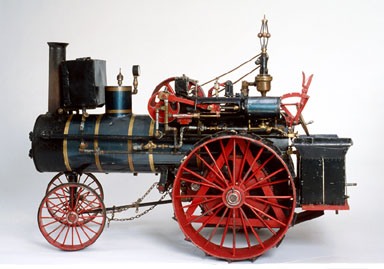
As we refined this stuff, it lost some of its mass. We began to see through technology’s disguise as hard and cold and began to see it primarily as action. Today technology suggests software, genetic engineering, virtual realities, bandwidth, surveillance agents, and artificial intelligence. You wouldn’t hurt your toe if you dropped any of this. Technology became a force. A verb not a noun. A vital something that throws us forward, or pushes against us. Not just against us, but also against the biological world we perceive as our natural mode. It proved so strong in its action, so animal like in its presence that we now perceive technology as a super alien power, the thing to blame when things go wrong.
In reality technology is both stuff and force and more. Technology is, in fact, anything we create. Writing, painting, music are all technologies. Libraries are technologies, as are double-entry bookkeeping, civil law, calendars and clocks, institutions, all of science, as well as the plow, clothes, sanitation systems, medical tests, personal names, and the safety pin. What is not technology then? Anything that doesn’t come from our minds. Anything born of our minds is technology.
That is probably going too far for many people. How can a Shakespeare sonnet, or a Bach fugue be cast in the same mold as a nuclear bomb or a Walkman? Easy. If a thousand lines of letters is a technology (the code for an HTLM page), then a thousand lines of letters in English (Hamlet) must be as well. We can’t separate out the technology in the Lord of the Rings movie. The literary rendering of the original novel is as technological in the strict sense as the digital rendering of its fantastical creatures and places. Both are works of the human imagination. Both affect audiences powerfully.
Technology is a type of thinking. A technology is a thought expressed. One could view the elaborate system of law running Western societies as a variety of software. It’s a complex set of code that runs on paper instead of in a computer, which slowly calculates fairness and order (ideally). Both law and software code are manifestations of human thought and thus both are technologies. When the technology critic Wendell Berry asks: “How could the steam-engine make men better?” he seems to have a good point. There appears to be nothing the two – man and machine – share. But the answer to his question is “compared to what?” Are there any manifestations of human thought anywhere than can make men better?
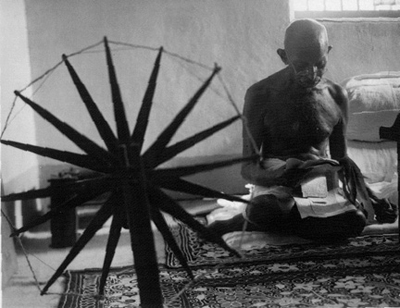
There probably are. While a Star-Wars’ laser and Ghandi’s act of civil disobedience are both works of human imagination, and thus both technological, there is a difference between the two. Not all thoughts are equal. Some thoughts are better thoughts. More importantly some thoughts by themselves are silly, or misguided, but as part of something larger make sense, or are even needed to get to a better thought. Thoughts have different values, in context.
I believe the same is true of technology.
An answer to which Wendell Berry might agree to is that the technology of law makes men better. A system of laws keeps men responsible, urges them to fairness, restrains undesirable impulses, breeds trust, and so on. Yet, there are good laws and bad ones, and some systems of law (technologies of law) are better than others. The proper response to a bad law is not no law; it’s a better law. The proper response to a bad idea is not to stop thinking; it’s a better idea. The proper response to a bad technology is not to stop technology; it’s better technology.
The logical next question is, how do we improve (create) a method for evaluating the worth of specific technologies? How will technology help us to be better people? Indeed, how do we make better technology? If by technology we mean what Wendell suggests – cold hard yucky stuff, like steam-engines, chemicals, and hardware – then I’m not sure this question will get us far because this stuff is not big enough. Wendell has a very small idea of technology; a too small idea. By my calculation the total summation of technology equals civilization. Civilization is technology. Technology is the aggregate accumulative work of human imagination and invention.
By this calculus Wendell’s question becomes, “How can civilization/technology help to make people better?” Or, “What is the gift to us that technology delivers?”
The advancement gifted by technology is often hard to see. Every thought can be subverted. Every technology can be abused. With every solution a technology brings, it also brings new problems. The more powerful the thought and technology, the more disruptive it is. If all that technology brings is an even wash of good and bad – then the gift is a meager one. However what technology ultimately offers is far greater that some more bad and some more good. In the sum it offers increased possibilities and choices. And this is why we gravitate to it so.
In general, a technology presents humans another way of thinking about something. Each invention brings another view of life, another choice, an alternative state of being. Each additional tool, material, or media we invent offers humanity another way to express our hearts and souls, and another way to test the truth. As more possible ways to express the human condition are devised it enlarges the pool of people who can find their unique place.
We value diversity for its own good. Diversity – possible species, possible races, possible view points – is an end it itself that we crave. It is what we want (among other things) for our children – to have choices. More than anything else, this is what the technium brings us: choices. More than anything else, it is technology (the human imagination made real) which creates choices.
While in general new technologies don’t eliminate old ones, occasionally a particular technology will diminish previous choices. Sometimes, too, a technology will not yield as many options as it promised. Our challenge is to substitute these as fast as possible. The remedy for a limiting technology is a liberating technology.
The gifts of technology are possibilities, opportunities, diversity of ideas. Without technology we have very little of those. Our collective job is to replace technologies that constrain real choice, with those that open it up. The telephone, for instance, is a technology that continually widens opportunities and possibilities, while closing off very little. DDT is a technology that unlocks some important possibilities but restricts too many others. Genetic engineering opens up vast terrains of choices, but its potential to constrict many others is both vast and uncertain.
To return to Wendell Berry’s question: How can technology make a person better? Only in this way: by providing them with chances. A chance to excel at the unique mixture of talents they were born with, a chance to encounter new ideas and new minds, a chance to be different than their parents, a chance to create something their own.
I will be the first to add that by themselves – without anything around them – these possibilities are insufficient for human happiness, let alone betterment. Choice works best when it has values to guide it. But if one has spiritual values, Wendell seems to say, do you even need technology to be happy? Or, in other words, is technology necessary at all for human betterment? The same question can be applied to the enlarged versions of technology I prefer: Is civilization necessary for human betterment? Because I think the technium and civilization are the same. I say yes. The technium is necessary for human betterment. A special subset of humans will find that the constrained set of choices found in, say, a monastery cell, the tiny opportunities in a hermit’s cave, or in the deliberately restricted choices of a wandering guru are the path to betterment. But most humans, most times in history, see the accumulating pile of possibilities in a rich civilization as something that makes them better people. That’s why we make civilization/technology. That’s why we have cities and libraries. They produce choices.
Choices without values yield little, this is true; but values without choices are equally dry.
The gift of technology is possibility — possibilities in ever increasing mountains of diversity. Like biological life itself (despite its many hourly horrors), and like diversity itself, I find greater possibility to be an unequivocal good.
