


The Evolutionary Mind of God


[Translations: Japanese]
There is no human-created description of God that is without contradiction. Any minimal definition of God we can conjure up entails multiple infinities, such as omnipotence, omniscience, or eternal existence. However when a being is “infinite in all directions” the infinitudes cross and begin to contradict each other. The school-yard riddle that asks if God could make a stone so heavy he can’t lift it is just one simple case of how infinite capacity is muddled when one‘s infinitudes are pitted against each other.
The many other inherent paradoxes of God pointed out by theologians usually rest in these battling infinite dimensions. How can a being be infinitely just and infinitely merciful? How can it be boundlessly omniscient and free-willed? And if God is defined as less than infinite, even in a few dimensions, then it becomes a God few want to honor since humans, even in our lesser minds, can imagine a greater God – one who is infinite in all directions, even though this God as defined is full of contradictions. (This discussion takes God at its most naked and leaves out the extra burdens of religious clothing.)
But any description of the universe without God is also compromised with contradictions. How does existence begin with no beginning? If the universe is deterministic, what determines its first motion? In a field of infinities, why is anything at all finite?
One is left with the conclusion that both God and no-God are impossible, at least to our limited human minds. Both possibilities could of course simply be beyond human comprehension, and their inherent contradictions, so apparent to us, could be resolved by intellects greater than ours.
Indeed, some theists who assert the reality of God counter contradictions by claiming God is ineffable – that is unknowable by us, and therefore has no definition. This seems like a cop out to the atheists who assert the reality of no-God is at least definable. Atheists counter the contradictions in their own view by claiming our ignorance and inabilities can be overcome via science. In a recent blaze of publicity and attention, atheists have come out of the shadows in contemporary culture, and are denouncing religion of Gods, and promoting the superior perspective of no-God as a view that should appeal to the modern and technologically oriented. And it has. Nerds and techies find the scientific approach of current atheism extremely appealing.
But recently a third way of imagining the ground of the being has emerged which is also very appealing to techies. It stems from one of the most ancient theologies, but this ancient orientation is being rejuvenated by scientific and technological understandings. Judged from my own discussions with educated and rational people, this third view is more appealing to them than the blankness of atheism, and I suspect in the long run, more likely to gain the allegiance of those who can’t make that leap into a belief of God.
This new third way is a type of pantheism. In the orthodox definition of God, God transcends the universe. The universe in this view is a creation issuing from God. The universe has the same relation to God as a story or painting would to us. As authors, we transcend our masterpiece. While the universe reflects the nature of it creator, it is decidedly “other.” The furthest the two – creator and creation — might be entwined is into a duality like a body and soul. We might say the author was the soul of the work. In Augustine’s metaphor from the 4th century, the universe is the body for God’s soul.
In atheism, there is of course no duality; the universe simply is. But pantheism, at least in its revived form, offers a concept of godhood with unity. There are many many historical varieties of pantheism, but most could fairly be summed up in the literal translation and description: “All, God.” Creation and God are not separate. All is One. The philosophers of pantheism like to say that rather than God transcending the universe, God is immanent in the universe. Mystics since the dawn of consciousness have claimed to be awaken to the startling fact that since the universe is God, then that each of us contains God, or even more shocking, is God. God is everywhere we look. And this is where the contradictions of this description of the universe begins.
If God is everything, then the divine includes rape, murder, cheating, war, destruction and the worst of everything we can think of. Some of the most ancient eastern religions assent to this view of the two-faced nature of God, the yin and yang. But if God is literally everything, then it is meaningless, because it leaves nothing that is not-God. If the boundary of God stretches to include everything in the universe (infinite in all directions), then there is nothing intelligent we can say about it, because every word ultimately means the same thing: God. With no distinction between God and not-God (since there is nothing that is not God) the idea of both God and our world becomes a self-conflicting tautology: All = all. Nonetheless this particular contradictory perspective has many appealing attributes over the other two contradictory perspectives.
Except for the mystics, the appeal of pantheism was somewhat thwarted by our understanding of the universe in ancient times. The universe was a noun, a thing, or maybe a bunch of things, like atoms, stars, planets, rain, and light, as well as odd and different people. Perhaps ignorant shepherds and farmers long ago might be able to worship this thing as a God, and pay tribute to its greatness and mystery, but the fixed nature of this God had little appeal to the enlightened. As big as the world was, it didn’t seem like a big God. As our view of the universe changed, so has the attraction of pantheism.
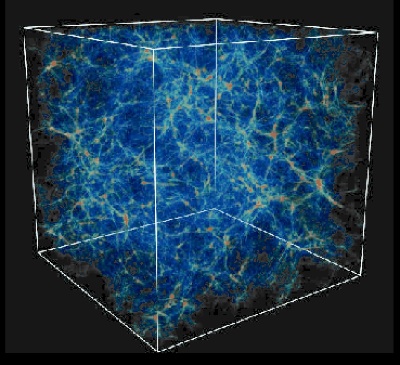
As science probed the material world it discovered that there was very little fixed about it. When physicists unpacked solids they were revealed to be mostly space and tiny whirling bits. When they unpacked those whirling bits inside, they, too, were found to be mostly emptiness slightly populated by further tinier bits inside. Those scarce bits in turn were mostly nothingness as well, and so on “all the way down.” Most of the universe was nothing. More alarming, anything that was something seemed to be informational, that is, stuff turned out to be everything we think matter is not. The foundational elements were in constant transformation into something else. Nothing was static, or a noun. As Buckminster Fuller pronounced, “I seem to be a verb.”
Further experiments showed that at its core the physical universe enjoyed properties that we might assign to ghosts – capable of being in two places at once, or nowhere at all. A thing could only be defined in relationship to other things. The more scientists looked at the universe the more it seemed as if there was no body, only a soul. The ethereal nature of our world would not have surprised the mystics, but it made it much easier for the average person to see how their own ineffable consciousness and the ethereal essense of the universe might be in the same boat. All is one.
Okay, but “All is One” doesn’t mean “All is God.” I think the main force pushing our understanding towards “All is God” has been evolution. Evolution has been blamed by theists and heralded by atheists for displacing God – and man — off his throne. Evolution is normally seen as the latest in a long procession of insights that move humans out of the center of their world and into the periphery. It’s commonly regarded (by all sides) as the antidote to religion. Starting with Copernicus who moved the Earth out of its pivot in the center of the solar system, to Hubble and others who moved the solar system to the edge of the galaxy and then pushed the galaxy out of the universal center, to recent theorists who moved our home from one universe to the metaverse of multiple universes. Each of these relocations reduced our supposed specialness by increasing our awareness of how common, inconsequential and natural our history is, and therefore reduced the supposed role and need for God.
But Darwin did more than simply slip humans to a side branch of life on a minor planet in the shadow of a speck of a star in a speck of a galaxy in a speck of a universe. The understanding brought about by evolution was like a pair of magic spectacles which suddenly gave us a glimpse of how an invisible force could build up good things in the face of universal indifference. This force could create not only every living creature we’ve seen but probably any creature that we could imagine. If we understood the mathematics correctly the force within evolution seemed to be spread through the universe. It appeared to be unleashed at the big bang. And it seemed to be the same force that created our own consciousness. We could now trace our own awareness – and soul if we thought that way – back to the beginning of all matter. We can read these words because of an unbroken cascade of ever increasing complexity reaching back to t=zero.
That is still not quiet pantheism, but getting closer. What is closing the gap is the computer. Computers have put God into the evolutionary universe. Not the hardware, but software code and the need to program them. That and our new computational metaphor for the mind. When we look at evolution we see it as a software program. We see how it can be unleashed remotely and invisibly, expanding out in recursive feedback, growing, changing, and forever surprising us, just as some cool super computer game might. It makes sense how the immanence of a programmer can be embodied in his dynamic, intricate, and non-trivial code. In this new view we size up matter as bits of information, flipping ceaselessly in indirect consequence of some initial state. The universe could be a program that is programming itself. We can see how evolution resembles a mind, as it adapts, searches for solutions, and elevates itself into now meanings.
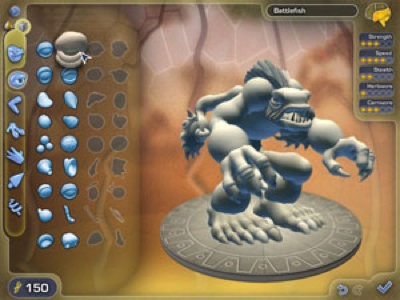
Indeed if we take the very very long billion-year view and picture the slow unfolding of complexity from the first femo seconds of the universe till now, it almost appears as if the universe is a mind assembling itself. As the undifferentiated energy at the big bang is cooled by the expanding space of the universe, it coalesces into measurable entities, and over time, the particles condense into atoms. Further expansion and cooling allows complex molecules to form, which self assemble into self-reproducing entities. With each tick of the clock, increasing complexity is added to these embryonic organisms, increasing the speed at which change and complexity are added to the whole system. As evolution evolves, it keeps piling on ways to adapt and learn until eventually the minds of animals are caught in self-awareness. This self-awareness thinks up more minds, and together a universe of minds transcends all material limits. We become one mind, the overmind, the mind of God.
Not surprisingly this modern evolutionary pantheism has its religious followers. In Christian circles, one strand is known as process theology. In over-simplified terms it describes God as a verb – as a process. God is not monumental entity infinite in all directions, but rather is changing, or perhaps (although they don’t use this word because it entails time), evolving itself. The earlier aversion to accepting a God less than infinite in all directions is overcome in part by the recent appreciation that an evolving God is superior to a static God. You tell me, which god is greater? A God incapable of improvement, or one constantly perfecting? Evolution is educating us to belatedly acknowledge the latter as the greater being – at least as far as our minds can grasp. Furthermore in process theology the inherent logical paradoxes of God are embraced as unavoidable, in somewhat the same way that Godel’s theorem reveals the inherent contradictions in any logical system as unavoidable.
Like all definitions of God, evo-pantheism contains its own absurdities. In fact, technically this perspective might be more accurately called “panentheism” which means that believers want to keep their cake and eat it too. Christian theologians hold the view that God is simultaneously both transcendent (not of the universe) but immanent (in the universe) in the person of Jesus Christ. By his own volition the unbounded God limited himself into the form of very tiny body of a man. On the other hand, Islam is one long argument against this idea of a transcendent God limiting itself to special immanence. It maintains Mohammed is not the immanence of God, and prohibits his picture in defense of this temptation. Evo-pantheism is open to straight up immanence: God is evolving itself, and that evolution is what we call the universe.
Right now there are a few circuit-riding missionaries preaching this gospel of spiritual evolution to anyone who will listen. They call it the Great Story, the story of how the universe is waking up, of how evolution is a divine force, and how we are all engaged in the expanding mind of God.
Every description of the universe and its ground of being is rife with contradictions. A world without God, a world of God, and a world which is God are all logically impossible. Pick your impossibility.
