


The Evidence of Progress


[Translations: Japanese]
No sane person can ignore the heaps of ills on this planet. The ills of the environment, of inequality, of war and poverty and ignorance, and the ills of body and soul of many billion inhabitants are inescapable. Nor can any rational person ignore the steady stream of new ills that are bred by our inventions and activities, including ills generated by our well-intentioned attempts to heal old ills. The steady destruction of good things and people seems relentless. And it is.
But the steady stream of good things is relentless as well. Who can argue with the goodness of antibiotics – even though they are over-prescribed? Electricity? Woven cloth? Paper and ink? Radio? The list of desirable things is endless. While they all have their downsides, we acknowledge the goodness of these inventions by purchasing them in bulk. And to remedy currently perceived ills, we keep creating new good things.
Some of these new solutions are often worse than the problems they were supposed to solve, but it is my observation that on average and over time, the new solutions slightly outweigh the new problems. As Rabbi Zalman Schacter-Shalomi once said, “There is more good than evil in the world — but not by much.” Unexpectedly “not much” is all that is needed when you have the power of compound interest at work – which is what culture is. The world needs to be only 1% (or even one-tenth of 1 %) better day in and day out to accumulate goodness, or what we call civilization. As long as we create 1% more than we destroy each year, we have progress. This delta is so small that it is almost imperceptible, particularly in the face of the 49% of death and destruction that is in our face. Yet this tiny, slim, and shy differential generates progress.
But is there really even 1% betterment over the long term? I think there are four pools of evidence. One is the long-term rise in longevity, education, health, and wealth of an average person. This we can measure. In general, people live longer, have access to a larger library of knowledge, and own more artifacts and choices, the more recent in history they lived. Indexes of health and wealth fluctuate within period of decades and by regions of the world, since war and strife can certainly depress well-being locally and temporarily. However the long term trajectory (and by long-term I mean over hundreds or even thousands of years) is a steady rise.
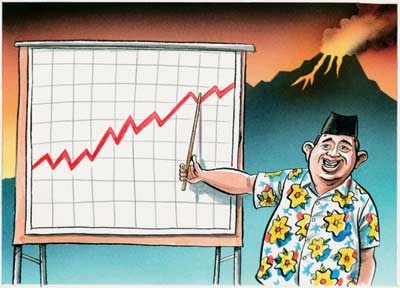
The second indicator of long-term progress is the obvious wave of technologic development we witness in our own lifetimes. Perhaps more than any other signal, this constant surge of newness daily persuades us that things improve. Devices not only get better, they get cheaper while they get better. We turn around to peer through our window into near past, and we realize they didn’t have window glass back then. The past also lacked machine-woven cloth, refrigerators, steel, photographs, or the entire warehouse of goods spilling into the aisle of our local superstore. We can trace this cornucopia back down a diminishing curve to Neolithic era. Craft from ancient times can surprises us in its sophistication, but in sheer quantity, variety, and complexity, it pales against modern inventions. The test of this is clear: we buy the new over the old. Given the choice between an old fashioned tool and a new one, people almost anywhere in the world – at any time – will grab the newer device. Either humans have consistently been dumb, choosing the inferior new, or as the critics of technology claim, they have been consistently duped by king, priest or corporation into making choices against their best interests. Or else they consistently choose what they truly value more – the newer, improved stuff. For whatever reason, humans have consistently acquired and developed the reach, variety, and power of technology. The rise of technology is steady, though like these other curves, its most abrupt rise has been in the last 200 years.
The third prong of evidence for small, steady long-term advance is in the moral sphere. Here metrics for measurement are few, and disagreement about the facts greater. Over time our laws, mores, and ethics has slowly expanded the sphere of human empathy. Roughly, humans originally identified their self primarily via their family. The family clan was “us.” This declaration cast anyone outside of that intimacy as “other.” We had – and still have — different rules of behavior for those inside the circle of “us” and for those outside. Gradually the circle of “us” enlarged from inside the family clan to inside the tribe, and then from tribe to nation. We are currently in an unfinished expansion beyond nation and maybe even race, and are now crossing the species boundary. Evidence that this is happening would be laws prohibiting discrimination or favoritism for humans over say, animals, or even robots – or conversely the elevation of the rights of animals and robots species (like say an AI) to equal status as humans. If the golden rule of morality and ethics is to “do unto others what you’d like do to yourself” then we are constantly expanding our notion of “others.” Although I have not seen a long timeline of this expanding circle of empathy (email me if you know of one) I suspect a catalog of laws over time would show this trend.
The fourth set of data does not prove the reality of progress but gives it a strong hint. The data is the hundreds of million of species in life’s 4 billion year journey from small extremely simple organisms, to large extremely complex and social animals. The notion that evolution has any trajectory at all is so controversial in science that it may be useless to prove anything else. Yet, everyone reading these words has an intuitive grasp of this long term trend – even though it is not clear how to measure it scientifically, or how to explain it if it does exist. The progressive trend in evolution may be illusionary as some theorists claim, but if it were true, this background “progress” makes it easy to perceive progress in human affairs because our culture then becomes an extension of work begun 4 billion years earlier. In this view the progress in human health, material wealth, technology and morality is the latest chapter in a greater story of ongoing evolution.
It would be nice if we had other longitudinal measurements that could quantify softer concepts of “progress” such as happiness and contentment, or spiritual enlightenment – but we don’t have any reliable long-term measurements of those yet.
Any metric of progress must also, in the end, account for the misery I began with. From all the increasing good of the world must be subtracted the increasing rottenness of the world. And, as I say clearly, it is increasing. Only by this ratio can we declare one greater than the other.
