

Supreme Low Tech
Clothes Dryer Chicken Coop
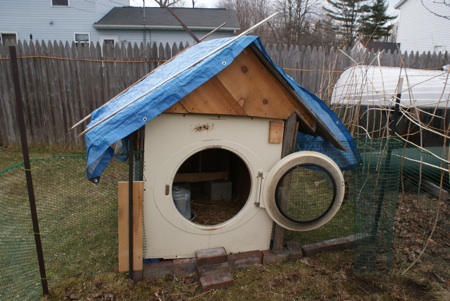
Here’s one way to keep your chickens dry. Pete Betchik of Madison on the Lake, Ohio built a chicken shelter using found materials. “The frame is made from wooden pallets, the roof also is pallet wood. The sides are old steel shelves. The inside is lined with old pizza boxes, the nest box was once used to ship fresh fish to market, and the front door was an industrial clothes dryer front.”
Outdoor Barbers in India
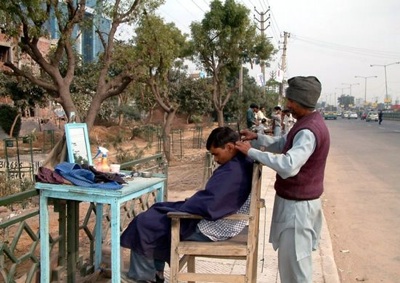
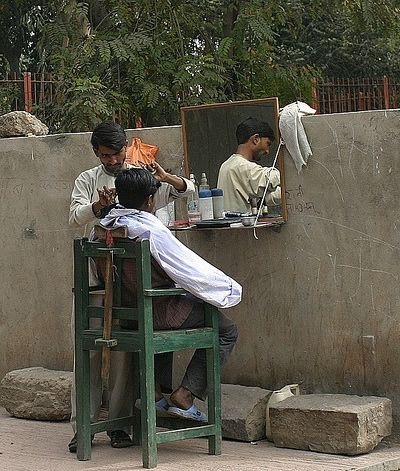
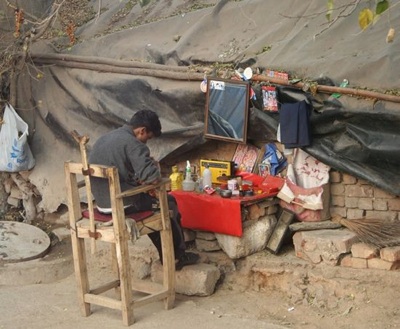
Streetside barbers are quite common in India, at least in the smaller towns. A hair cut can certainly wait for good weather. The tools are very portable. Note the cool adjustable head rest on the chairs. This set of pictures comes from Dark Roasted Blend.
Milk-Crate Crab Pots
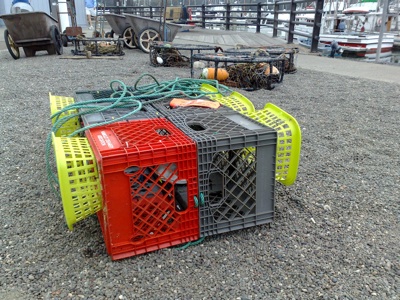
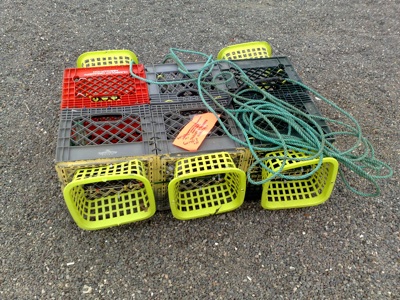
Cool Tool Editor Steven Leckart submitted this street use device the other day.
Spotted this homemade crab catcher in Bodega Bay, CA. A few milk crates, a couple laundry baskets and some rope!
I’m not sure how it works. I think the baskets serve as flexible one-way portals to reach in to remove the crabs stuck in the crate. The crabs probably enter the one crate without a basket and travel to the other 5 via a connecting passage they can’t re-find, and so get stuck.
Pop-Up Market in Bangkok
Street Use’s Ambassador-at-Large, Todd Lapin, filed this report about street use in Thailand. The contents of this short video clip entitled Train Runs Through Bangkok Market is very hard to describe, but I can assure you it is worth watching. What is most surprising is the speed of recovery. Mr. Lappin writes:
Watch this one through to the end… it’s a pop-up market on a train track in Thailand. Amazing.
Mule Bookmobile
Mobile libraries carried on the backs of animals are not new. We covered camelbookmobiles. Here is one using mules in Venezuela as reported on the BBC .
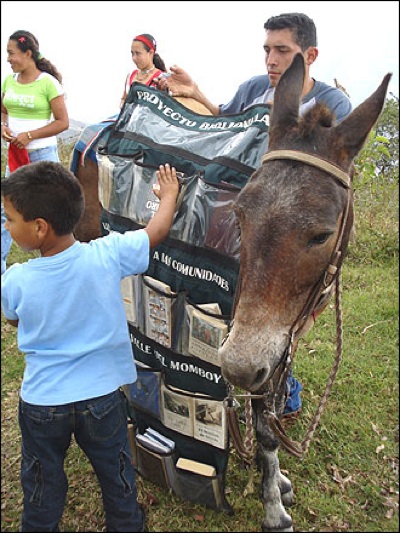
They are known as bibliomulas (book mules) and they are helping to spread the benefits of reading to people who are isolated from much of the world around them.
The idea of loading mules with books and taking them into the mountain villages was started by the University of Momboy, a small institution that prides itself on its community-based initiatives and on doing far more than universities in Venezuela are required to do by law. Anyone who was not out working the fields – tending the celery that is the main crop here – was waiting for our arrival. The 23 children at the little school were very excited. “Bibilomu-u-u-u-las,” they shouted as the bags of books were unstrapped. They dived in eagerly, keen to grab the best titles and within minutes were being read to by Christina and Juana, two of the project leaders.
As the project grows, it is using the latest technology. Somehow there is already a limited mobile phone signal here, so the organisers are taking advantage of that and equipping the mules with laptops and projectors. The book mules are becoming cyber mules and cine mules. “We want to install wireless modems under the banana plants so the villagers can use the internet,” says Robert Ramirez, the co-ordinator of the university’s Network of Enterprising Rural Schools. “Imagine if people in the poor towns in the valley can e-mail saying how many tomatoes they’ll need next week, or how much celery. The farmers can reply telling them how much they can produce. It’s blending localisation and globalisation.”
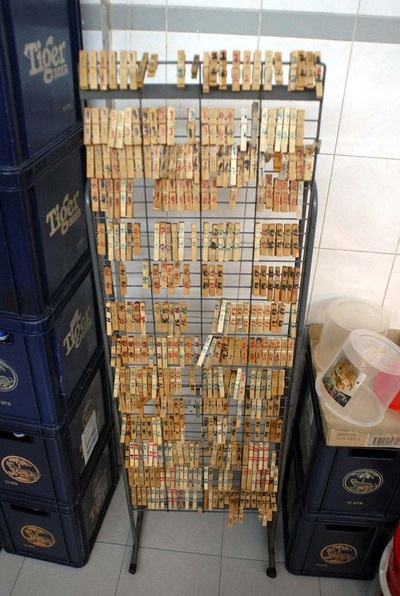
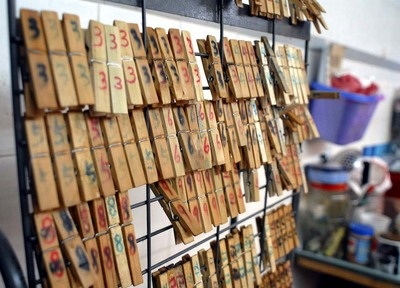
ClothesPin Tracking System
Tump Line/Human Delivery of Heavy Goods
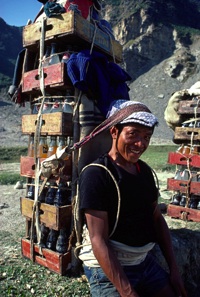
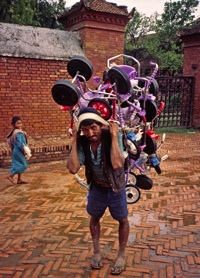
For thousands of years humans have transported heavy goods on their backs using a head held tump line. The loads a fit porter can carry are astonishing. Some can manage 100 kilos (220 pounds), which considering their own body size is incredible. These guys in Nepal can manage both heavy and awkward loads with ingenuity. Keep in mind that the coke bottles below are heavy glass (made to be washed and re-used many times), and are filled. Just one wooden tray would be a load for most of us. I’ve seen these porters pack in refridgerators, heavy lumber, furniture, and mother-in-laws. These photos are by Jeff Greenwald.
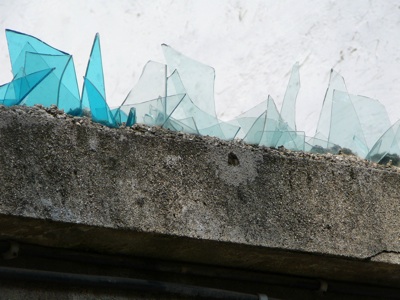
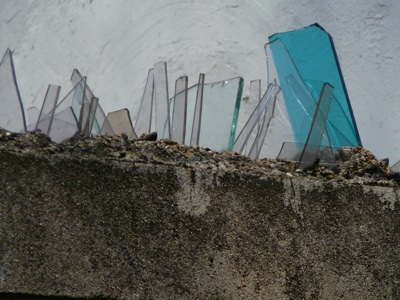
Glass Shard Home-Protection Device
Throughout Asia in my travels I found glass shards used to line the top of walls to form a cheap alternative to barbed wire to keep introders out. Glass bottles and window glass are common sources. An entire wall will have this along the ridge, perhaps on several levels. This method was very common several decades ago, but has been eclipsed by strips of metal pikes in many places as they develop. It looks neater than broken glass but I doubt it is more effective. This stuff looks very scary.
How To Move Live Chickens
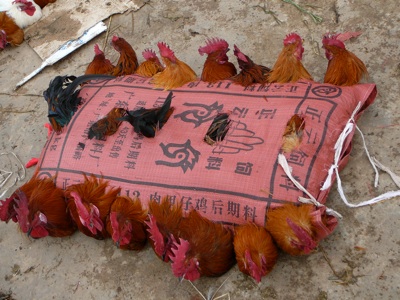
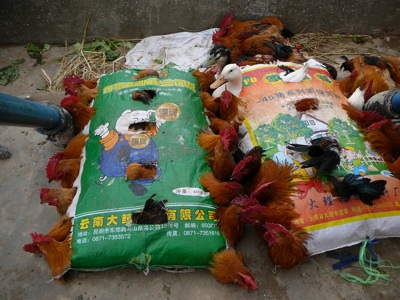
I saw a couple of this very clever transport devices for moving a dozen or so live chickens and roosters (near Dali, Yunnan, China). You get some large sacks, poke some holes in the top, weave the birds into each so each head is sticking out, and then you can throw the entire sack on a bicycle or truck. The birds were quiet and seemed to like the swaddling.
Cobbler’s Machine in Yunnan
Coming up are a bunch of examples of street use technology I saw on my recent trip to Yunnan, China.
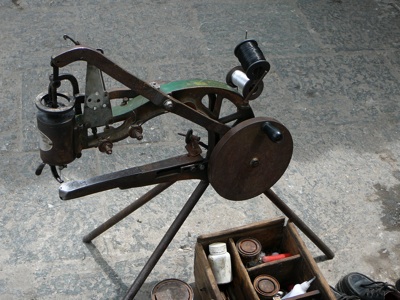
This one is a very nice cobbler’s sewing machine used by cobblers to fix shoes on the street. It’s hand cranked, uses heavy canvas thread and has a very long neck allowing you to shove the shoe onto the anvil throat. Very nice machine.