Street Use

Recyle Surprises

Cuban Motor Bike

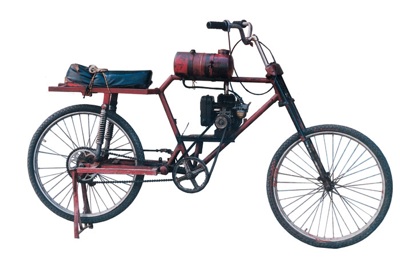
What an elegant design. A wonderfully sleek bicycle is given a motor  and gas tank in Cuba to make a motor bike.
Cubanbike

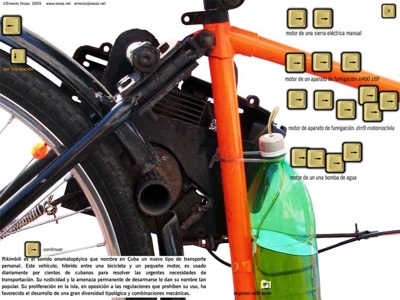
A close up view with annotations shows a different home-made motor bike in Cuba, collected by Ernesto Oroza. The detail of the soda bottle gas tank is wonderful. This design uses the motor's rotor to directly power the tire.

Res-Dt1

Posted on January 24, 2008 at 5:58 PM |


Re-Invented Objects

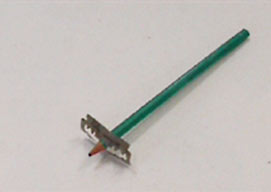
That's what Cuban artist and researcher Ernesto Oroza calls these "inventions of neccessity." For eight years he has collected everyday objects crafted from discards, and re-purposed technology found in Cuba. Where purchased goods are in short supply, people fix their own. He's shown these re-invented objects in several exhibitions. For instance, here is a razor made with the blade and a pencil.
5-1

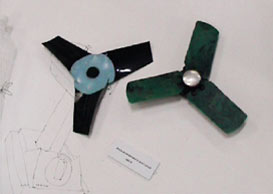
Or a fan blade repaired with a piece of vinyl record.
3-1 

There are others. Check out this set of chairs constructed from broken plastic chairs given a new rebar skeleton. 
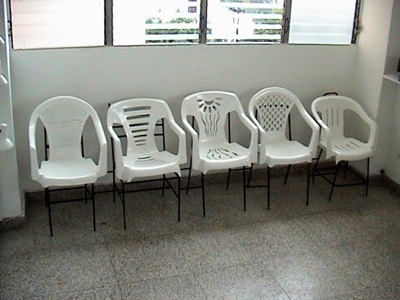
On4

Many of Oroza's objects were photographed and collected into a booklet called No Waste, which was publshed by Pentagram and is now out of print (available in a handful of libraries).

Posted on January 24, 2008 at 5:33 PM |


Plastic Bottle Chandeliers

This is all I know: English-Russia says "These days in some parks of St. Petersburg you can meet chandeliers made of used plastic bottles.."

Posted on September 18, 2007 at 12:55 PM |


Cardboard Bridge and Paper Shelters


Paperbridge2

A bridge made of cardboard tubes. (First noticed on here.) It's more of an artpiece than utiltarian structure. Think rain and snow.

Paperbridge1


However the architect, Shigeru Ban, has built many utilitarian structures using low tech cardboard tubes. Protected inside an outer membrane, the tubes keep their strength and preform magnificently. For example,
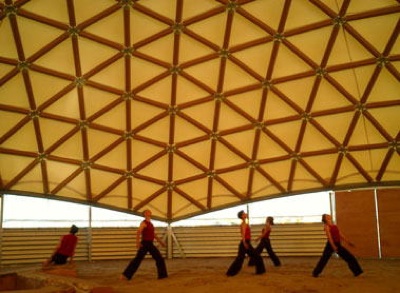
Amspapertheater1

This is a paper theater built in Amsterdam, Holland in 2003.


Pavillion Int1

This one is a Japanese pavilion built for an Expo in Hannover in 2000.

Posted on July 31, 2007 at 7:42 PM |


Bubble Wrap Lace Curtains

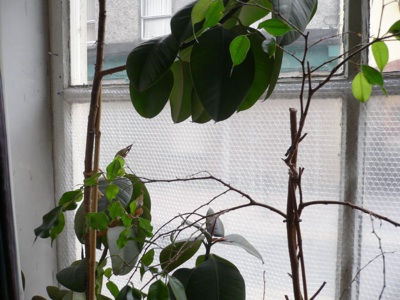
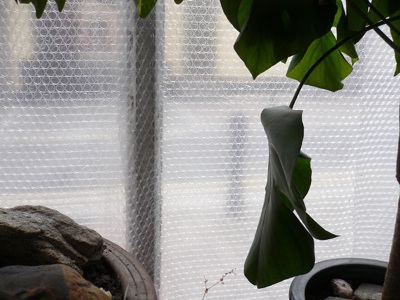
Recycled hi-tech lace curtains. "Seen a few days ago in Cork, Ireland: a sensible use for all that bubble-wrap." Submitted by Tom Raworth.

Bubblelace

Bublelace2

Posted on July 16, 2007 at 5:27 PM |


Baby Carriage Mobile Vendor

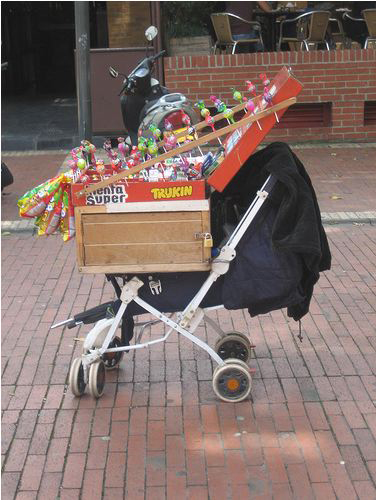
Reader David Sarpal writes: "My sister is visiting Colombia right now and she happened upon a street vendor who has arrived at an ingenious re-use of a baby carriage as a street vendor."

Carriagevendor-1

Posted on June 22, 2007 at 7:42 PM |


Foam Hard Hat

This foam cushion tied to the worker's head in India is reputedly a hard hat substitute. The picture is from this humor blog so I don't know its veracity. It is much more likely a piece of padding to hauling iron pipes since the common way to transport heavy things in india is using the head/spine for support.
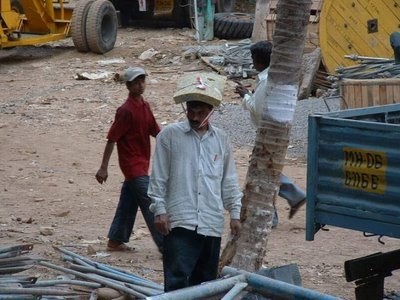
Foamhat

Posted on June 12, 2007 at 2:57 PM |


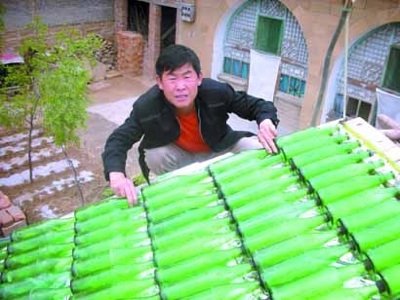
Beer Bottle Solar Hot Water Heater


Beerbottle Heater

According to the Internets, this Chinese farmer is getting hot shower water from this roof of beer bottles and plastic tubing. This version of the story was seen on Ananova (sent in by reader Arnaud Betremieux). The account says "I invented this for my mother. I wanted her to shower comfortably," says Ma Yanjun, of Qiqiao village, Shaanxi province.Ma's invention features 66 beer bottles attached to a board. The bottles are connected to each other [with plastic tubing] so that water flows through them.Sunlight heats the water as is passes slowly through the bottles before flowing into the bathroom as hot water, reports China Economy Network. Ma says it provides enough hot water for all three members of his family to have a shower every day.And more than 10 families in the village have already followed suit and installed their own versions of Ma's invention."


Posted on June 6, 2007 at 4:17 PM |


Tires Recycled Into Farm Tools

Chinese farms are the ultimate in thriftiness. Old tires are recycled into all kinds of useful gear. Here is a horse feed tub made from a tire turned inside out. I saw these everywhere.
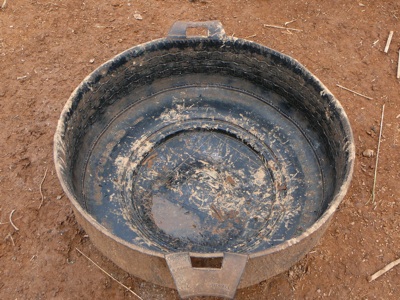

Tiretray

And here is a water bucket for dropping into a well sewn from old tires.
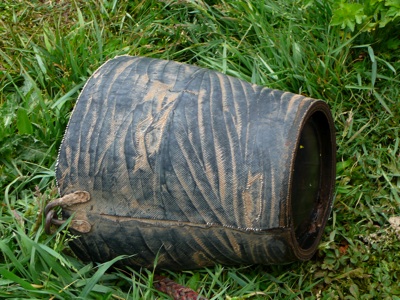
Tirebucket

Posted on May 13, 2007 at 6:23 AM |


Styrofoam Peanuts Boats in China

These fishing rafts are made from chunks and pieces of styrofoam bundled into nets to form pontoons. The pieces are bigger than foam peanuts, but not much bigger. The rafts are about 12-15 feet in length. Their deck is made of bamboo, covered with mesh. Here they are stored against a wall.
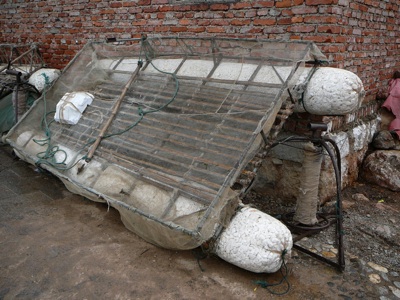
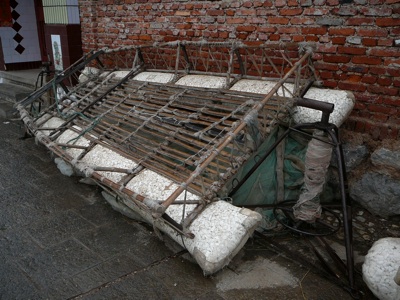
Styroboat1-1


Styroboat2-1

Posted on May 8, 2007 at 4:19 PM |


Hammering Shells Into Espresso Machines

From the BBC News:

In his workshop in Mekele, just 120 km from Ethiopia's border with Eritrea, Azmeraw Zeleke is turning burnt-out shells into cylinders used in coffee machines. Most of the shells are left over from the 1998-2000 war between the two countries. "The shells were dropped in Ethiopia during the war with Eritrea," Mr Azmeraw says. He uses old mortar shells, which stand about one metre high, to make his coffee machines. Azmeraw Zeleke begins with a burnt-out shell. He then transforms the cylinder to channel the water, coffee and milk.

Shellmachine203

Posted on November 1, 2006 at 6:17 PM |


Recycling Vehicles for Recycling

An independent documentary called "Pretty Dyana" captures the story of how Roma (gypsies) in Belgrade find old Citroen Dyana cars and modify them into mini-trucks that haul recycled cardboard.

Dyana2

They do this primarily by stripping the cars of everything except their motors, chaise, and steering wheel. Everything else goes. The Dyana is particularly suited for this, the Roma say, because the frame remains intact after you take everything else away. So they can easily add a bin on top of the back. And presto, now they have a cardboard hauling cart.

Dyana1

And because it doesn't look like a car anymore, it fits into some grey zone with the police. Not that they don't get fined for driving it around. All this and more about how the Roma survive in Belgrade is presented in this nice short documentary.

Dyana3

Note the plastic bottle gas tank.

Posted on October 7, 2006 at 4:20 AM |


Dark Days Shelters in Subways

The urban legend about cities of homeless living underground in the neglected corridors of New York City's subways was partly true. For about a decade in the 80s, a colony of extremely resourceful hobos built shelters in an underground section of Penn-Central railroad beneath New York. They had stolen electricity and a few even had cold running water; many worked outside as can collectors or street vendors, and rifled garbage for uneaten restaurant food. The routines of these underground inhabitants, and their squabbles with each other, were recorded in a pretty good documentary called Dark Days available from Amazon or Netflix. The film records their fight with the city to keep their plywood homes, filled with TVs, beds, and mini--kitchens. These shelters were quite sophisticated and great examples of street use of scrounged materials.

Dark Days1 Copy

Darkdays3 Copy

Posted on September 11, 2006 at 9:17 PM |


Jazz on Bones: X-Ray Sound Recordings

In the USSR and Eastern Europe in the 1950s underground night spots would play music pirated from the west. The only media they had were recorders etched into discarded X-ray film. I've long sought some images. Researcher Camille Cloutier pointed me to these, collected and posted by József Hajdú. Here's what he says about them:

During the late 1930s and early 1940s the prevalent sound recording apparatus was the wax disk cutter. As a consequence of the lack of materials in the war-time economy, some inventive sound hunters made their own experiments with new materials within their reach.

X-Ray1

I do not know the name of the inventor who first utilized discarded medical X-ray film as the base material for new record discs; however, the method became so widespread in Hungary that not only amateurs, but the Hungarian Radio made sound recordings on such recycled X-ray films.

X-Ray2

I felt that those X-ray record albums relate to our contemporary lives in many ways, especially when considering such terms as 'multimedia' or 'recycling'. I copied the X-ray films with their engraved sound-grooves on photosensitive paper and made enlargements of certain details.

X-Ray3

I was quite lucky to find a considerable amount of similar sound records in private collections. These are also interesting from the visual aspect. By utilizing different photographic processes, I created from them pictures meant to be exhibited in galleries.

In an online paper called The Historical Political Development of Soviet Rock Music, Trey Drake, at the University of California, Santa Cruz, offers further historical perspective on this street use of technology:

Owing to the lack of recordings of Western music available in the USSR, people had to rely on records coming through Eastern Europe, where controls on records were less strict, or on the tiny influx of records from beyond the iron curtain. Such restrictions meant the number of recordings would remain small and precious. But enterprising young people with technical skills learned to duplicate records with a converted phonograph that would "press" a record using a very unusual material for the purpose; discarded x-ray plates. This material was both plentiful and cheap, and millions of duplications of Western and Soviet groups were made and distributed by an underground roentgenizdat, or x-ray press, which is akin to the samizdat that was the notorious tradition of self-publication among banned writers in the USSR. According to rock historian Troitsky, the one-sided x-ray disks costed about one to one and a half rubles each on the black market, and lasted only a few months, as opposed to around five rubles for a two-sided vinyl disk. By the late 50's, the officials knew about the roentgenizdat, and made it illegal in 1958. Officials took action to break up the largest ring in 1959, sending the leaders to prison, beginning an orginization by the Komsomol of "music patrols" that later undertook to curtail illegal music activity all over the country.

From Artemy Troitsky's Back in the USSR: The True Story of Rock in Russia (1987, Omnibus Press):

The demand for pop and jazz recordings at the end of the fifties and beginning of the sixties was already enormous, while records and tape recorders were in catastrophically short supply. This led to the birth of a legendary phenomenon -- the memorable records 'on ribs.' I myself saw several archive specimens.

These were actual X-ray plates -- chest cavities, spinal cords, broken bones -- rounded at the edges with scissors, with a small hole in the centre and grooves that were barely visible on the surface. Such an extravagant choice of raw material for these 'flexidiscs' is easily explained: X-ray plates were the cheapest and most readily available source of necessary plastic. People bought them by the hundreds from hospitals and clinics for kopeks, after which grooves were cut with the help of special machines (made, they say, from old phonographs by skilled conspiratorial hands).

The 'ribs' were marketed, naturally, under the table. The quality was awful, but the price was low -- a rouble or rouble and a half. Often these records held surprises for the buyer. Let's say, a few seconds of American rock'n'roll, then a mocking voice in Russian asking: "So, thought you'd take a listen to the latest sounds, eh?", followed by a few choice epithets addressed to fans of stylish rhythms, then silence.

Both the shtatniki and beatnicki were few in number and their heyday was brief. The imitative, decorative style and American mannerisms they cultivated were way out of place in the early sixties, when Soviet youth was full of euphoric enthusiasm over the fliht of Yuri Gagarin, the Cuban revolution, and the programme proclaimed by Khruschev at the 22nd Party Congress wherein Communism would be achieved within the next two decades. Decadence and disaffection were completely out of style.

I'd love to find out more about this street use. Pointers welcomed.

Posted on August 28, 2006 at 7:29 PM |


Beach Sandal Curtain

A large part of street use is recycling one product into another product. Often the new product is lightyears away from the notion of the designers of the original product. In Nairobi, Paul Merrill found this bead curtain made up of plugs from the soft foam in the soles of flip-flops. Flip-flop sandals are the standard issue shoe in much of Africa. Since they are so lightweight and wear out fast, they are constantly being lost or discarded. They wash up on the beach in large numbers. Here's Paul's collection from one morning's walk:

Sandals

But someone figured out they could be harvested to make a colorful bead curtain for only the cost of string.

Sandal-Beads

Posted on August 25, 2006 at 7:21 PM |


Rice Sack Sails

Sails sewn from used rice sacks found on a boat sailing up the Niger in Mail between Mopti and Timbuktu. Photo by Crazyrabbit.

Ricesacksails

Posted on August 24, 2006 at 9:41 PM |