

Bikes/Trikes
Priti Baiks
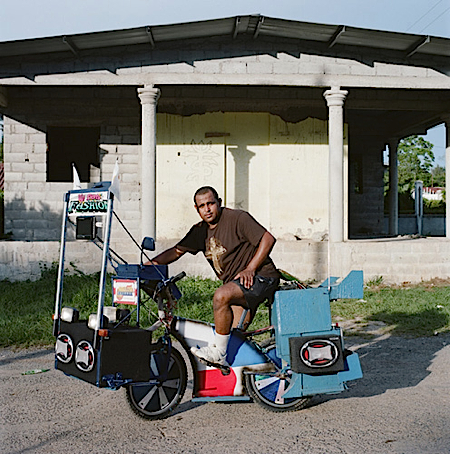
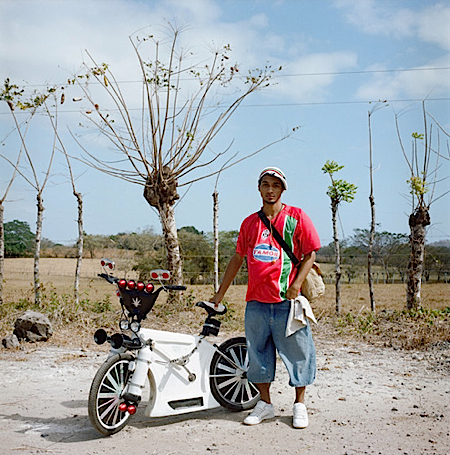 Street bikes from Panama. They are called priti baiks. The term priti means both “pretty” and also ingenious, or striking.
The photographs are taken by Jose Castrellon, who spent time hanging around this subculture of hot rodders. Except these guys are too poor to own a car so they soup up their bikes. Note the air horns, normally found on trucks.

His web site says, “Priti Baiks is a series of portraits of men who display tons of creative ingenuity and dedicated a good amount of their meager resources to decorate and equip their humble bicycles.”
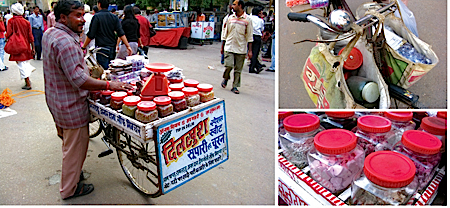
Velowalas: Bikes for Business
In much of the developing world, bike technology is significant mobile technology. Bikes are transportation, and offices and shops and stores. The folks at Velowala — velo for “moving” as in velocity and wala for “man” as in the Hindi — collect examples of people using bicycle technology on the streets of India. This wala sells churan, tangy snacks and digestive pills. Many more examples here.
Wooden Pedal Bicycle
Unlike the wooden bikes I posted about previously in Street Use, this wooden bike is unusual because it employs a pedal. It is made by the Cameroon wood sculptor Jules Bassong who normally makes effagies out of wood. He is riding his wooden bike on a tour of Cameroon. As reported by Walter Nana in Africa News:
“There is the break mechanism, if not I wouldn’t have been able to go down the steep slopes found along the Dschang road in the West Province of Cameroon,” Bassong noted.
Monster Segway
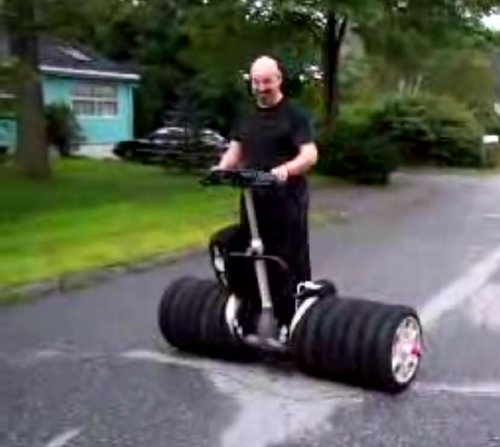
When I saw a photo of this I thought it must have been photoshopped. But here’s a video:
Guns on Segways

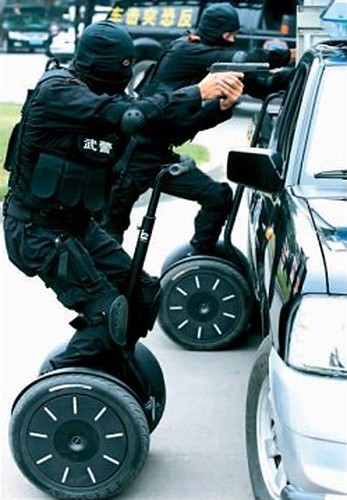
Anti-terrorist demonstration in Jinan, China. (BigPicture)
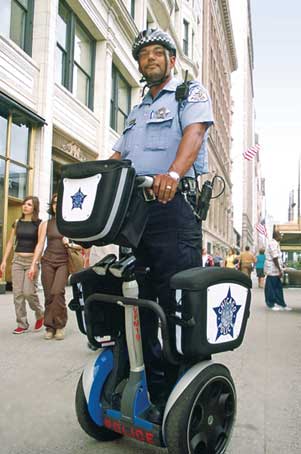
When the lovable Segway was unveiled, who would have guessed that its chief street use would be a platform for cops and soldiers. Here’s Paul Saffo on the phenomenon:
It is always fascinating to see once-cuddly technologies turn dark. Consider the Segway, that sweetly geeky gizmo that was supposed to drive autos out of our cities and save the planet. Well, Segways have arrived, but instead of transporting happy auto-eschewing citizens on their daily errands, the Segway has become the personal chariot of cops adopting the gyro-stabilized two-wheeler for patrol and crowd control work. Seqway-riding security dudes are turning up at airports and convention centers, and now are finding their way into the security mix at lock-down events like the G8 Summit and the upcoming Beijing Olympics. No cuddly here, just pure menace, like the rent-a-samurai in full battle rattle riding a nobby-tired industrial Segway at the this month’s G8 summit (pic below). Watching the transformation is like discovering that one’s favorite teddy bear has fangs and a taste for human flesh. Before long, I’ll bet we’ll see squads of Segway cops in full riot gear running down fleeing demonstrators at some future anti-globalization demonstration.
Some of the pics Saffo has collected and captioned:
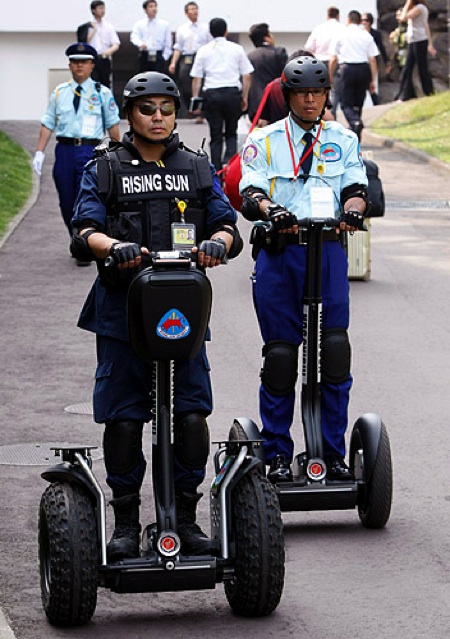
The G8’s rent-a-samurai and his timid sidekick.
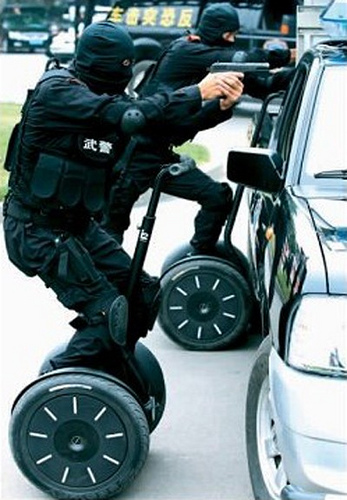
I wonder how the Segway handles recoil? (Flickr)

The Ventura county sheriff’s gyro-bomb squad. (Segway)
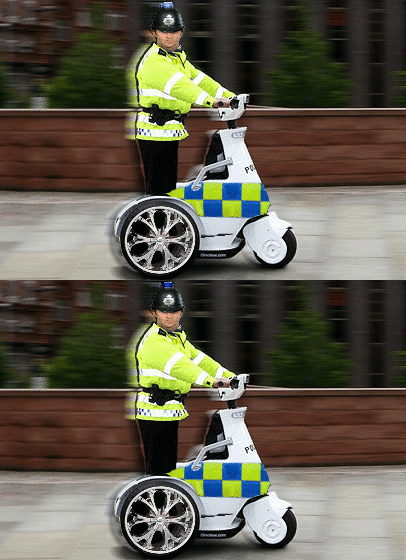
A Segway with training wheels for the vertically challenged.
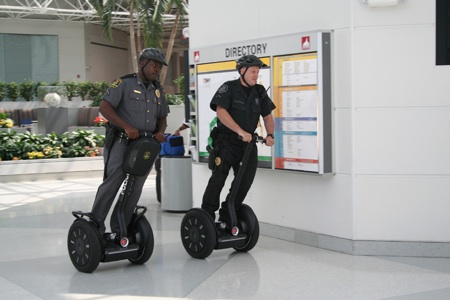
Last one to the Dunkin’ Donuts is a rotten egg!
And a few others:
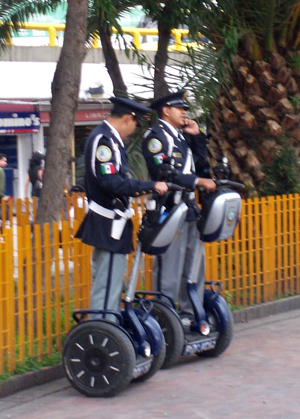
In Mexico City (Jason)
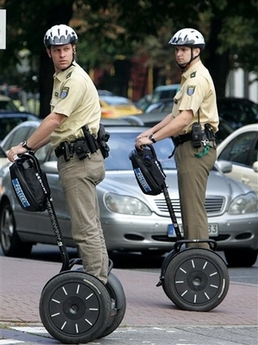
You need a good belt. (Wilisms)
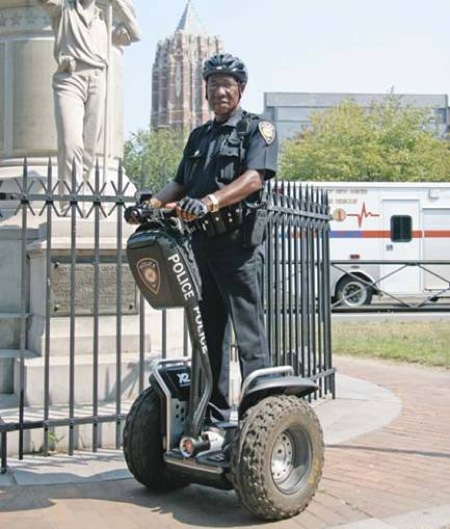
Nice off-road tires at Yale University (Yale)
Wooden Bikes
Wooden bicycles can be found all over the world. These handmade bikes are often larger-scale scooters that you sit on. Made with whatever wood can be found, they use small wooden home-made wheels covered with discarded rubber rims. Forward movement depends on the rider pushing with their feet.
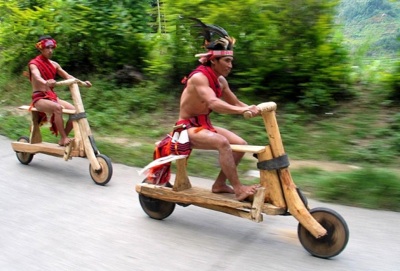
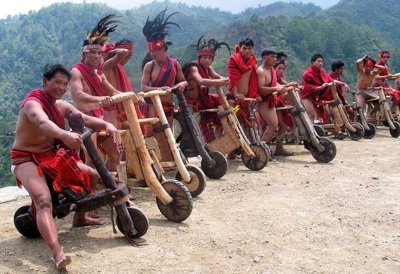
These wooden bicycles are ridden in the Banaue region of the Philippines. During an annual festival celebrating the culture of the regional tribes, wooden bikes are raced by participants in native costume. Notice the cool foot-activated brakes. These photos are from the Flickr pool of Harry Palangchao.
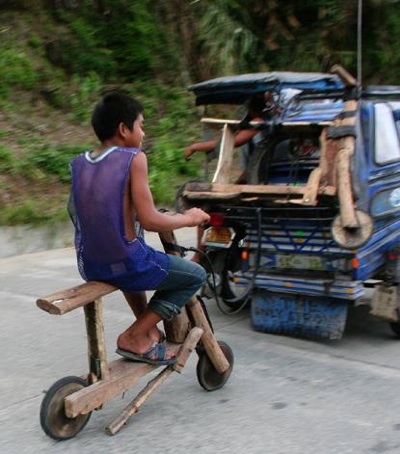
This kid bike is also found in the Philippines. This one too has a foot-actuated drag brake.
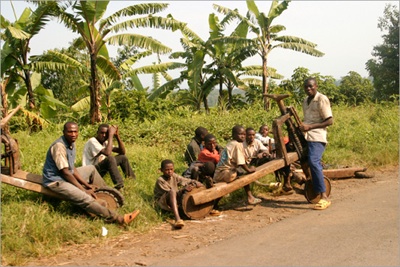

The ones above are found in Burundi and were taken by Will Okun. These wooden bike scooters are used to haul cargo. Pushed up hill and then ridden down.
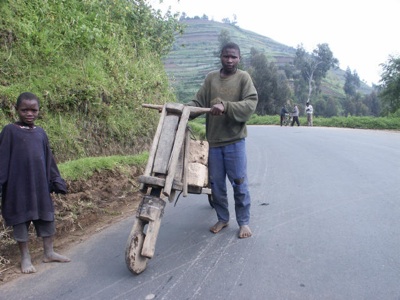
Same idea in Ruhengeri, Rwanda. From Peter Strong at Camelworld.
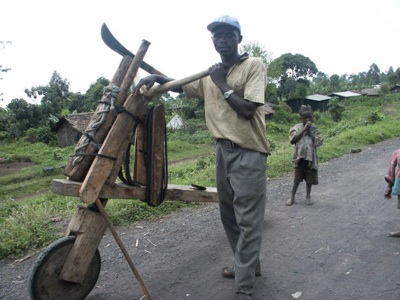
Wooden bike-truck in Goma, Republic of Congo.
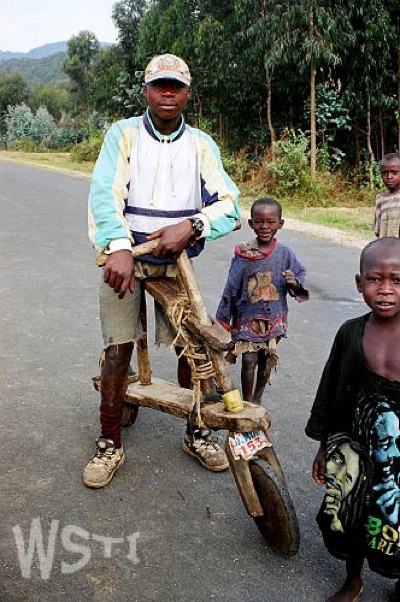
This one was found in Gikongoro, Rwanda and photographed by Louise Batalla-Duran for Wandering Spirit Travel Images.
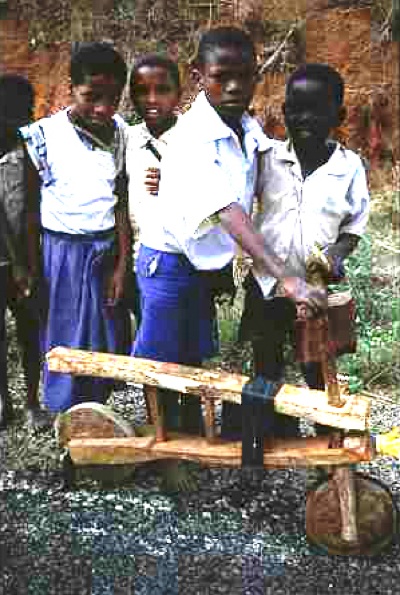
Kids made their own bike in Tanzania. Note the yellow plastic “headlight.” From Wooden Bicycles in East Africa.
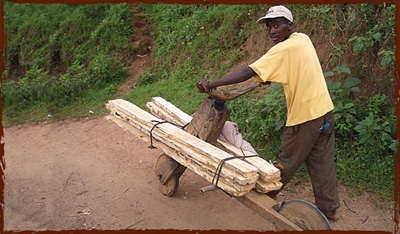
In Rwanda this farmer uses his wooden bike to haul lumber. Turns out there is a wonderful non-profit set up to help spread the technology and use of simple load-bearing bikes. The Coffee Bike Project will donate rugged metal bikes to coffee farmers in Rwanda to aid them in getting their beans to market.
Multi-Rider Bicycle Bus
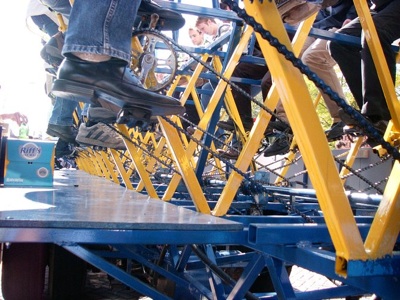
The students at Eindhoven University of Technology in the Netherlands created a 2.5 metric ton bike bus that has 32 seats. Each rider can pedal. From S. Fridqvist.
Layers of Time
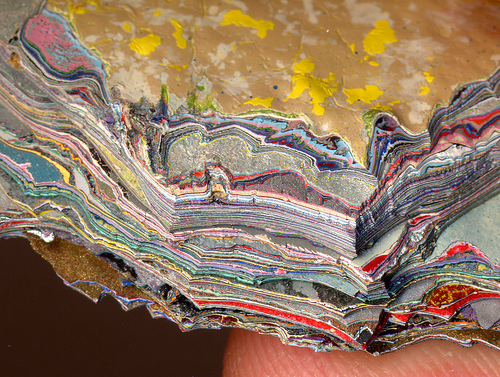
I found this on Otherthings Flickr page. It a multilayered paint chip taken from a public mural wall that was recently demolished.
This is an extreme closeup scan (2400 dpi) of a paint chip retrieved from the ruins of Belmont Art Park by Amy McKenzie earlier this year. The fragment is about 1cm thick, and appears to consist of about 150-200 layers of paint. (For a sense of scale, note the ridges of my fingerprint in the lower right.) This should give you an idea of the staggering number of pieces painted in this spot over the decades. The park used to be surrounded by one long wall covered with artwork, but that wall was illegally demolished by real estate developers earlier this year.
Motor Unicycle and Monowheels
I don’t know much about them, other than these custom bikes look pretty cool. Found here and here.
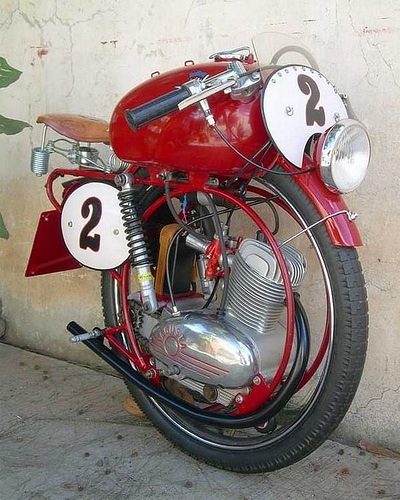
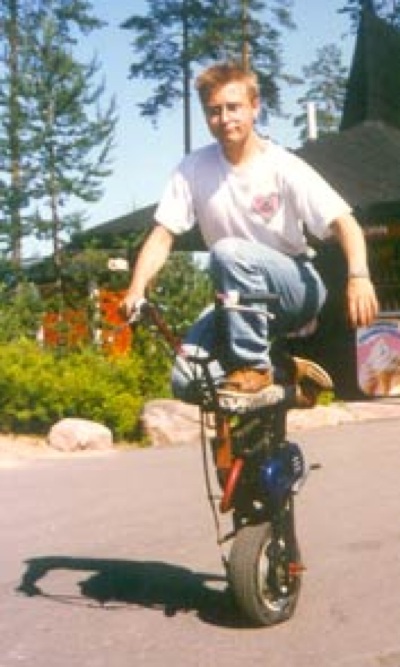
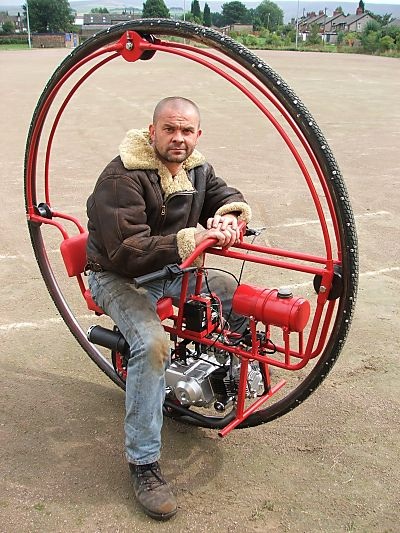
This last one is properly called a Monowheel. It was built by David Southall. He says:
The wheel itself is a 5 foot diameter hoop of 2 inch tube. It was a bit beyond what I can do so was made for me by The Angle Ring Company . The pulleys on which it runs were custom-made by AED rollers. Everything else was cut, bent and welded in my shed! The engine is a 90cc four stroke from a Chinese quad bike. I was initially going to use the engine/wheel unit from a 50cc scooter but the wheel was too big and the two stroke power delivery can be a bit peaky! The quad engine is fully auto with electric start. The friction drive wheel is the rear wheel from a mini moto. It has a cable-operated disc brake which must be used with extreme caution. The tyre on the outer wheel is three 24 inch mountain bike tyres cut up and pop riveted on.
There are plenty more from a whole web site devoted to monowheels.
Great Minds Think Alike: the Bicycle Lawnmower!
Over at Treehugger, Warren McLaren has rounded up all the examples of this ingenious, indigenous, “labor-saving” invention that he could find.
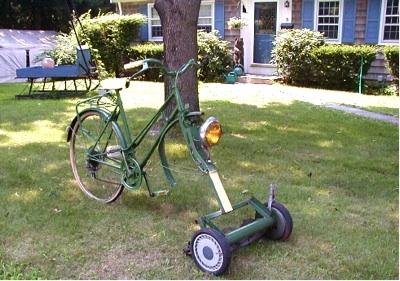
It is apparent that thousands of people who have to mow the lawn decided there must be an easier way and had exactly the same idea: Why not hook the mower to a bike? And so the bikemower is born in a thousand of garages around the country. Judging from the pictures, they are still in the garages. Most of the pics rounded up by McLaren look as if they were taken at garage sales. I have my doubts that the bike mower is very useful, or easier to use than pushing on your feet.
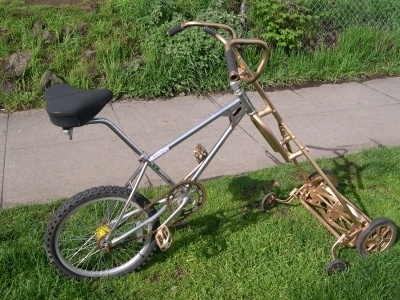
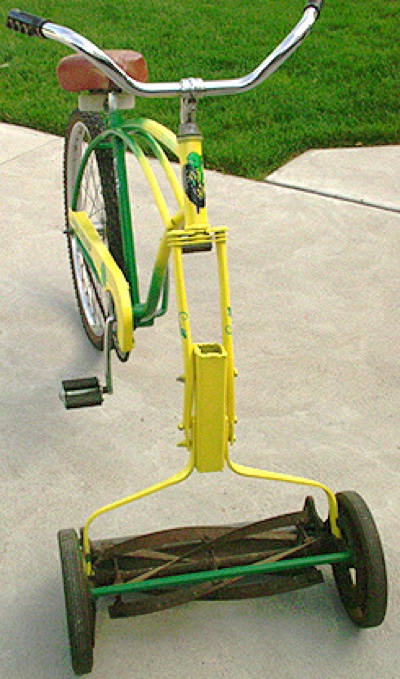
For the full set see the Treehuger post above.