Play
String Saver

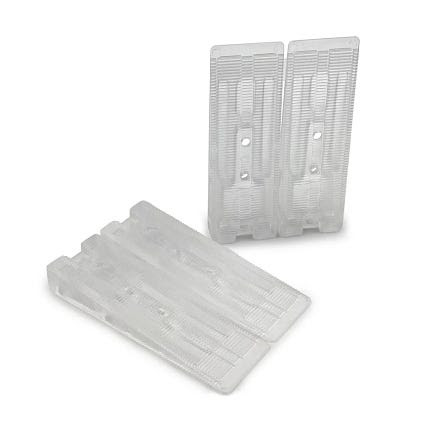
This Band-Aid for tennis rackets saved the day for me during a tournament when I was playing well with a favorite racket, but the strings were frayed and close to breaking. It’s a little tool that lifts the string and inserts and leaves behind a small piece of plastic that sits right at the intersection where the two strings cross, preventing them from sawing across one another and breaking. Extra plastic inserts are stored in the handle.

If you carry it in your tennis bag you can use it to extend the life of your strings, though obviously not indefinitely. It’s essential if you have only one racket and you don’t want to sit any games out.
Available from Amazon
Red Ryder

By far the best air rifle for a kid. There is nothing to break and it has a 650 BB capacity. You can fill it once and wander around in the woods all afternoon. All of my nieces and nephews get one when I think they are old enough.
-- K.G.
I recommend the Daisy Red Ryder. They're inexpensive and don't break.
-- Dale C Snyder
Every child should have one.
-- Dave Culp
Available from Amazon
Manufactured by Daisy Outdoor Products
Geocaching Tools

Take a geo-location system, add an Internet directory of hiding spots, and voila! A 21st century treasure hunt! One T-shirt slogan calls it "using multi-billion dollar military hardware to find Tupperware in the woods." Geocaching began in 2000 when an Oregonian stashed a container in the woods, posted its latitude and longitude on the Internet, and other GPS users went out and found it. Now there are nearly 900,000 geocaches hidden worldwide, and hundreds of thousands of cachers, ranging from the curious to fanatics. The hobby is a fun additional activity for those roaming the outdoors on foot, bike, 4-wheeler or horse. There are at least as many urban caches as park hides, so it's also become a hidden virtual layer to the cityscape, unsuspected by passing muggles who are not into the game. And it's a great family activity - kids love 'treasure hunting' and trading for the toys and trinkets found in many caches. Geocaching is also an open game, extendable (within limits) by its players to add things like gnarly logic puzzles that must be solved to reveal a cache location, or objects whose worldwide movements among caches are tracked online.
Geocaching.com
There are a few other geocache directory sites, but Geocaching.com is the original and by far the largest. Free to register and play the game; $30/yr for paid membership enables more powerful search and personalization options.
Find a geocache
The game can be played with any geo-location technology. Some urban cachers rely solely on Google Maps, printing out aerial photos of hide locations. Entry-level consumer GPS units or geo-location add-ons for smart phones are available in the $100 price range. Those who become serious about the hobby will want a GPS unit with these qualities:
* Ability to keep a satellite lock in poor signal conditions -- from urban canyons to redwood canyons
* Rock solid firmware -- there's nothing worse than having to reboot the unit in the middle of a hunt.
* Good ergonomics and user interface
* Durability -- tough enough to take a beating in the field
* Easy computer interface -- for downloading and uploading cache coordinates, logs and descriptions

Although they're not the latest products in the company's line, the Garmin 60Cx and 60CSx are the workhorse GPS receivers of hard core geocachers. (The only difference between the two models is a compass and altimeter independent of the global positioning system featured on the 60 csx.) These models score on all the points above, coming short only on the computer interface, as they don't mount as a drive on your computer desktop. However, they have USB interfaces and are well-supported by paperless caching applications on both the Windows and OS X platforms.
Hide a geocache
After finding a few dozen geocaches, most players will think of a nearby place that needs a cache and want to hide their own. There are some common-sense rules for placing and registering new hides on Geocaching.com, including keeping off property where the public isn't welcome, not using a container that can be mistaken for a bomb, and labeling the geocache as such. Most geocaches are made from recycled or repurposed containers and camouflage, and many cachers pride themselves on creative reuse of materials in their hides. One essential quality of a geocache is remaining watertight through years of handling and tough climate. Two types of containers that are resistant against both weather and other geocachers are military surplus ammunition cans, and Lock&Lock-type plastic storage boxes.

Small 30-caliber or large 50-caliber military surplus ammunition cans work well. (When reusing ex-military containers, always sand off or paint over the military markings, which can be quite alarming to those not expecting to find a box of rifle ammo or grenades in their local park!)

Lock&Lock-type storage boxes are available as a pre-labeled set, or you can get an assortment of sizes to camouflage yourself.

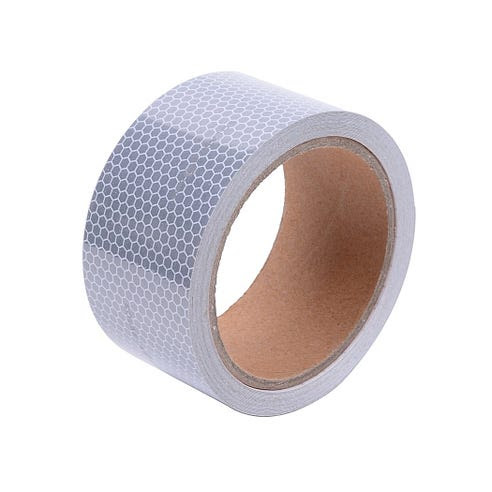
Simple cache camouflage can be amazingly effective for hiding your cache from those in and out of the game, particularly in park hides. Camo tapes and paints designed for use by hunters are readily available, and one roll or spray can will cover many caches.
Geocaching.com
Free-$30/yr
Garmin GPS Navigators
60Cx, $258 from Amazon
60CSx , $293 from Amazon
Ammunition cans
$8-$17
Available from MidwayUSA
Triple-Cache Container Set
$15
Available from Groundspeak.com
Lock & Lock Polypropylene 20 Piece Set
$30
Available from Amazon
Camo Duct Tape
$6
Available from Amazon
Hunter's Specialties Camo Spray Paint Kit
$15
Available from Cabela's
BOX4BLOX

In trying to reclaim floor space in our son's bedroom, we bought this colorful cube composed of four stackable trays and a lid. Three of the trays have open grids of differing sizes, and together, they function as a phenomenal pickup, sorting (by size) and storage solution for Lego bricks. You just scoop the bricks up (our son has a dustpan that's dedicated just for Lego duty), dump them into the top tray and shake away. The smallest bricks sift down to the bottom level; each higher tray retains slightly larger bricks. At this point you can either further sort each tray by color and dump them into storage bins or just put on the lid. The cube itself is 10¼" on a side and purports to hold approximately 1500-1700 Lego bricks.
BOX4BLOX has been instrumental for well over a year now in keeping our son's collection of several thousand Lego bricks in some semblance of order and reasonably clear of his bedroom floor. So we sent one to our nephew for Christmas last year. In my son's eyes, as well as mine, BOX4BLOX really is a transformative tool— one that elevates a dreary task into something that's actually fun to do (and done well).

Board Game Geek

The passionate gamers on BoardGameGeek.com (BGG) devote a lot of time and effort to create comprehensive content and reviews on practically every game that is out there, including out-of-print and small, self-published games. They not only rate the games, but write up rule clarifications, post in-depth game analyses, suggest variants for better gameplay, and even translate rules into other languages. The site features a marketplace where you can buy, sell and trade games with other gamers, forums where you can ask questions, create lists, and tons of other functionality. Of course, the real value of such a large, informed and well-established community is the wisdom of crowds effect you get from their collective opinions. As I write, the #1 game on BGG [Puerto Rico] has 11956 votes compared with 7 votes for the #1 game on the previously-reviewed Board Game Ratings (BGR) [Password]. And since BGG isn't a retailer (unlike BGR), they have a comprehensive database of *all* games, not just those the store happens to carry.
I probably visit BGG one to two times a month, mostly to browse for new games that might be good (In the past year, I've picked up Pandemic, Roll Through the Ages, Caylus, Agricola, Dominion, Race for the Galaxy, Galaxy Trucker, and Ticket to Ride: Märklin.). Also, I sometimes hear about a game through a friend or some other channel, and I'll go to the site to find out more. Since it's heavily crowdsourced, and there is such a large, passionate community, I've discovered that even the most obscure games will have details like pictures, descriptions, type, and of course ratings. It's also a great resource when you're playing a game and need rules clarifications, rule variant suggestions, expansions, etc.
If you are considering buying a game, you owe it to yourself to check out BGG. Granted, the list of top-rated games tends to lean a bit more toward the serious-gamer crowd. But you can use the advanced search feature to look for "light" games with high average ratings, and then sort the results by Bayesian ranking. You'd even do OK just by picking games of the "Hotness" list in the left column.
-- Dave Cortright
BONUS: For purchasing said games, FunAgain.com is the current consensus among my gamer friends on the best place to buy from, though I've also used Fair Play Games with great success. -- Dave Cortright
NeoCube

My latest cool toy is the NeoCube, a 6x6x6 cube of 216 small neodymium-iron-boron magnetic spheres which can be arranged into an amazing assortment of geometrical and non-geometrical shapes. You can create various polyhedra, even Buckyballs, and all kinds of familiar shapes, too. It's basically a 3D tangram on steroids. As fascinating as it is addictive. It is mesmerizing to rearrange the spheres. I carry mine in my pocket and will often spend around 45 minutes at a time just playing with it -- at home listening to NPR or in the car waiting for my wife. A supreme time-waster!
Warning: arranging the spheres into a cube is not as easy as it seems in the first video below. That is your first challenge.
It's not cheap, but if you try to buy the magnets yourself, it will cost much more. There are also some cheap Chinese knock-offs, but I'd rather give my money directly to the inventor. What's interesting is how the NeoCube was thought up by a 20-something car salesman from Monongahela, PA who describes himself as a square fiddling around in his basement. He began by posting demo videos to YouTube. In no time he was inundated with requests and sold out immediately. Now that's cool.

NOTE: I made a Buckyball as per these instructions (scroll down). First you make pentagons and stick them together. It's really amazing how they just snap into place as if they had a mind of their own. Then I made a compound version shown here. I added a ball to the center of every pentagon and then used the remaining balls as a chain. The magnets are so powerful, the chain easily holds the weight of the entire ball, even as the ball rotates!
Toys from Trash

The recycling, reuse and reppropriation of common household goods, trash and miscellany into functional and/or amusing items is something Cool Tools readers know well. No matter where you fall on the spectrum of tinkerers, whether you have children or not, it's near impossible to visit Arvind Gupta's Toys From Trash without wanting to attempt at least one of his many projects.
His web site boasts a fantastic range of educational experiments like how to fashion a potato battery and a bottle barometer, as well as a section called "Pumps from the Dump" which includes a stellar-looking Syringe Pump. Granted there's an array of light experiments akin to the ones you'll find in the previously-reviewed Science Toys You Can Make With Your Kids. But in addition to the nerdy, educational stuff, Gupta's site features quick and easy one-offs that aren't the least bit science-y, like how to fold six types of newspaper hat.
I first perused Toys From Trash a couple years ago, but found myself diving back in recently after a friend reminded me just how much cool stuff Gupta's published. Many of us already tinker, create, deconstruct and build stuff back up for fun, work, education, etc. -- or at the very least we're partial to blogs and publications which show us what's possible. I'm guessing one of the biproducts of the economic downturn in the U.S. will be an increase in DIY and, therefore, even more kids raised on transforming what could be discarded into treasures.
-- Steven Leckart
Paddleboards

Paddlboarding is a great way to stay in shape for surfing, to explore the coast, to watch birds, and to cruise around in almost any body of water. Paddleboards, like surfboards, snowboards, skateboards and other devices used for moving through space, have evolved greatly in recent years. For years, Eaton paddleboards were the primary manufacturers of quality racing boards. Lately, Joe Bark has been turning out beautiful stock and custom boards. This summer I bought a slightly used Joe Bark 12' "Surftek" paddleboard in L.A. for $1,000 ("Surftek" is the nickname for lightweight surfboards/paddleboards built with Styrofoam and epoxy resin, rather than the more standard polyurethane foam and polyester resin). The board is feather light (22 lbs.) and lets me skim through the water like a water skeeter. Boards run from 12-19' or so. The 12-footers are the most popular partly because they are the easiest to transport and store. The longer boards are slightly faster in races (there are over 70 races a year in Southern California), but more cumbersome to deal with on land.
-- Lloyd Kahn

12' Surftech Bark Board
$1380
Available from The Frog House
A full range of boards, including standup* boards, available from BARK
This is the board I'd get if I were to buy a new one -- LK
![]()
*NOTE: There is also stand up paddleboarding (SUP), where you use a physical paddle to propel and steer your way through surf and to catch waves. Giant, heavy surfboards, those have a completely different design. The ones I review above are lie-down (or kneeling) boards, which you *cannot* stand on and are not intended for wave riding (though you can catch small waves). -- LK
Deep Fun

Or in other words, how to have good clean fun. Directions for about 25 well-proven games for groups are succinctly supplied by this free PDF book. These games originated in church youth groups, but I've seen them used at camps, large family gatherings, company retreats, and even a few tech meetings. They are aimed at building community, and are primarily ones that can be run indoors. I've played a number of these games as an adult over the years and they really are deep fun. It is amazing how fast you can unleash your inner kindergartner. Some of this group fun, like Silent Football, have been around since ancient youth camp times. I wish more folks would enliven their stuffy meetings and offsites with a few of these games.
-- KK
Deep Fun
Free from UUA
Sample excerpts:
To make this book more user-friendly for youth and advisors, we decided to organize the games into five chapters, loosely based on Denny Rydberg's "Five Steps to Building Community." Introducing new games to your youth group or conference will work best if your timing is right--if you choose games that fit the level of community already attained and nudge the group on to the next level.
Hog Call
Parameters: 15 to 60 people
Have the group split up into pairs and come up with a matching set of words or sounds (i.e. "hic-cup," "peanut-butter," or "honey-bee"). Have each person choose one of the words as their own. Then have each person announce their word to the group, so that there are no repeats. Then instruct the group to close their eyes and start milling around the space with the goal of getting as far away from their partner as possible. Once the pairs are well-separated, announce that they are to find their partners without opening their eyes, by shouting their word. (If all goes well, Peanut will meet up with Butter).
Angel Wash Variations
Parameters: 15 to 60 people
(Remember anyone can opt out if they don't feel comfortable.)
Form two lines facing each other. Have one person from the end of the line (or two people holding hands) close their eyes and place their arms crossed on their chest. Direct them to proceed down the aisle of the double line with their eyes closed. As they pass, each person washes their aura with their hands, passing their fingers and hands lightly over their body, from the crown of their head to the ground, without actually touching them. If the person should stray, the people in the lines can gently direct them back on course. When they reach the end, their friends can communicate to them, with touch, that its time to open their eyes. Continue until everyone has had a chance.
Downhill Skateboarding

Downhill skating is like surfing; carving back and forth on long downhills. Note: you guys who skated as kids and have quit. The technology is way advanced these days. Decks, trucks, wheels, designs. It's a different skating world. If you've ever skated, you've got the motor skills (due to "muscle memory"), and you'll be surprised at how much fun you can have skating downhill with today's boards. Here are three unique skateboards meant for downhill, as opposed to acrobatic street and ramp skating.
-- Lloyd Kahn
Loaded Carving Systems

This is my board of choice, after maybe 20 boards. The decks are made of 1/2 cm strips of vertically laminated bamboo (with the grain running truck to truck,) sandwiched between layers of fiberglass. The decks are convex (from end to end) and you can pump to accelerate, gaining speed from the flex of the deck and rebound from the truck bushings and wheels. They produce a graceful and flowing ride. I've got a Dervish model with Orangatang wheels. Check out the film clips on their website.
Dervish complete board w/wheels
$315
Available from Loaded Boards
Carveboard

This is a whole other animal. Surfers love them. They're heavy, have adjustable air pneumatic tires, and the deck tilts off springs so you can carve insanely tight angles. I use one with tires deflated to about 10 lbs. pressure to be able to skate a steep local hill that I can't handle on any other board.
43" Carveboard
$450
Available from Carve USA
Landyachtz Evo 2008

From British Columbia, land of heavy-duty mountain bike riders and downhill skaters, come these downhill racing boards. The drop-down decks give you a lower center of gravity and great stability at high speeds. Being closer to the ground makes it easier for skaters to get a padded glove on the ground for sliding (to slow down).
Evo 2008 w/Gumball wheels
$240
Available from Landyachtz
Safety Gear
1) Loaded sliding gloves -- best ones available. When you fall face down, these save the skin on the palm of your hand. They are also used for sliding.
2) TSG Force 2 knee pads. Top of the line; you can put these on over long pants.
NOTE: top image via the Northern California Downhill Skateboarding Association --sl
VibraSpin Lure

The VibraSpin fuses together two concepts that are very popular in fishing: the standard spinning lure, which uses a rotating blade to create a visible flash in the water, and the newer principle of using a flat blade that pushes the water as it is pulled forward. Fish, more specifically predators such as bass, muskie, pikes and walleye hunt by not only sight, but all their senses. Sight hunting is covered by the flash of the spinning willow blade as well as the back and forth of the "vibrashock" blade and the various colors available. Sounds and actual vibration are added by the spinning blade, and even more so by the swim blade. The flat blade imparts a thumping or vibration on the lure that has to be felt to be believed. Since I started using a prototype of these last spring, I have caught more fish than I used to with the standard spinning lure.
-- Doug Mainor
VibraSpin Fishing Lure
$7
(various colors)
Available from the manufacturer, KaRu Lures
[Click here and scroll down to see a video of the lure underwater -- sl]
Related items previously reviewed on Cool Tools:
Apples to Apples

We've been playing this word-based card game for the last three years and it continues to be an enlightening ice breaker. There are two types of cards: nouns (red) and adjectives (green). Each player is given a small stack of nouns. The game begins when one player (the judge) draws an adjective. Each player then anonymously lays down one noun he/she believes the judge will associate with the adjective. Players can try to sway the decision, but ultimately, the judge's power is absolute. Some people are inherently literal, sarcastic, wishy-washy, optimistic, stubborn or dryly humorous. The challenge lies in figuring out what type(s) of judges surround you and what kind of judge you want to be. Discovering who's on the same wave length is always interesting. What's more "magical" -- a sunset, Thomas Edison, the Pyramids, surfing the net, or Barney the dinosaur? Subjectivity rules!
---- Steven Leckart
Apples to Apples
$25
Available from Amazon
Manufactured by Out of the Box
Related items previously reviewed in Cool Tools:
Wiggle Rig

I love bass fishing, but often I am frustrated because I can't get the action I want on plastic worms and lures. Wiggle Rig gets the most outstanding lifelike wiggle on a lure that I have ever seen. It was designed as a dropshot rig with a twist. Below your hook and attached to the weight is a special elastic made with spectra fiber (making it much stronger than general elastic). Move your rod tip and the action of the "SpecTastic" (the green-blue strip below the lure in the photo above) creates a stretch and release motion that allows your bait to move much more fluidly and with a greater range of action than just fishing line would. Plastics become almost lifelike. After viewing the videos, I just had to give them a try. I will never fish without one again.
-- Doug Mainor
Wiggle Rig
$3+
(depends on kit + shipping)
Available from and manufactured by SpecTastic Tackle Company
ELMS Hand Cut Puzzle Rental Club

Dedicated jigsaw puzzlers know nothing matches the quality (or challenge) of a hand-cut wooden puzzle. But at about $2.00 or so per piece they are outrageously expensive (a 20" x 24" 1000-piece puzzle can cost $3,000). ELMS Puzzles solves the dilemma by offering a rental program that lets you keep a puzzle for three months, by which time you should either be done or realize you've met your match.
The wooden pieces (unlike cardboard) are very exact in their fitting so you have to be very certain about having the right piece. Also, many are cut with straight lines inside the puzzle -- i.e. a piece in the middle won't have interlocking pieces. Those who do puzzles by putting together the border and working their way in will really be challenged; and many of the pieces are cut in shapes appropriate for the puzzle. For example, a Christmas puzzle will have a piece the shape of a Christmas tree, the shape of a sleigh, the shape of an angel, etc. Oh, and no picture comes with the puzzle for those who "cheat" by looking at the top of the box.
While still not cheap, at $40 - $225 depending on the number of pieces, renting these puzzles becomes affordable for special occasions like family vacations with other puzzle fanatics. There are other companies that sell puzzles (Stave comes to mind from having seen their advertisements in The New Yorker), but ELMS are the only people I know who rent. I like the idea of renting 15 - 20 puzzles for the price of buying one.
I recognize this is not something everyone thinks is sane. Our family members are divided on it, some love them, others think it's the biggest waste of time known to man. You either like jigsaw puzzles or are bored silly by them, but if you're a fan you should enjoy the pleasure of a quality hand cut puzzle at least once.
-- Julee Bode
ELMS Hand Cut Puzzle Rental Club
$75
(lifetime membership + first 200-piece puzzle)
Available from ELMS Puzzles, Inc.
[Note: you will need to pay shipping, either FedEx or priority mail -- sl]
Aero Ace

This is a little R/C airplane that is tough, easy to fly and lots of fun. It flies using differential thrust from 2 tiny motors on the wings and has no moving control surfaces. If you want to go up both motors spin faster, left the right motor spins faster, etc. This is a great little plane with a big following on R/C forums. There are lots of mods that have been done. Flies slow enough to fly in a backyard and minor repairs can be performed with hot glue. Comes ready to fly.
-- Jason Tan
Air Hogs Aero Ace 27
$30
Available from Toys R Us
FlingSock

Even the most sports-impaired among us can enjoy this well designed little toy: take a bean-bag, wrap it in grippy fabric, and add a tail: voila, the FlingSock. Better than other "flying tails", in my opinion. It flies amazingly far (sometimes too far -- be careful that it doesn't end up on a roof). Even when it smacks me in the head, the light polyethylene pellet filled bag don't hurt a bit. Doesn't bounce either, so it won't pop out of your hand or roll unexpectedly into the street. Easily sized to grab, with grippy rubberized fabric to keep it from slipping, and a fabric tail for second chance catches, as well as fabulous flinging...all in cheery, rainbow tie-dye colors. The mini size is perfect for slipping into school backpacks, flipping around in your yard, or to keep handy in the car for spontaneous flings -- rolled up, it's about the size of a small lemon. The regular size can and will go 30 yards and more -- better save that one for the park!
-- Barbara Dace

Mini FlingSock
$7
Avialable from FunAttic
Regular FlingSock
$8
Available from FunAttic
Sandcastles Made Simple

In case you haven't noticed, sand castles have become very elaborate and sand sculpture a new art form. Building them is a complicated business. We've used the simple methods here to build sandcastles we can be proud of without too much equipment. In our experience the most important part is finding a beach with suitable building sand. For the rest, follow this book and/or DVD.
-- KK
Most beach trips I would sit and read while my wife played around in the sand building castles. This year, I found a great resource that had me building sand castles and sculptures that stopped every passerby on the beach.
The Sons of the Beach Sandcastles Made Simple book showed me how to build high-reaching towers and arches by hand, without any buckets or forms. Their tool set was perfect for giving professional looking details. Their optional DVD makes it even easier to learn their technique.
The first week I had their book, I built a 48" tall light house, several castles (one with a monorail train), and a snowman (they teach you how to make snowballs out of sand). Many people asked me how many years I'd been doing sand sculpture!
The book and DVD teach "hand stacking." This is a process of scooping a big handfuls of completely saturated wet sand and plopping them on top of each other. By jiggling the sand just as the excess water is running out, it fuses the new plop with the previous ones creating a stable tower.

Tools for advanced sand castling
These folks also discuss and sell large forms (5, 3, 2 foot diameter) which can be used for large competition sculpture, but that was more than I wanted to carry down to the beach.
-- Chris Evans

Sandcastles Made Simple
Lucinda Wierenga
2005, 128 pages
$12
Available from Amazon
Sno-Baller

I'm ten and I love my awesome snowball maker. When we go to Tahoe I use it to make tons of perfect snowballs quickly. It's a big help in a snowball fight--and super fun, too!
-- Daniel Steigman
Sno-Baller
$10
Available from
Amazon
Manufactured by
Beach Comber
Cuboro

This is the best toy I have seen since Lego. I recently purchased a set for my 3 year old son, and we both have been having a blast with it ever since. The basic idea is simple: marbles and a track. The interesting thing is that the track is built out of individual wooden blocks with curves and channels cut into them, allowing you to create
a track of whatever shape your imagination can conceive. The marbles are moved along strictly by gravity, falling from one level to another and cutting back and forth through hidden tunnels.
The company is based in Switzerland, but sets are available from several US retailers. There are several starter sets, plus add-on kits that allow you to build more complicated structures. I started with the Cuboro Standard, and recently added the Cugolino set. Although Cuboro is a bit pricey for a toy, the manufacturing quality is
exceptional and you get what you pay for.
-- Kurt Thearling
Cuboro
$110 starter set
$153 standard set
Available from Oh! Toys
Manufactured by Cuboro
Set

A simple game in a class by itself. You get a deck of cards with colored symbols. These are laid out, face up. To play the game you need to organize the symbols into sets of three "un-alikes" -- but they can be grouped in more ways than one. Many more ways. Everyone else is trying to group them into sets faster than you. This game exercises a unique part of your brain that few other activities do. Half math, half intuition, all concentration. It's fun, loud, fast moving, and very challenging to do well, yet easy enough for small kids to join in meaningfully (that is, do better than you). After several years of playing the game, here is what I've observed:
1) It can't be explained; it has to be shown.
2) Some folks are more gifted than others at finding patterns fast.
3) But *everyone* improves, often within the span of a game.

I hear that many schools use this game to teach sets and logic in math class, and that's great. We use it as a raucous parlor game. Like the game Go, Set possess the kind of simplicity which keeps expanding, never growing old. And as far as games go these days, it's cheap.
-- KK
Set
$9
Available from
Amazon
Produced by
Set Enterprises
The Curtis Creek Manifesto

Cartoons rule as the densest form of information packing known to humans. This slim 48-page book of cartoons contains just about all you need to know about fly-fishing, and covers more material than most wordy 480-page books on the subject (of which there are many). First published in 1978, this funky manual is still the one that veteran fly-fishers hand out to newbies with the command: "Read this first." It is not the last word, but everyone agrees it is where you start.
-- KK
The Curtis Creek Manifesto
Sheridan Anderson
1978, 48 pages
$10
Available from Amazon
Sample excerpt:


Doing Circus

Circus is a physical art-form that can engender a sense of control just as any type of athletics or dance training can. However, unlike most physical disciplines, circus has a place for almost any physical type. It's one of the few places where I've seen short powerfully built women valued for their bodies. The circus is associated with the carnavelsque, so it's a great way to have a party or to disrupt social patterns. And circus is also a lot of fun.
Circus is still mainly an oral tradition. Moreover, for certain of its disciplines it is confined to very particular places that can rig the necessary equipment and safety devices. It would be, for example, impossible and probably immoral to write a book describing how to learn the flying trapeze. There are plenty of books and resources for learning the object manipulation arts, eg. juggling, stick spinning, plate spinning, diabolo, etc. A good place to start with these would be Juggling Information Services. However, most serious folks quickly move back to oral traditions.

The best place to learn new juggling and assorted object manipulation is your local juggling club. The Internet Juggling Database lists juggling worldwide, by country.
For the more physical circus arts and clowning, most big cities have enterprises that offer classes. The San Francisco Circus Center and Chicago's Circus Factory are one's I have experience with but I know there is instruction available in Boulder, CO; New York, NY; Seattle, WA; Atlanta, GA; Asheville, NC.
I think the best value however, if you have the time, are youth circus programs. Many big cities have non-profit programs that teach circus to youth. Many of these programs will offer volunteers instruction in the circus arts. The American Youth Circus Organization has a directory of youth circus programs.
I personally have not been too interested in the professional schools. They are more like the graduate programs.
Of course, working for a circus is not a bad way to learn either, and the way that most people, historically, have learned the trade.
-- Forest Gregg, co-founder of Runaway Circus
Wedgits

I first saw this toy construction set at a front-door exhibit in the San Francisco-based Exploratorium. You arrange the rectangular plastic pieces in endless formations, limited only by your geometrical imagination. The squares interlock loosely, cleverly. A baby can do it. Every time you come to the set, you see new possibilities. But unlike other complicated construction sets, this ingenious one has just four simple sizes of one shape. I think of Wedgits as a 3D version of the ancient Tangram game. In fact you can get a booklet with profiles of shapes which you can try to build, in Tangram mode. Wedgits will challenge an adult, yet are easily manipulated by the small hands of an infant.

This toy was first called the Diamant, and it was invented in 1981 by the German designer Peer Clahsen. You can purchase an exquisite museum-quality wooden version (and other amazing toy-art) from the Swiss design company Naef. Here is what reader John Edmark has to say about them: "Swiss-made Naef toys are some of the most intelligent, well-crafted, creativity-promoting toys ever made. They are also very expensive, but well worth it. I possess and cherish but three of them to date: Diamant, Cella, and Ellipso. Cubicus is next on my list. These are not just toys for kids, but for anyone with an inquisitive mind. Nor are they puzzles to be solved, rather opportunities to enter into a creative dialog with spatial geometry. The quality and craftsmanship is outstanding. I've never seen better."
However, for plain fun, the cheap plastic version of the Diamant, or Wedgits, works just as well. I'd get the Deluxe Set version with 30 pieces. A great gift for kids. If you want art, go with the Naef.
-- KK
Wedgits Deluxe Set
$30
Available from
Fat Brain Toys
Also from Amazon
Manufactured by Wedgits

Naef Diamant
$350
Available from Nova
Manufactured by Naef Toys
Parafoil Stunt Kites

Unlike "traditional" delta-style stunt kites, where the steering is slightly non-intuitive (you let out rather than pull in), this kite drives intuitively. And, since they are parafoils, you don't worry about breaking expensive carbon fiber spars if you crash.
Apparently, the inventor has had trouble getting dealers to market the kite as a stunt kite: dealers tended to classify it as a "power kite" for pulling loads, or as pocket kites.
Anyway, these kites are only sold directly online. The website is a nightmare to navigate, but check out a few choice video clips.
-- David Chin
Video clips of kites in action
Seattle AirGear WindDance Parafoil Stunt Kites
$100 and up
Available from
Seattle Air Gear
MouthSounds

Not everyone appreciates the thrill of making weird, silly or rude sounds with your mouth. All the better, then, if you know how to throw up a fake a cell phone ring, or present a first-rate chicken cluck. This great book teaches you how to create those and 200 other special sound effects with your mouth only. It comes with a CD, which you really do need to get these sounds correct. Your master guru is Fred Newman, the guy on Garrison Keillor's Prairie Home Companion show, who produces an entire symphony of sounds live in front of a mike. Besides being a how-to manual for audio gags, this book is also a very funny, and most importantly, one of the best classes I know of for opening up, training and exploring your voice, even if you don't want to make amazing noises.
-- KK
MouthSounds: How to Whistle, Pop, Boing, and Honk for All Occasions...and Then Some
Fred Newman
2004, 245 pages
$10
Available from
Amazon
Sample excerpts:
Screech 'N' Skid
Instructions
1. There's no shortcut to the Screech 'n' Skid. It has to be done like you're a six-year-old. First, load up with air, and hold your breath.
2. Now squeeze hard and let the sound squeak out in your highest falsetto voice. If it's rough and gravelly, so much the better. (If your face gets red and you pop a button, it's your own damn fault.) Let the screech rise and fall in pitch and volume.
Uses
The Screech 'n' Skid is the perfect response when someone makes a profoundly dumb suggestion, asks an inane question, or proffers a really bad idea such as "Let's wash the cat" or "How 'bout a double for the road?" or "Why don't we bungee jump out of this hot-air balloon?" The Screech 'n' Skid is the ultimate reality check.
*
Gummy Cheeks
Gummy cheeks is a juicy, abstract sound that slips past "mildly unpleasant" on the gross-factor rating scale and slides straight for "downright filthy" - in the way that stirring tuna and mayo together in a bowl has a disgusting sound, but you're not quite sure why. Gummy cheeks does not simulate any one sound in particular, but rather suggests a whole host of offensive goings-on.
Instructions
1. Relax your face completely with your mouth closed loosely.
2. Pinch your cheek lightly with the thumb and crook of the index finger.
3. Pull out and push in the relaxed cheek very rapidly. You will get a repulsive, gooey, slurpy sound - a misdemeanor in Florida.

Uses
If you are fortunate enough to have large jowls, your Gummy Cheeks can make grown men squeamish. You can double the indignity by making Gummy cheeks simultaneously on both cheeks for a sort of slushy, surround-sound effect.
*
Awesome Party Tip #38
"Talk under the din." If you are at a loud party and find yourself shouting louder and louder just to talk to people, begin speaking "under the noise." What is happening is that the voices in the room are competing in the same frequency range - so that people raise their volume and their pitch when they feel they can't be heard. They shout in high voices. All you have to do is not compete. Talk in a quieter, deeper voice, and you will be heard easily. Try it. You will be shocked at how easy it is to talk under the din.
20Q

The other day Will Wright, the genius behind Sim City and the Sims, handed me this tennis ball-size orb and said, "It knows what you are thinking." Most of the time it will guess what you have in mind after asking you twenty yes/no questions. It is eerily smart, and slightly addictive. I see it as an educational toy.
Burned into its 8-bit chip is a neural net that has been learning for 17 years. Inventor Robin Burgener programmed a simple neural net on a DOS machine 1988. He taught it 20 questions about a cat. He than passed the program around to friends on a floppy and had them challenge the neural net with their yes/no answers to the object they had in mind. The neural net learns only when it plays a game; no data is added except for the yes/no answers of visitors. So the more people who test it, the more they teach it. In 1995 Burgener put the now robust neural net onto the new web where anyone could play it (that is, train it) 24 hours a day. And they did. Burgener's genius was to turn the hard tedious work of training a neural net into a fun game for humans.
Last year, after 1 million rounds of 20 questions online, the neural net had accumulated 10 million synaptic associations. It has a 73% success rate of guessing what you thought. Burgener then compressed the 20Q code to run on a chip, and had the neural net select 2,000 of the most popular 10,000 objects it then knew about. He then had the neural net select out the most useful 250,000 synaptic connections related to those 2,000 objects, and hard wired that learning into the chip in the orb. In other words, this sphere is a handheld version of Burgener's Twenty Questions web site. (Because it knows about fewer objects than the web version, it gets confused less often, so its success rate is ironically higher.)
The toy is remarkable. Because it is so small, so autonomous, its intelligence is shocking to the unprepared. Most children can't stump it, and if you stick to objects it will stump smart adults about 80% of the time with 20 questions and most of the time with an additional 5 questions. I love to watch people's reactions when they think of a "hard" thing, and after a seemingly irrational set of questions you are convinced are dumb, the sly ball tells you what you had in mind. (For instance, it can correctly guess "flying squirrel"without asking "does it fly?") People who play chess machines won't be surprised, but just about everyone else is tickled. It feels like the future.
While the 20Q orb doesn't learn, the web neural net continues to learn and grow. It has now played 16 million games of 20 questions, and is racking up 2 million additional games every month. I asked Robin Burgener if it was still getting smarter. "It is learning, but it is not increasing its success rate. What happens is that it is learning to play more kinds of people, people who don't speak English easily, or who have never played 20 questions, or who come from different cultures, and to understand more difficult kinds of things." Has he given this intelligence a name? "No, but it sure does have a personality. Some days it does well, and some days, it's just off." Right now, 20Q is being ported over to Apple servers to keep up with the traffic, and it is being trained in new languages: French, Spanish, Chinese, Italian to start with (it will become separate neural nets for each language). In the future, there may be medical versions of 20 questions to help emergency triage, or other expert uses.
But right now, for ten bucks, you can get an amazing little artificial intelligence, about as smart as an insect -- but an insect which specializes in guessing what object you are thinking of. And in that part of the brain, it's smarter than you are.
-- KK
Radica 20Q
$10 at retail discounters
$14 from
Amazon
Manufactured by Radica Games
X-Plane

747 cockpit
Everyone's heard of Microsoft Flight Simulator and other consumer flight simulators for PC's, but the real McCoy is X-Plane, an unbelievable simulator written (and re-written and re-written) by a manic flight (and gadget) crazy independent programmer named Austin Meyer.
While difficult to set up and learn, the experience of flying a 767 in X-Plane from San Francisco to JFK (with actual weather and way-true-to-life instrumentation) is almost an eery experience. X-Plane (unlike the other consumer toys) has even earned FAA approval towards the airline transport certificate. All you need is a PC and $50.
Like many tools, X-Plane allows you to deeply immerse in a "place" where most people never get to go (especially these days): the cockpit. You can pilot virtually any aircraft you can imagine (including helicopters, zeppelins, and even Burt Rutan's SpaceShipOne). I've heard of pilots spending a lot of time in an X-Plane cockpit (say a new all-glass Cirrus) before actually buying a plane (Austin owns a Cirrus).
For others (more like me) it just offers a potentially immersive glimpse into an area I find fascinating but may not be able to experience. MSFT/FS is fine for just playing around -- most newbies would actually find X-Plane boring compared to MSFT/FS. But taking an evening -- with spouse and kids gone -- and working through a successful (and extremely realistic), sunset round trip from SFO to the little un-manned airstrip in Half-Moon Bay in a Cirrus - using all the instruments including the GPS -- makes this sim a unique thing.
X-Plane is a lot closer to "open source" than the consumer-friendly sims like MSFT/FS. As such, lots of people actively contribute to the world of X-Plane in terms of new (unbelievably accurate) planes, scenery, even tower and ground crew radio chatter. Here's a sample of the detail in one update: "New engine failure type option: engine fire. If you specify an engine fire, then the engine smokes as it fails...regular engine failure does not leave a trail of smoke though. Pilot system failure resulting in airspeed indication error. Engine SIEZURE, and engine INDICATION failures. Low battery failure, resulting in an inability to get up to starting N1. Transponder can fail." Or, on a more positive note: "Real-Weather now checks the entire planet, not just USA!" There are weird third-party websites for pre-flight checklists, obscure throttle controls (that strap to your desk), PDF scans of antiquated aircraft manuals, logbooks, menus... So the "world" of X-Plane (Google X-Plane) changes more frequently than other packages.
-- Tim Smith
X-Plane
Mac, Windows, or Linux
$50
(Version 8.6)*
Available from X-Plane
Or $32 (Version 8.0) from Amazon
NOTE: Version 9 is now available. --sl

See open source and freeware add ons, X-Plane Freeware
Kapla Blocks

I've concluded from many years of building with kids that when it comes to construction kits (Erector sets, K'nex, Tinkertoys, Duplex, Legos, and so on) long-lasting enjoyment is proportional to the simplicity of the pieces.
Almost nothing is simpler than Kapla blocks. Simpler even than Legos. There is only one size, one shape, no holes: a sturdy wooden plank precision milled from hardwood. The key difference between these and ordinary wooden blocks is something they share with Legos: amazingly precise dimensions. Because of this machine-like uniformity you can build very large, high and stable structures. Even little kids can build very rapidly (without the planning Legos seem to require) and very large. And because of their simplicity -- one simple plank -- you can build with endless variety. Finally, because they lack the tricky locking device of Legos, and are not tiny, kids of the youngest age can build with them. And you can't break them if you tried.
Kapla blocks come in wooden buckets of various multitudes. The 1,000 piece set is sort of over-the-top, but endless fun (suitable for a dayschool or the like). Like the best toys, these are not just for kids.
I would include Kapla blocks, along with Legos, as a toy that you can pass on to the next generation.
-- KK
Kapla Blocks
$53 for 200 piece set
Also from Amazon
UPDATE: It appears Kapla blocks are no longer available in the US, but there is a very good equivalent in Keva Planks. These are manufactured to the same size, out of maple, and are about the same price as the old Kapla blocks.
Keva Planks
$68 for 200 piece set
Available from Amazon


Silly Putty by the pound

Silly putty -- even the newer varieties like the thinking putty here -- has long been sold in small amounts in the classic plastic egg. But this stuff is best enjoyed in bulk. The technical name of this now generic substance is Dow Corning Dilatant Compound 3179. Five pounds of it is.... well, pretty silly. Ten pounds of the stuff is enough to transfer a whole page of comics, or to make a humungous superball, or to lighten up the dour faces in a boardroom after being parcelled out. The surprise for our family has been never ending amusement of watching a huge ball of this compound slowly melt over whatever you set it on, like the blob from outer space. Hand out some at your next birthday party. Don't ask why.
-- KK
Funny Putty
Classic beige color
$16/pound
Silly Putty
Comes in various colors
$80/ 5 pounds
Crayola
[Note: You can also make your own! There are several instructional videos and recipes online.]
Thinking Putty

A short while back the patent on Silly Putty expired. Crazy Aaron
takes the basic recipe of this childhood favorite and adds all sort
of colors and effects including temperature based color change. Now
instead of a little ball of Silly Putty, I have a big ol' fistful of
Thinking Putty. Great exercise for guitar players, a great stress
reliever and a good way to get people thinking at a meeting. The
website is a lot of fun - shows what happens when you whack putty
with a hammer. (It shatters.) Comes in a variety of sizes and I give
it away as a unique, inexpensive gift item to friends and business
associates. Their customer service is outstanding as well.
-- Bob Cooper
Crazy Aaron's Thinking Putty
$7/ one fifth pound (90g)
Putty World
Glow Tubes, in bulk

Burning Man is coming up next week so it's time to get my playthings in order. I'm partial to those foot-long noodles that glow in various shades of color, also popular at raves. They are plastic tubes with a glass insert that start to luminesce when snapped. Like road safety sticks but thinner, longer, more flexible and cheaper. These floppy light wands say: be creative! The tubes come with a plastic coupler that can connect them in a chain or in a circle. Since they are flexible and light and cheap they can be woven into bike spokes, sewn on clothes, spun, pinned, or swung. They'll last 7 or 8 hours and if by chance you are near a freezer you can freeze "ignited" ones; just thaw them out and they start glowing again. You don't have to go to raves or Burning Man to enjoy them. We break them out for Halloween, Fourth of July, birthday parties, and dark nights while camping. Called glow sticks, they are available from a number of online sources (check for rave suppliers). The come in all sizes from mini-sticks to swords.
One or two tubes are okay; the key to the fun is to get them in bulk, by the hundreds. One hundred 8" sections should be about 10 cents a piece, or $10. One hundred is not too many. It's barely enough to cover a jacket with them, or decorate 3 bicycles, or make a huge glowing hula hoop, or enough bangles for all the arms at a party. The supplier below has the lowest prices I've come across and I've used them with no problems.
-- KK

8" Glow Bracelets
$9 for 100
Sure Glow
22" Glow Necklaces
$25 for 50
Sure Glow
For related flexible neon see my review of El Wire
Stream Machine

The genius of these water cannons are their simplicity. A single moving part -- a big fat piston with handle grip -- squeezes a wide stream of water down and out their large diameter tubes. Filling them you reverse, sucking in water via the same orifice. When loaded (takes about 2 seconds) they gush water at least 30 feet. Impossible to clog, and nearly unbreakable, both kids and adults can operate them around pools, lakes, rafts, canoes and boats. These are the regulation-issued weapons at our place.
-- KK
Stream Machine
$12 -- 1 foot
$16 -- 2 foot
$20 -- 3 foot
Cabela's
Also from Amazon.
Manufactured by Instant Fun
Hobby-Lobby

Radio-control is now cheap. Thanks to fanatic model airplane enthusiasts, featherweight units are micro enough to fit almost anywhere, at a reasonable price. You can purchase the hi-tech guts for use in boats, bots, helicopters, cars, toys, and machinery. Or you can get off-the-shelf models. The chief source with the largest selection seems to be Hobby-Lobby. They specialize in all-electric (quiet) RC airplanes, but have the latest hi-tech batteries, servos, nano-radios, and parts. I've used them and their service is dependable. They publish a paper catalog, too.
-- KK
All-Star Games

One of the things I picked up from the Japanese was their appreciation for group games. My initial response to join a bunch of Japanese adults playing clapping games at a youth hostel was "No way. That's for kindergartners!" But once I gave into the hilarity, it was the most fun I had had in years. Good clean fun seems in short supply these days, but one place it prospers is in "youth ministries" at churches. Youth leaders have the job to keep American teenagers engaged, responsible, helpful, generous, and highly entertained, without demeaning others. The games included in this book are the best games some of the best youth leaders know. Because they are church ministries there is a small amount of church lingo, but mostly the "all-stars" trot of some very funny and high-spirited games that will work for anyone. The selections range from competitive photo scavenger hunts to New-Games-style encounters with no "winners." These were all designed for teenagers, but good clean fun is highly contagious among adults, too.
-- KK
All-Star Games: From All-Star Youth Leaders
Mikal Keefer and Bob Buller
1998, 109 pages
$14
Group Publishing
Amazon
Excerpt:
Blackout Musical Chairs
Play this game in a completely dark room. If you can't darken your meeting area, have kids play blindfolded.
Set up a circle of chairs, all facing out. Place one less chair in the circle than you have kids in the game. Tell kids that they'll be playing Musical Chairs...with a twist. Unlike regular Musical Chairs, this version is played in the dark.
Ask kids to form a circle around the circle of chairs and to stand with their arms folded across their chests. When the music starts, kids are to march slowly around the circle in the clockwise direction while maintaining the crossed-arm position. When the music stops, kids will have five seconds to find a chair. Anyone still standing or sitting on someone else after five seconds will be eliminated from the game.
*
Bob in the Basin
This game will create memories for your kids, especially if you bring a camera and take pictures of the contestants. To prepare for the game, find a new toilet. Toilets are surprisingly inexpensive at builders-supply stores or department stores, or you can borrow a toilet from a local plumber or plumbing-supply store. Make sure the toilet is completely clean and then seal the trap with duct tape or an easily removed plug--the toilet needs to hold water in the bowl.
Set the toilet in your meeting room before kids arrive. Then cut the bottom out of the cardboard box and set it over the toilet. Make absolutely certain no one knows what's in the box until you're ready to reveal the secret. When the kids arrive, have them form two teams. Explain that teams will compete in a game many of them played as children: Bobbing for Apples. Show the apples you'll be using and assure the kids that you have towels for drying their hair. Explain that, just as in the usual game, kids must grab the apples with their teeth or lips--no hands!--and lift them from the water.
If everyone understands the rules, remove the cardboard box to reveal that kids will be bobbing for apples in a toilet. Pause a few seconds, giving kids a chance to reconsider. Don't force anyone to participate, but remind kids that their team has a better chance of winning if everyone on the team participates.
It is essential that you have an absolutely new, unused, never installed toilet for this game. Of course, you don't necessarily have to share that information with your group. It adds a certain elegance to the game if--as kids participate--you hint broadly that you picked up the toilet at a very reasonable rate when the old city bus station closed.
*
Kings of the Mountain
Ask kids how many of them have played King of the Mountain. The idea of that game is to see who can claim the top of a pile and then kick and throw off any challengers. Explain this is a cooperative version of King of the Mountain. Instead of seeing how many people one person can toss off, the goal is to see how many kids can simultaneously stay on top of or in a certain space.
* Sofas can hold far more people than you might expect. The usual safety concerns about keeping the sofa firmly planted on the ground apply - but any sofa that has made it into a youth room has plenty much sagged to capacity already.
* How many kids can fit into a phone booth? Note: Do not close the door! For an even greater challenge, use a cellular phone to call the booth after your kids have packed themselves in! (You got the number first, didn't you?)
* How many kids can get at least part of their bodies into a Hula Hoop? Count fingers, toes, ears - whatever. Better yet, how many kids can fit into a Hula Hoop so that their bodies don't touch the ground outside? Encourage kids to link arms so that their bodies hold each other in the Hula Hoop.
Into the Wind

An astounding variety of kites from one source. Kites that swoop, kites that fit into your palm, or kites that will lift a man. All shapes, colors, speeds, prices, designs, and accessories. I like their indestructible mini airfoils that will collapse into a backpack pocket. Unroll and fly. Praise to them, they also sell hi-tech fabrics and materials for making your own sky darts. Paper and online catalog.
-- KK

Junkyard Wars

An attempt to build a flying machine in 36 hours.
The TV show said to be the most commonly recorded on a TiVo is the hackers' special, Junkyard Wars. Two teams of tinkerers race against each other to construct a working submarine, or an airplane, or a cannon, or deep-sea diving gear, all assembled from scrap found in a junkyard, and all built within a day and a half. That both sides usually succeed at some level (although only one side wins) is the first surprise of this TV series. More amazing is the easy lesson in physics and engineering each episode brings. By watching how a pump is cobbled together from motorscooter tires, one gets a visceral sense of how a pump works. By watching how geeks think around impossible obstacles, one catches the confidence to tackle an impossible project. They are educational enough that some science classes show them.
--KK
Some episodes, on VHS, available from Amazon.
Amphibian dune buggy from scrap parts.
Launching a homemade torpedo.
The propeller end of the team's torpedo.
White Dwarf

My intellectual friends, my arty-farty friends, hell, even my deep geek friends think I�ve gone off my nut on this one. White Dwarf is the monthly house organ for Games Workshop, Ltd., a UK company that makes fantasy and sci-fi tabletop wargames. The hobby doesn�t seem to be big in the US (tho it�s growing), but it�s huge in Europe. Next to Star Wars and Star Trek, their future universe (Warhammer 40,000) is probably the largest collaborative alternate sci-fi universe out there, with over seven games devoted to it, seven (!) different magazines, dozens of novels, comic books, coffee table art books, THOUSANDS of game components and countless fan websites. White Dwarf is a gorgeously produced full-color magazine with beautiful photographs of mind-boggling 28mm painted miniatures and futuristic landscapes. The game�s enthusiasts spend inordinate numbers of hours lavishly painting details one can barely see with the naked eye.
I�ve always been fascinated with wargames, not �cause I�m a hawk (far from it), but because I�m fascinated by systems and how they interact given fixed parameters and random modifiers. Wargames are perfect little contained systems (part fixed rules, part fixed variables controlled by dice and part real-time decision-making with the rules and rolls). Wind �em up and watch �em go! I�ve also always been fascinated by world modeling, creating believable worlds and climbing into them. This goes all the way back to creating comic books as a kid, then to playing D&D as a teen, later to computer games/ MUDS/ MOOS, etc. Warhammer 40,000 is a collaborative world model that you render in the real world, on a tabletop. I don�t just want to watch sci-fi, I wanna direct! WH40K lets me direct.
The analog nature of the hobby is a great antidote to the digital saturation of so much of the rest of my life. When guys of my dad�s generation got old, they made a space in the basement to tie their own fishing flies or to paint Mallard ducks or whatever. Taking an alternate universe from a complex sci-fi mythology, and downloading it into an analog world of miniature models, alien landscapes and futuristic architectures is perhaps how aging cyberpunks (at least this one) plan on retiring.
�Gareth Branwyn

White Dwarf magazine
$50, 12 issues
Games Workshop
Battlebots:

Do-it-yourself mayhem! Competition! High technology! Battlebots has it all. This rapidly growing hobby entails creating a home-made radio-controlled machine capable of destroying another machine of the same weight before it destroys you. The goal is beautiful: to survive. Creativity and workmanship count. The diversity of designs is thrilling; the diversity of bot builders even more so�high school kids to teams of mad artists. Our friend Alexander Rose (who reviews some tools in this issue) is a Battlebot champion. His four bots are mechanical wonders produced in his spare time. Professional engineers are amazed.
There is not much material on how to start building successful bots yet. The best is found on the Battlebot website where you can get advice on building, sources of motors, and design tips. This pretty-picture book here will give you some idea of what kind of designs have worked so far. The brilliant thing is that the battles are co-evolutionary. As the winning bots evolve and advance, new strategies must be constantly devised. Newbies can win.
Anytime people are creating stuff themselves, the vibe is good. The twice-yearly competitions are broadcast on the Comedy Central TV station, but it�s the 400 or so contestants behind the scenes who seem to be having the most fun.
�KK

Battlebots
The Office Guide
Mark Clarkson
2002, 228 pages
$25
McGraw-Hill/Osborne
Amazon
Excerpt:
And don�t let your limited budget stop you. �I�ve seen $500 robots beat up $12,000 robots. Maybe during a battle a wire will pop loose in that $12,000 machine; then it�s just a really expensive chew-toy for the opponent. You�re at the mercy of luck and the arena weapons.
�
After high school, Setrakian attended UCLA, but he grew frustrated with the university�s film program. So in 1985 he joined George Lucas�s Industrial Light + Magic to start working in films for real. His first job? �I designed and built beaks for Howard the Duck,� he says. �You�ve got to start somewhere.�
�
Mechadon�s unique design reflects Setrakian�s own conception of a fighting robot. �I didn�t want to build something that looked like a lawnmower,� he says. And it certainly doesn�t. �Mechadon does not usually win,� Setrakian says, �but it leaves a big impression. People remember Mechadon.�
Mark Setrakian and Mechadon
Beamo

A Beamo is somewhere between a flying hula hoop, a slow-motion nerf disc, and a gigantic frisbee. The doughnut design makes it easy to catch using any part of your body, and since it softly boings when it hits something, it's super safe. Also, being large (30 inches) and slow and reversible, it's slightly easier than a frisbee to maneuver. Perfectly sized for kids, and oodles of fun for adults, it WILL tire you out. I recently witnessed a conference of chair-bound nerds rise up and break out into sweat to play with a Beamo for hours on end. It's hard to remain motionless when this Clown Frisbee is in the air.
--KK

Beamo
$25
Available from, among others, Out of the Blue
Made by Beamo.com
Stuntology

Pranks you can use. Stupid tricks, dumb gags, and funny routines. Liberate your inner 12-year-old with this handdrawn manual.

Stuntology
Sam Bartlett
2002, 122 pages
Email Sam Bartlett for a copy. Acess his website here.
Also from Amazon

Favorite (15)