25 October 2026
White noise alarm clock / Dopamine Shop / Inner sound journeys
Recomendo - issue #537
The key premise of Recomendo is that everything we have suggested weekly in the past 10 years has been a personal recommendation based on our own experiences. It is something we have seen, heard, visited, or used ourselves. For this Christmas, we’d like to deviate from that principle slightly (and temporarily) to provide you with a dozen of recommendations from our subscribers. That is you. For our brand new Annual Christmas Reader Recommendations issue we will select the best personal recommendations submitted within the next 2 weeks by October 25. To keep it sane, just one recommendation per subscriber. Keep it short and personal. Suggest a product, tool, app, place, book, documentary, podcast, follow—anything—that you genuinely love, and few know about. No self-promotion. Beyond the dozen we share in the newsletter, we will post all of the vetted submissions on our website.
White noise alarm clock
I needed a new bedside clock, so I got this Hotmoon Cocoon Pro 3 sound machine. Besides the dimmable clock display, it has 117 sounds, including 3 kinds of brown noise, my favorite. If you don’t like brown noise, try white, pink, green, blue, red, or gray. Once you set it up with the phone app, you don’t need the app unless you want to stream some of its regularly updated sounds. No subscription is required. It also has a night-light ring with adjustable color and brightness, works as a Bluetooth speaker, and has clearly labeled buttons on top. — MF
Recreational shopping
Recreate the entire ritual of online shopping on Dopamine Shop, or on Food Never Comes: You search for products, compare reviews, add items to your cart, enter a shipping address, place an order, and even track your delivery. That was fun! Then … nothing happens. No package arrives. No money changes hands. The food never comes. Nothing to return or clean up. You consumed nothing, yet you are an ace shopper. If shopping is your comfort scroll, this is very satisfying late at night. (This trend is big in Korea.) — KK
Inner sound journeys
I recently attended an in-person event with visionary Alana Fairchild, where she led us through a guided imagery meditation to meet Great Mother archetypes like the Black Madonna and Kuan Yin. I was especially moved by her chanting and singing. I own many of her oracle decks, but this recommendation is for her voice. You can experience her meditations and sacred music for free on Spotify. — CD
Gossip Goblin
Gossip Goblin is an Instagram channel of short AI-generated films set in a world that looks like a combination of Terry Gilliam’s Brazil and Mad Max. It explores themes of artificial intelligence, biohacking, and the merging of humans and machines. The artwork is incredible, as are the acting, stories, and characters. It’s the first time I’ve watched an AI video without thinking “this is AI slop. The Hollywood Reporter interviewed the creator, Zack London. His feature-length film, Gods Don’t Give Gifts, opens in US theaters October 30. — MF
Revisit childhood through drawings
Kids Trends is a directory of more than 100 million children’s drawings and paintings that you can search by any keyword. Exploring how children picture the world opens up imaginal portals in my mind. — CD
AI-musical debate
AI-musicals are becoming memes – and the new way to debate ideas. Not a normal debate highlights the debate about whether AI is a “normal technology” which has been spun into overdrive with AI-generated musicals defending each side. One musical refutes two academics scholarly paper arguing that AI is a normal technology, and the other AI musical by the two scholars refutes the first musical. Both music
Sign up here to get Recomendo a week early in your inbox.
10/25/2623 October 2026
Book Freak #228: Breakthrough Copywriter
A practical field guide to the copywriting genius of Eugene Schwartz
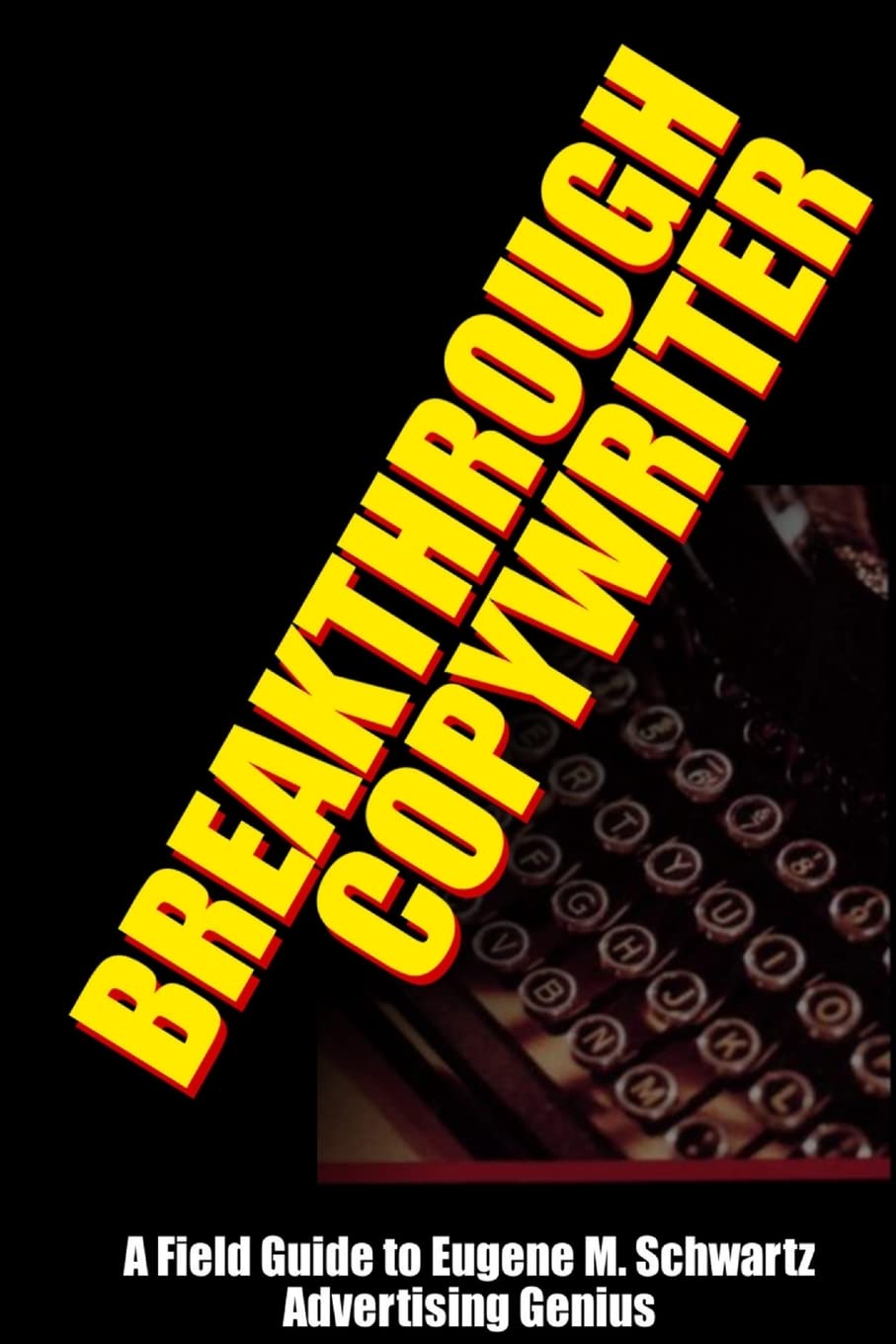
Breakthrough Copywriter distills Eugene M. Schwartz’s legendary advertising principles into an accessible field guide that shows you how to tap existing desires, match your message to market awareness, and create ads that work.
Core Principles
Channel Mass Desire, Don’t Create It
The copywriter’s job is to aim people’s hopes, dreams, fears, and desires at a specific product.
“The desire must already be there. It must already exist. You cannot create it, and you cannot fight it. But you can direct it, channel it, and focus it onto your particular product.”
Match Your Message to the Awareness
Schwartz identified five levels of awareness, from completely unaware to most aware.
“If your prospect is aware of your product and has realized it can satisfy his desire, your headline starts with the product. If he is not aware of your product, but only of the desire itself, your headline starts with the desire.”
Understand Market Sophistication
The first advertiser to promise a benefit wins. As competitors pile in with the same claim, the market grows skeptical, and the next advertiser has to push harder.
“Copy that successful claim—but enlarge on it. Drive it to the absolute limit.”
Find the Roles Your Customer Wants to Play
Behind every purchase is a person reaching for a version of themselves they want to become, like the savvy investor, the devoted parent, or the independent thinker.
“He has gained, or he has been given, a whole new vocabulary of wants. He now buys, not only objects, but roles.”
Try It Now
- Pick something you want to sell or promote. Instead of listing its features, write down three desires your audience already has that this thing satisfies, rather than explaining what the product does.
- How aware is my audience? Do they know they have a problem? Do they know solutions exist? Do they know my specific solution? Write your opening line to match that awareness level.
- Study three competitors in your space. Notice the claims they make. What can you claim that they can’t?
Quote
“Copy cannot create desire for a product. It can only take the hopes, dreams, fears, and desires that already exist in the hearts of millions of people, and focus those already-existing desires onto a particular product. This is the copywriter’s task: not to create this mass desire — but to channel and direct it.”
Book Freak is published by Cool Tools Lab, a small company of three people. We also run Recomendo, the Cool Tools website, a YouTube channel and podcast, and other newsletters, including Recomendo Deals, Gar’s Tips & Tools, Nomadico, What’s in my NOW?, Tools for Possibilities, Books That Belong On Paper, and Book Freak.
10/23/2622 October 2026
Uniqlo for Basics/Tops for Economy Class/SE Asia Haze
Nomadico issue #229
Good-value Travel Basics From Uniqlo
Back in Nomadico issue #218, I mentioned a men’s travel clothing article I got quoted in quite a bit. Another traveler who was featured mentioned a store I’d never shopped in, a Japanese one Uniqlo, and said it was great for inexpensive merino wool tops, shorts, and t-shirts. While I’m in Asia, I picked up a replacement for a fast-drying workout t-shirt that was getting worn out, an anti-odor wicking one that feels better-made than what you’d expect for $15. My last stop is Saigon, so I’ll probably snag a couple more before coming home.
Best Airlines for Economy Class
Skytrax runs the most respected annual rundown on top airlines because it relies on consumer surveys only, which tend to reflect the overall mood and service level more than obscure data points like on-time performance. The latest economy class report is dominated by Asian and Middle Eastern carriers. Anyone who has had one leg on Cathay Pacific (#2) and then a connection on American Airlines will give you an earful about the differences. Delta was the only North American carrier to make the top-20. Singapore won again, while others in the top 5 were Qatar, EVA, and All Nippon (ANA).
Toxic Haze in Southeast Asia
While there have been plenty of natural disasters happening around the world lately, the haze blanketing much of Southeast Asia for more than a month now is a man-made problem. The annual “Haze Season” is caused by farmers following slash-and-burn agriculture, including more than a few big Asian corporations. While the practice has long been squashed in most of the world, the rules in this region are poorly enforced, especially in Indonesia, so neighboring countries deal with dangerous air quality and poor visibility. El Nino is making it worse than usual: here’s the full story.
Disney World or a Luxury Tour?
According to a study that landed in my inbox from a company called FloridaRentals.com, it will cost a family of four an average of $4,064 this season to stay at one of the official Disney World resorts around Orlando. That’s already enough to put a family into a very nice house or apartment in much of the world, but if you pick the top option, Polynesian Village Resort, a week’s lodging will set you back $7,969. That’s before you pay the outrageous park entry fees or buy overpriced meals for everyone, so figure the total tab will be twice that. The things a mom and dad could do with that much money! It’s a dreamy travel list.
A weekly newsletter with four quick bites, edited by Tim Leffel, author of A Better Life for Half the Price and The World’s Cheapest Destinations. See past editions here, where your like-minded friends can subscribe and join you.
10/22/2621 October 2026
What’s in my NOW? — Tony Franco
issue #275
Tony Franco is a fractional COO and founder of SageWell Advisors, helping founder-led ecommerce and CPG brands build the operations to grow. He’s also Team Director for his town’s NICA youth mountain bike team, which he counts as one of his clients. Not a well-paying one 🙂
I can be found at LinkedIn. Hit me up – happy to help with all your type 2 fun needs.
PHYSICAL
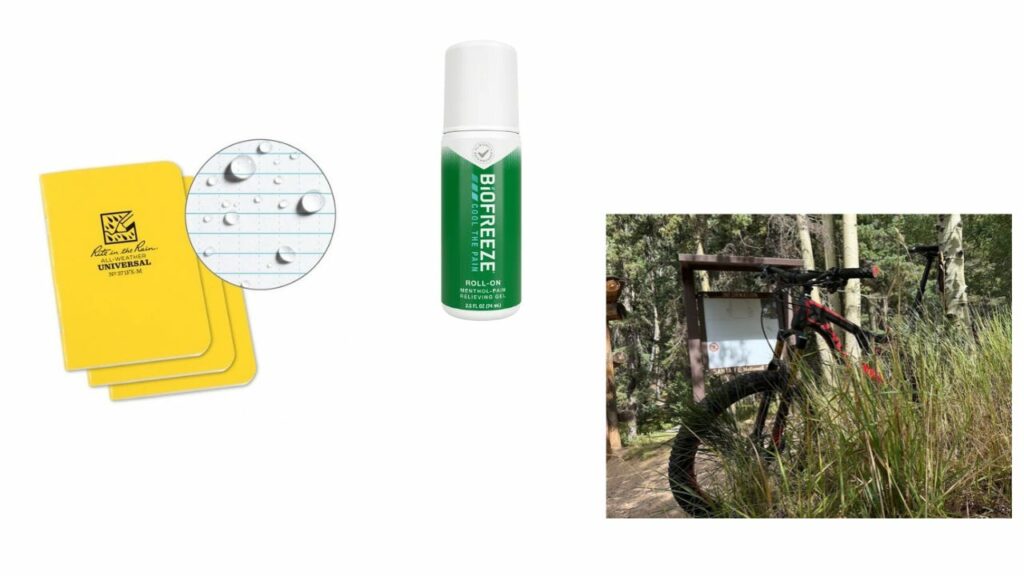
- Rite in the Rain notebook. Always a notebook. Writing something down does something to my brain, and I think it tells the other person that what they say matters and is worth remembering. I’m not a long-form journaler, more of a scribbler and jotter. My current favorite is a Rite in the Rain I picked up at my favorite local outdoor store before our summer mountain bike trips out west.
- Biofreeze roll-on. Sort of addicted to it. It lives on my desk and works just as well for tense Zoom calls as it does for post-ride shoulder aches.
- My Pivot. Our bike money tends to go to our three boys, and I was a bit past ready for a new bike myself. Then a friend at church gifted me this 10-year-old, barely ridden, amazing Pivot out of the blue. So grateful.
DIGITAL
- Notion + Claude. Whether it’s a client or the team, I track to-dos and roles in Notion. Then I use Claude to turn a well of data and spreadsheets into “pocket-sized” or executive summary views that communicate well.
- NICA coaching resources. A lot of what I’ve learned as a mountain bike coach came from NICA’s great resources and training. I absolutely love helping someone confront something hard, push through it, and grow on the other side. Sometimes that’s a hard ride or a challenging skill. Sometimes it’s a ride where the flow just works and the joy comes through. Now I try to help student mountain bikers and business founders, leaders, and teams experience the joy of type 2 fun.
INVISIBLE
You gotta earn the view. Embrace the suck, enjoy the climb… the whole thing is the thing.
Sign up here to get What’s in my NOW? a week early in your inbox.
10/21/2620 October 2026
Belushi / Timeline: A Visual History of Our World
Issue No. 140
BELUSHI – THE LIFE AND DEATH OF AN AMERICAN ICON
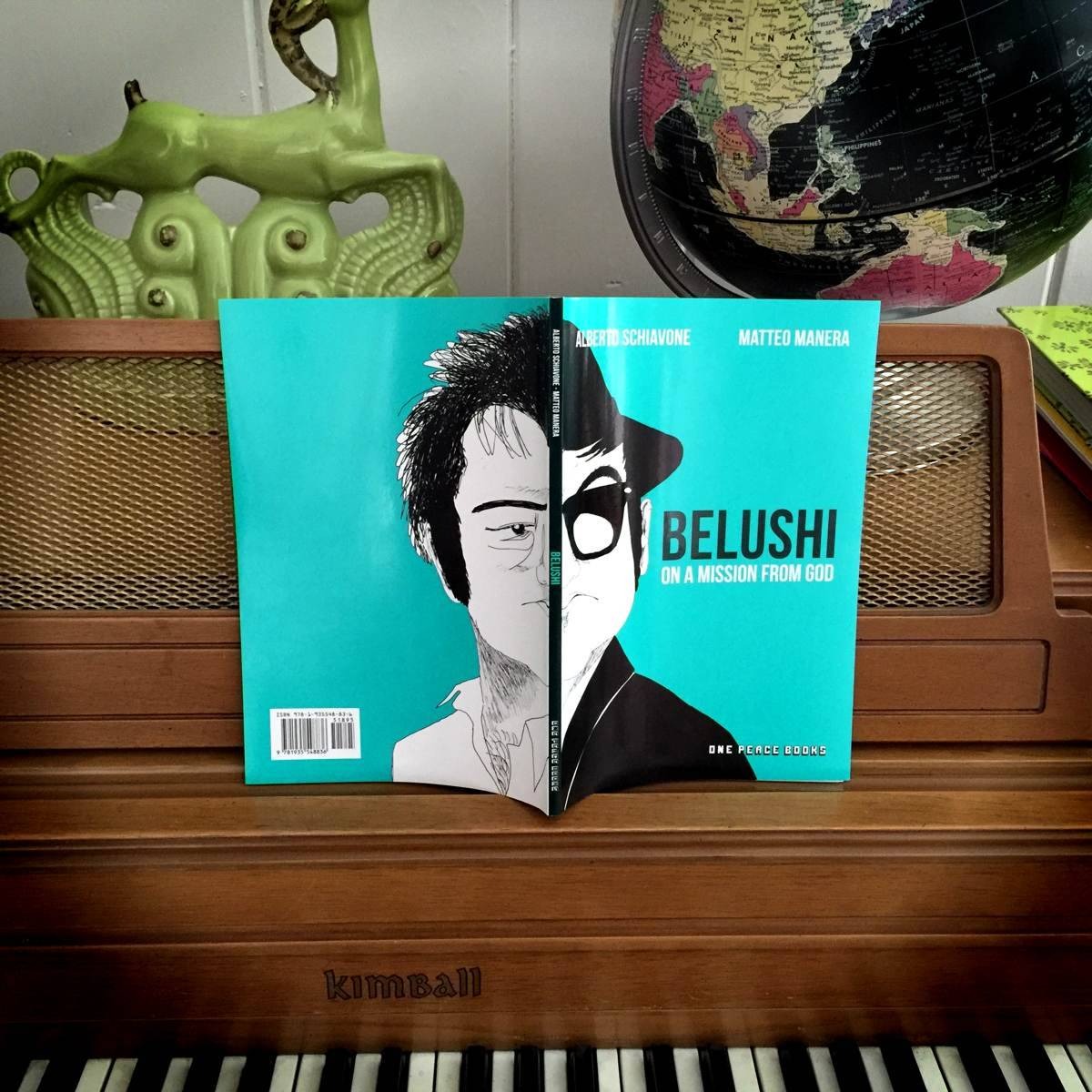

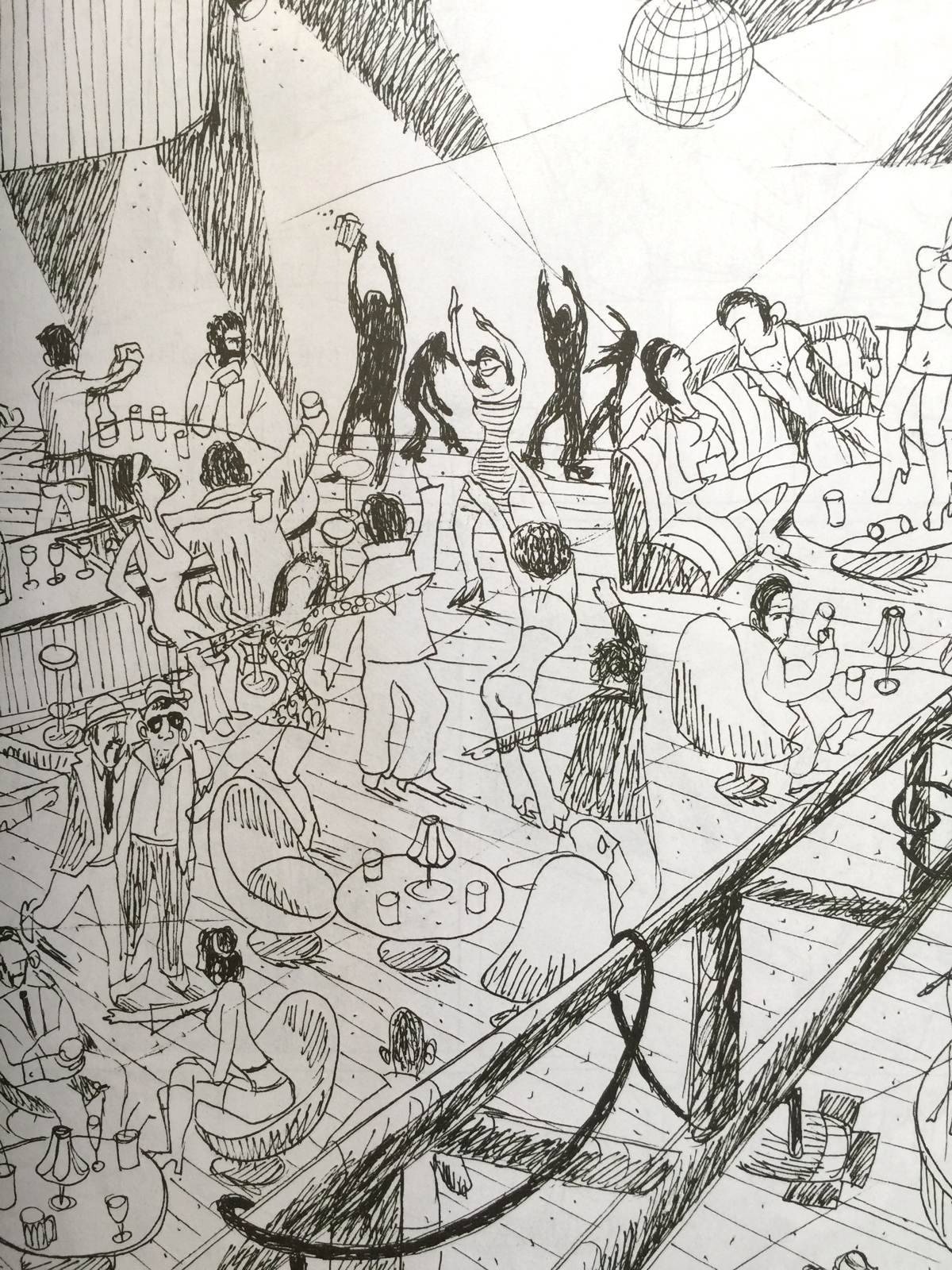

Belushi: On a Mission from God
by Alberto Schiavone (author) and Matteo Manera (illustrator)
One Peace Books
2016, 112 pages, 7 x 1 x 10 inches (softcover)
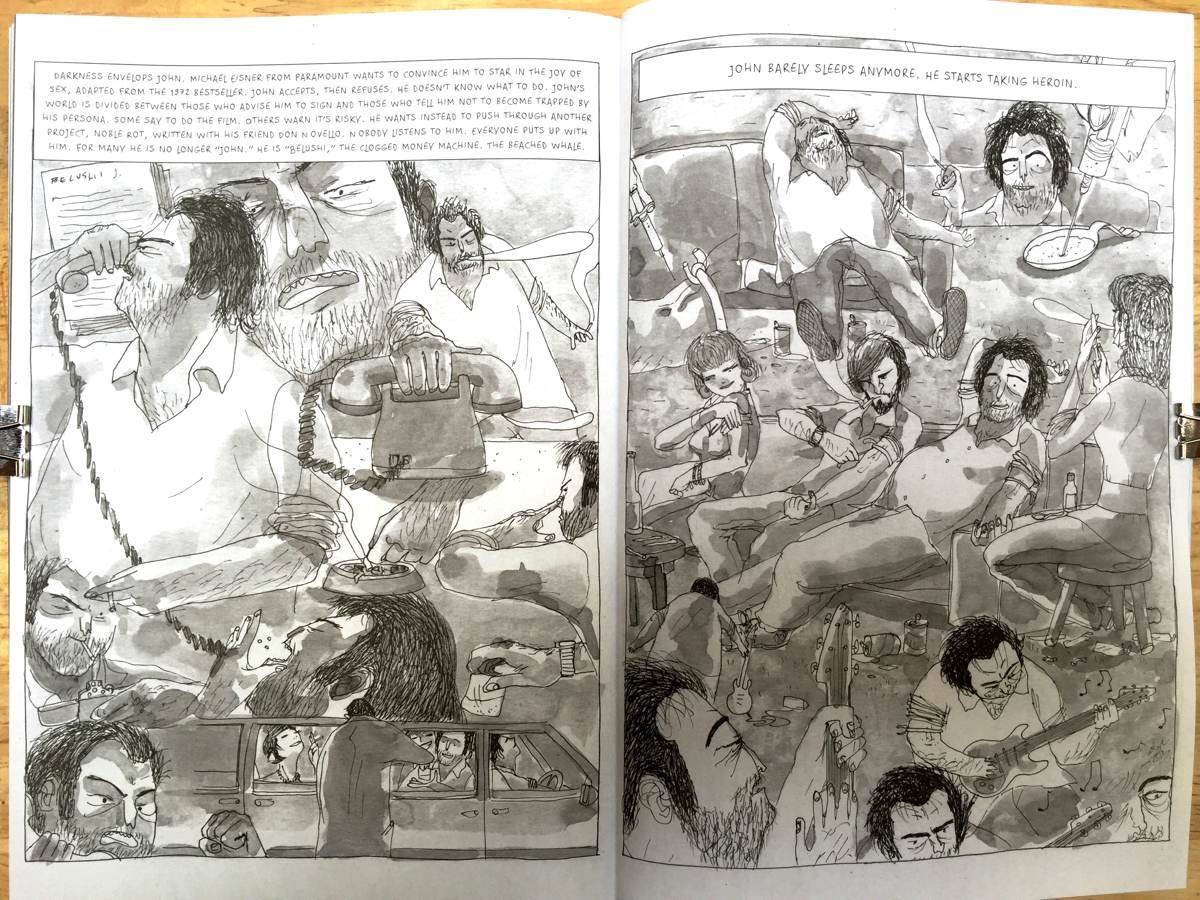
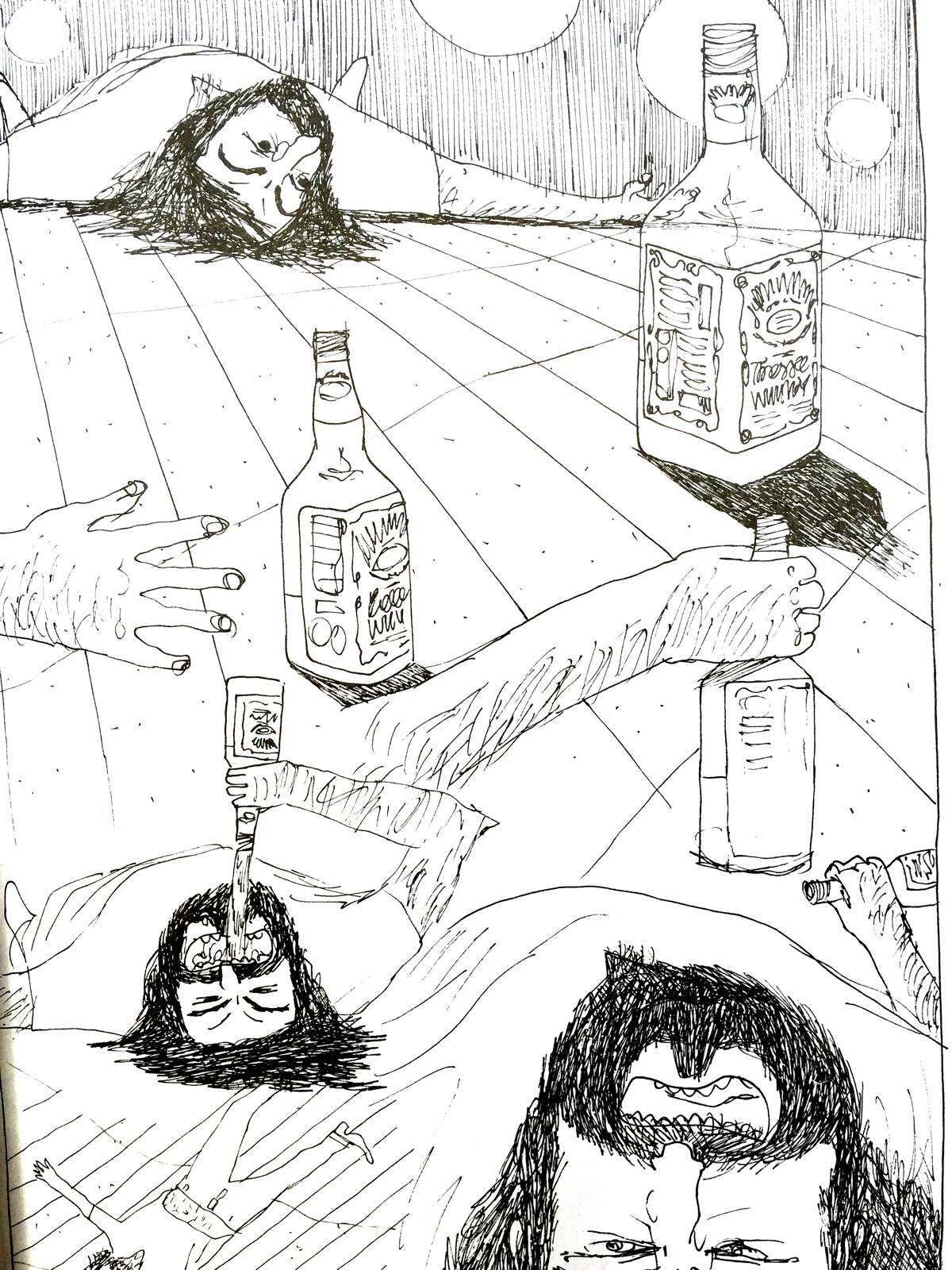
In 1982 John Belushi died from an overdose in a bungalow at the Chateau Marmont when he was 33 years old. At his memorial service, his friend and collaborator, Dan Akroyd, said Belushi was “a brilliant performer, writer, tactician, business strategist…a good man – and a bad boy.” Released today, this graphic novel biography, written and illustrated by two Italian truefans of Belushi, presents us with the story of a man whose level of self-destructive behavior moved in lockstep with his rapid rise to international superstardom. Author Schiavone doesn’t bother explaining why Belushi abused drugs when he had everything else going for him – because the why is not especially interesting. “Real greatness gives license for real indulgence,” explained Ackroyd at the memorial service, “whether it’s as a reward, as therapy or as sanctuary.” This is true for many great entertainers, and Schiavone wisely chose not to devote space exploring this aspect of Belushi’s life, choosing instead to focus on what made the comedian unique – his brand of humor that was fresh and absurd, yet comforting and deeply resonant at the same time. Manera’s fine-lined pen and ink illustrations capture the essence of Belushi and his manic short life. – Mark Frauenfelder
TIMELINE: A VISUAL HISTORY OF OUR WORLD
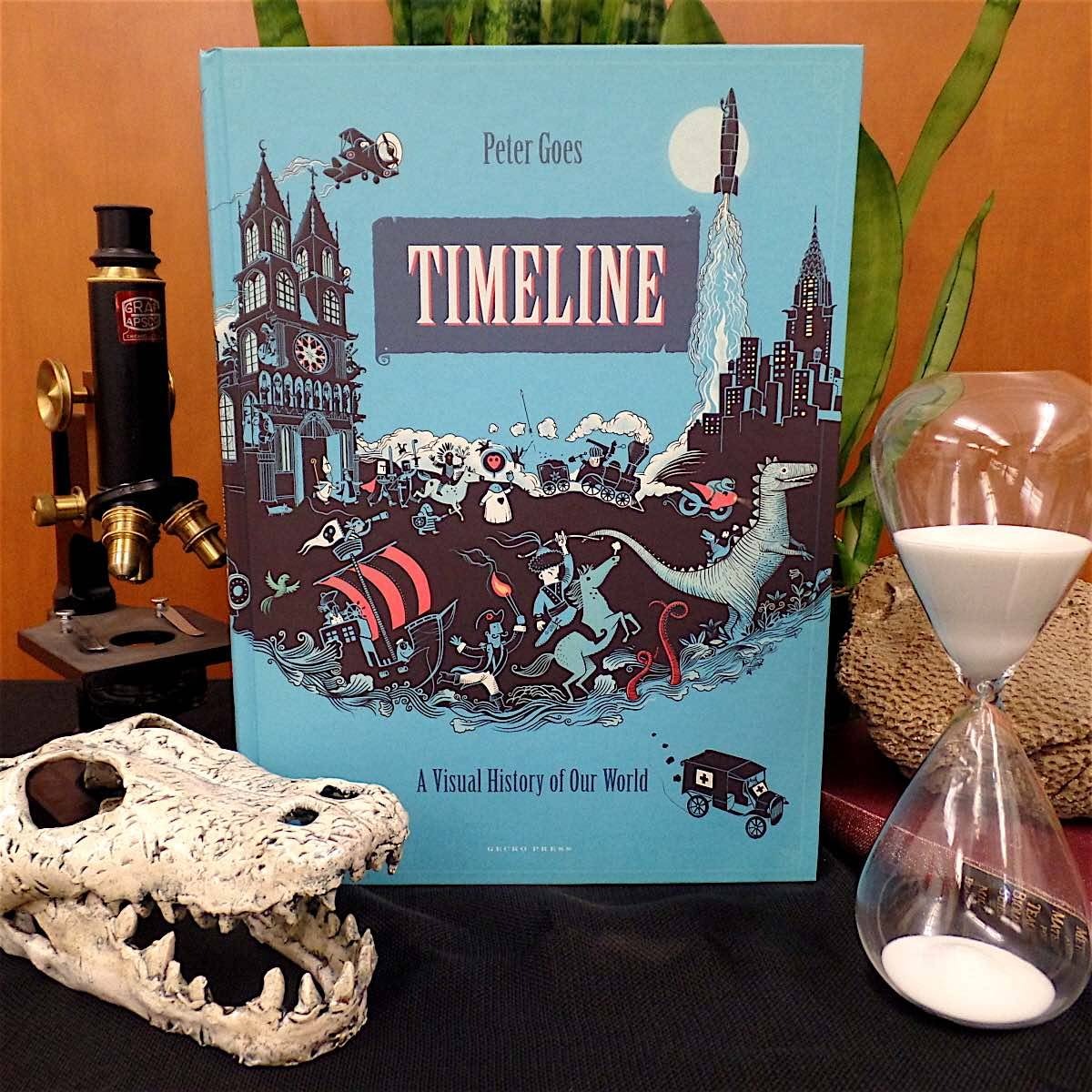
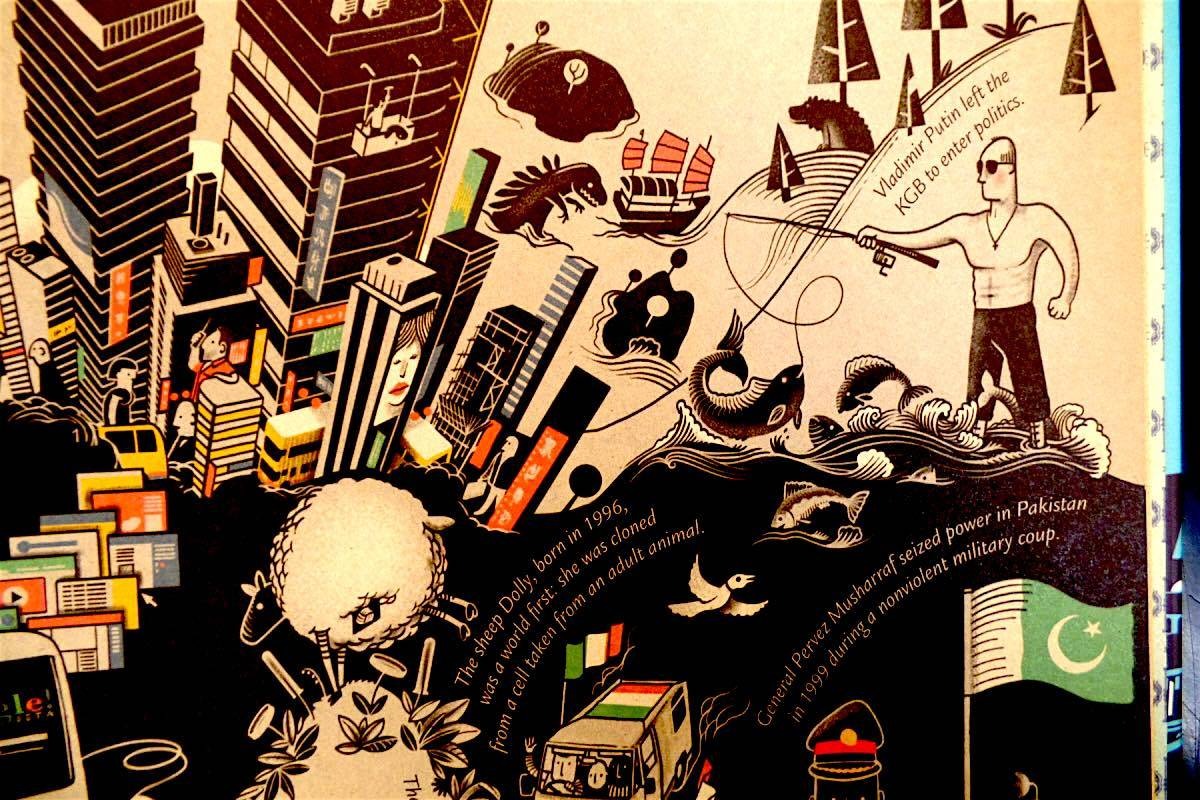
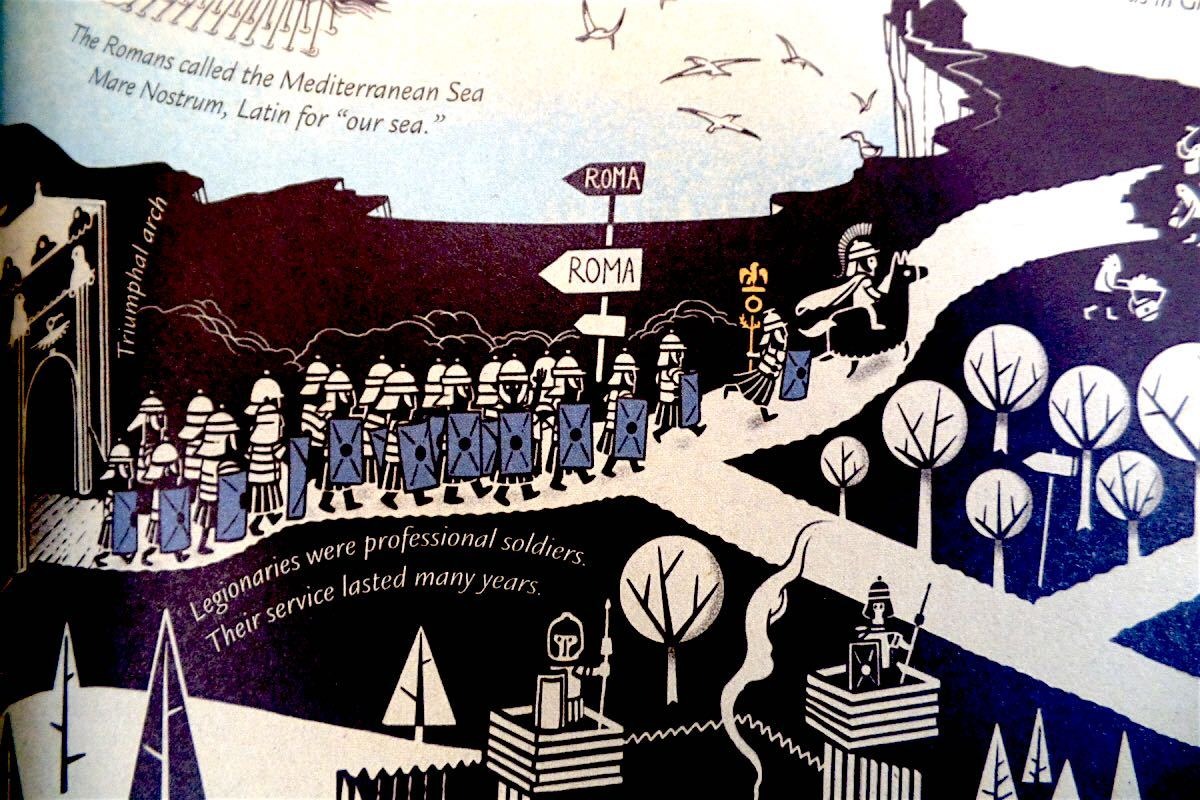
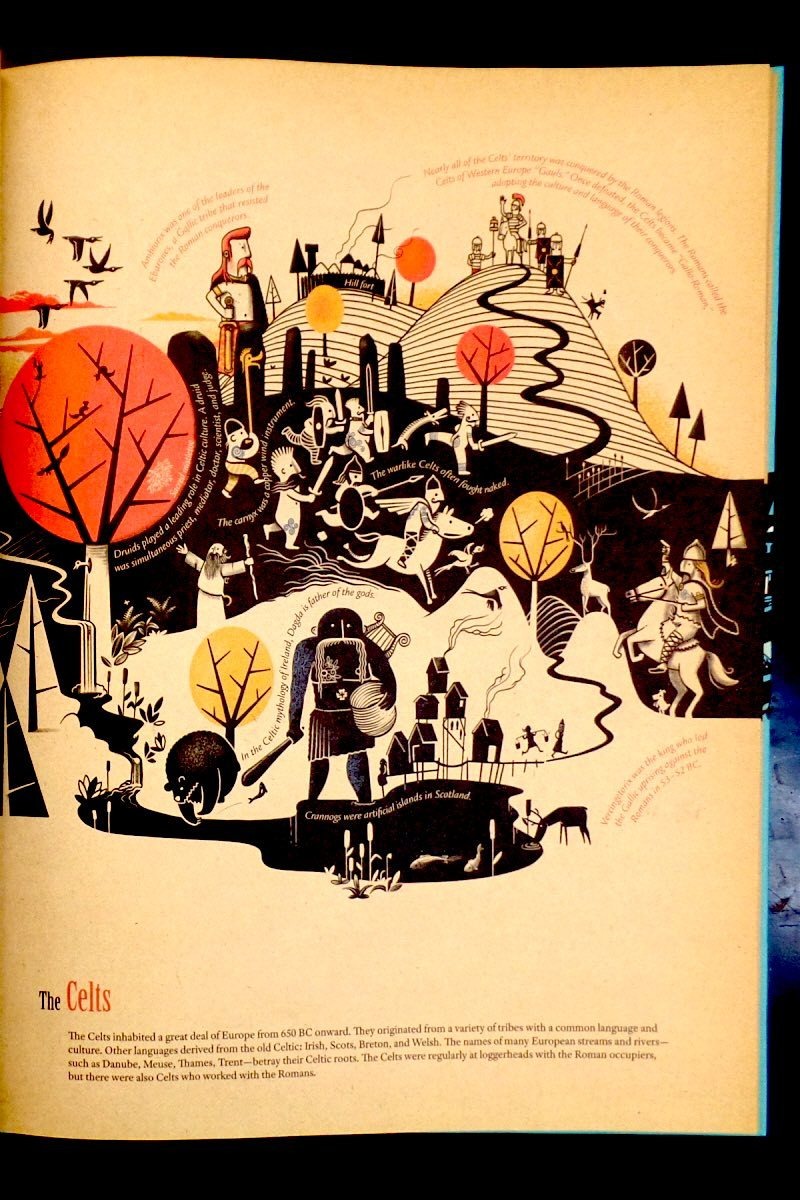
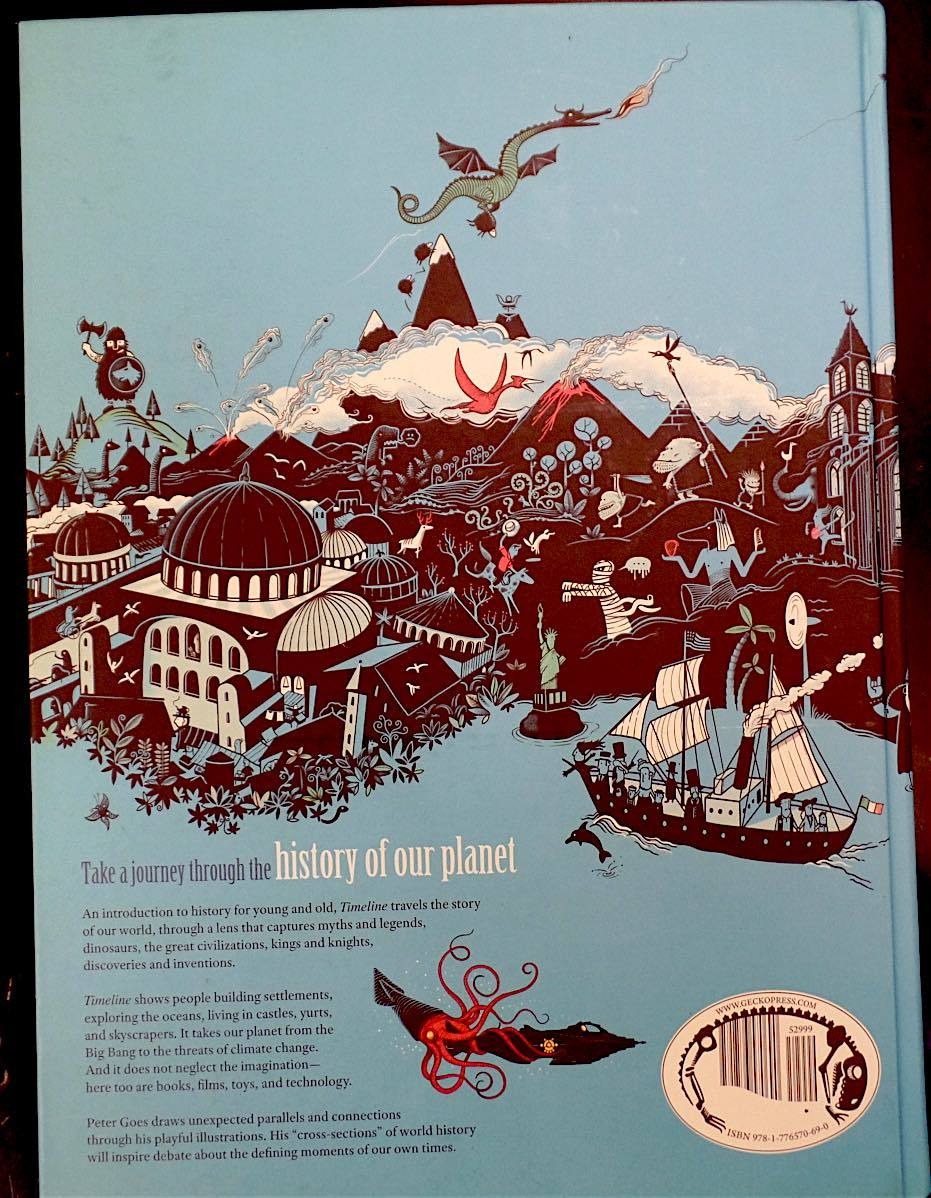
Timeline: A Visual History of Our World
by Peter Goes
Gecko Press
2016, 80 pages, 10.6 x 14.6 x 0.6 inches
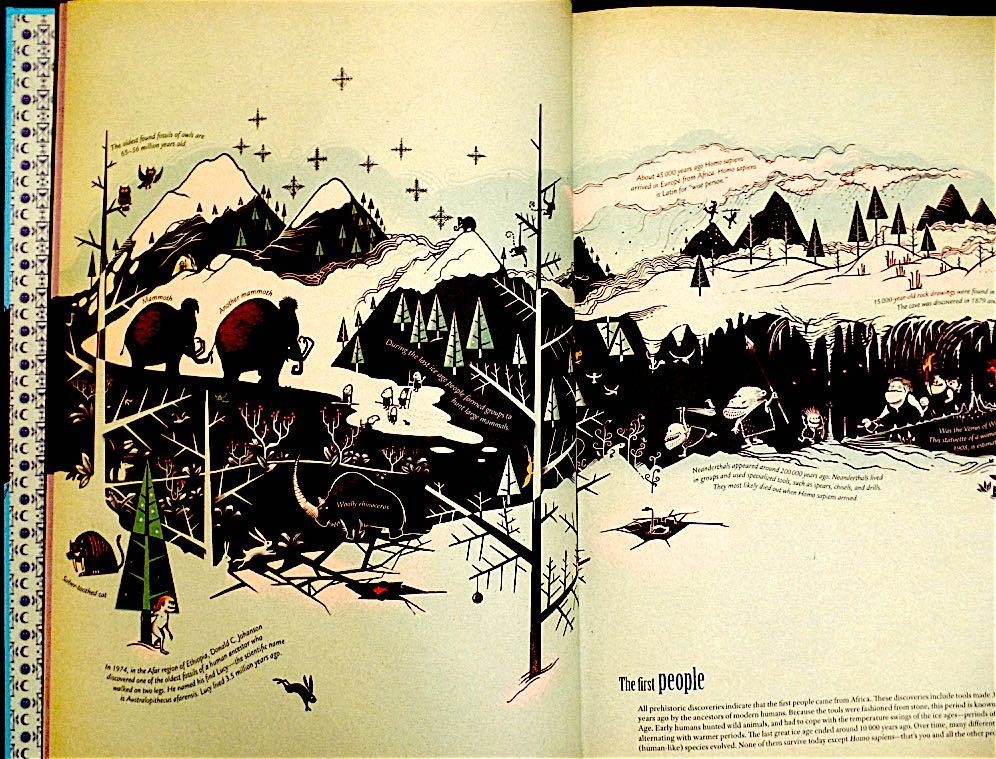
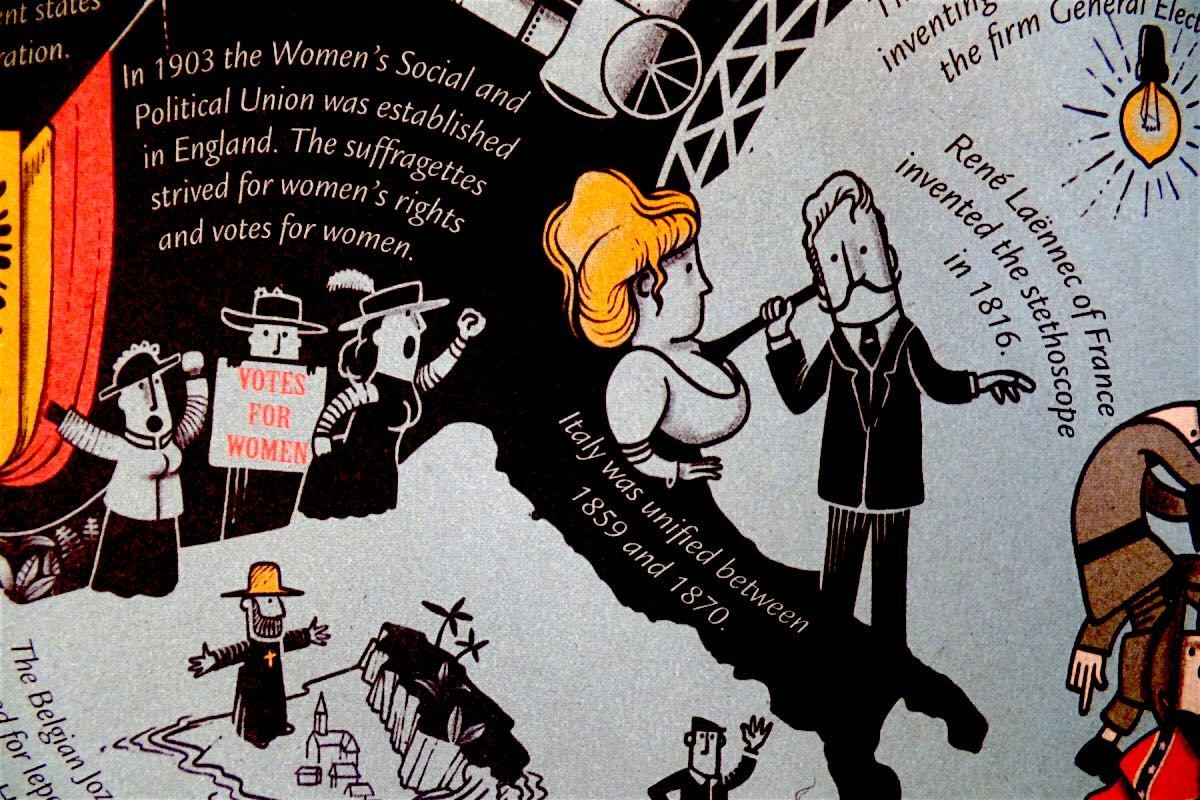
I love the tidbits of history, the unique visual style, the subtle humor, and the breadth of coverage in Timeline: A Visual History of Our World. On each 10×29-inch page spread are whimsical curved text blocks filled with simply written – yet intriguing – historical facts. And each spread addresses one era of time. The book, which targets children 7 to 12-years old, starts with The Beginning of Life and includes a miniature image-based timeline of stromatolites, trilobites, ammonites and more. The author offers spreads dedicated to the major geological periods, as well as more brief and recent timespans. Our current decade is the last timeline covered, concluding with “As time goes by…” along with a person spreading black paint across the page.
The illustrations are fabulous. Goes uses a minimalist color palette that differs for each of his timelines. The Dinosaurs are on a wheat-toned page with black silhouettes accented by red and gold. The Ming Dynasty appears on a dusty rose background with dark pink and white accents, again using black as the major illustrative color. Goes’ technique of black with two accent colors artfully draws the eye to visual vignettes on the page, while the curving text leads you to the next image. Wonderful. Engaging. Amusing.
This book makes for great conversational fodder. Did you know that, according to the page spread on 18th Century in Europe, “Mont Blanc was called Mon Maudit, or ‘cursed mountain,’ until the Enlightenment, when people stopped believing in curses”? The 1960s spread covers the social protest movements of the decade, referring to incidents from around the globe. One of the most interesting spreads to me was Explorers from All Periods, mostly because I love learning about specific people. China had an ambassador, Zhang Qian, in the 2nd Century BC – who knew that there were ambassadors that long ago? I am not a history buff, yet I continually enjoy perusing Timeline: A Visual History of Our World. – Lora Poser-Brown
Books That Belong On Paper first appeared on the web as Wink Books and was edited by Carla Sinclair. Sign up here to get the issues a week early in your inbox.
10/20/2619 October 2026
Simple Kitchen Aids
Tools for Possibilities: issue no. 212
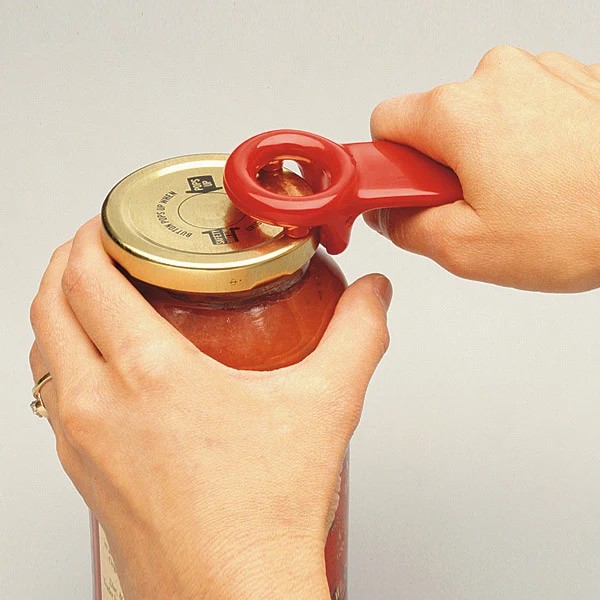
Easiest jar opener
The JarPop jar opener is the best five-dollar gizmo I’ve ever bought. It’s what I gave my mother for Christmas last year. It’s a beautifully simple bottle-cap-opener for lidded jars. It breaks the seal on a jar of applesauce (or anything else), and then the lid twists right off. I’m a little embarrassed how strongly I feel about it. — David McIntosh
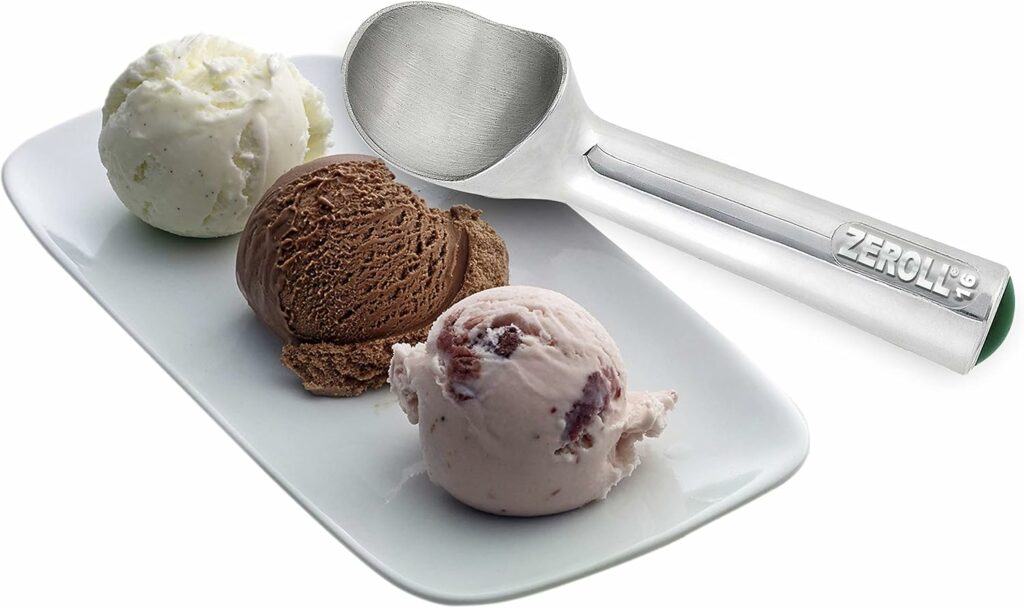
Heat-activated frozen treat scoop
Unfortunately for my waist, I love ice cream. For a long time, I accepted the fact I either had to strengthen my wrist muscles, leave out the ice cream to soften up, or run the frozen tub or spoon under hot water before digging in (which dilutes the ice cream if you forget to dry it off beforehand). Not anymore.
The trick to this scoop is a heat-conductive fluid sealed inside the handle and business end. The heat from your hand warms the fluid, which lets you scoop easier and quicker. I find it can scoop ice cream from ice cream tubs that are hard as a rock, like a spoon through a tub of margarine.
This Zeroll scoop is not dishwasher safe, and must be hand-washed in warm or luke warm water (the fluid in the handle can’t take any hotter). It comes in different sizes from two to four ounces, in either a silver aluminum or Anodized Teflon finish. I opted for the two-ounce aluminum scooper because I’ve heard the Teflon finish wears off over time.
It’s worth mentioning that I learned of the Zeroll from a cooking magazine. They tested various scoopers to settle on one that makes the “perfect, round scoop.” The Zeroll won. — Ethan Stettner
Really big ice cubes
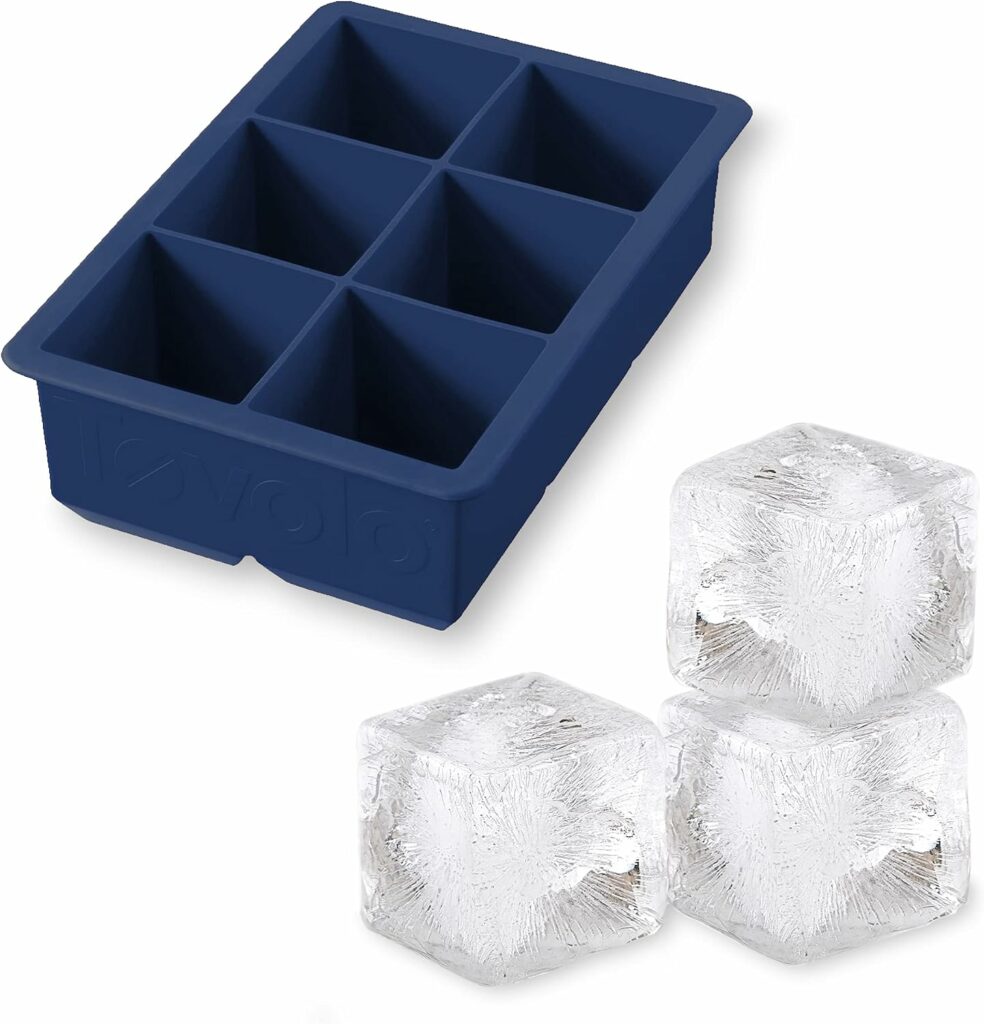
I don’t own a fridge with an ice maker, and so for the past few years have been relying on the cheap white ice trays that seem to inhabit everybody’s freezer. They’ve done their job, but never very well. Recently, however, I picked up the Tovolo King Cube Ice Tray and have been blown away with the oversized ice cubes it produces.
The silicone ice tray produces the largest cubes of ice (they’re 2″ x 2″) of any tray I’ve seen. Outside of being a gigantic novelty, the increased size is a boon as it reduces the surface area to volume ratio. This means the ice melts slower in your drink keeping it cold longer while minimizing how much it waters down your drink. I hadn’t expected it to make that much of a difference, but it’s really astonishing how much longer the ice remains in the drink. I’ve found these large cubes are downright perfect for cocktails like a gin and tonic, and while I’m no whiskey connoisseur I imagine they’d be even more at home in a scotch on the rocks. Simply put there’s something special about having an oversized piece of ice clinking in your glass.
Another design plus is that the silicone tray holds a greater volume of water than other ice cube trays I’ve tried (which all seem to hold a pitiful amount of water), while taking up less valuable freezer real estate (the tray is significantly taller, and not as long as my old trays). Popping the ice cubes out takes a bit of wrangling, but no more so than cracking traditional ice trays, and because silicone is a good insulator you’re not left with ice cold hands in the process.
The only downsides I’ve found so far are that the flexible silicone tray can twist and bend and slosh while finagling it into the freezer, and the fact that it only makes six cubes at a time. This hasn’t been a problem for me as it takes fewer cubes (read: one) to cool down most drinks.
Overall, these big ice cubes are just plain cool, and for $9 it’s a cheap and functional upgrade to any freezer. — Oliver Hulland
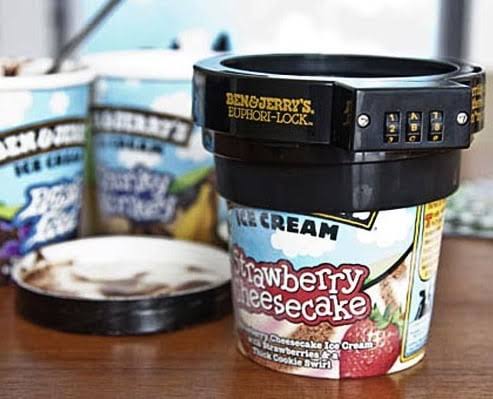
Personal ice cream security
Due to roommates that didn’t quite understand my displeasure at my consistently disappearing ice cream, I had to resort to this. Not a gag, it is actually is designed with the intention to work. Though I suppose that since the container it is “locking” is made of waxed cardboard (which can be deformed a bit) it won’t keep out a serious professional penetration attempt.
I found that it sends a warning message, sort of like one of those little LED’s you put in a car to give the appearance of having an alarm. — Morgan Davis
Safe can opener
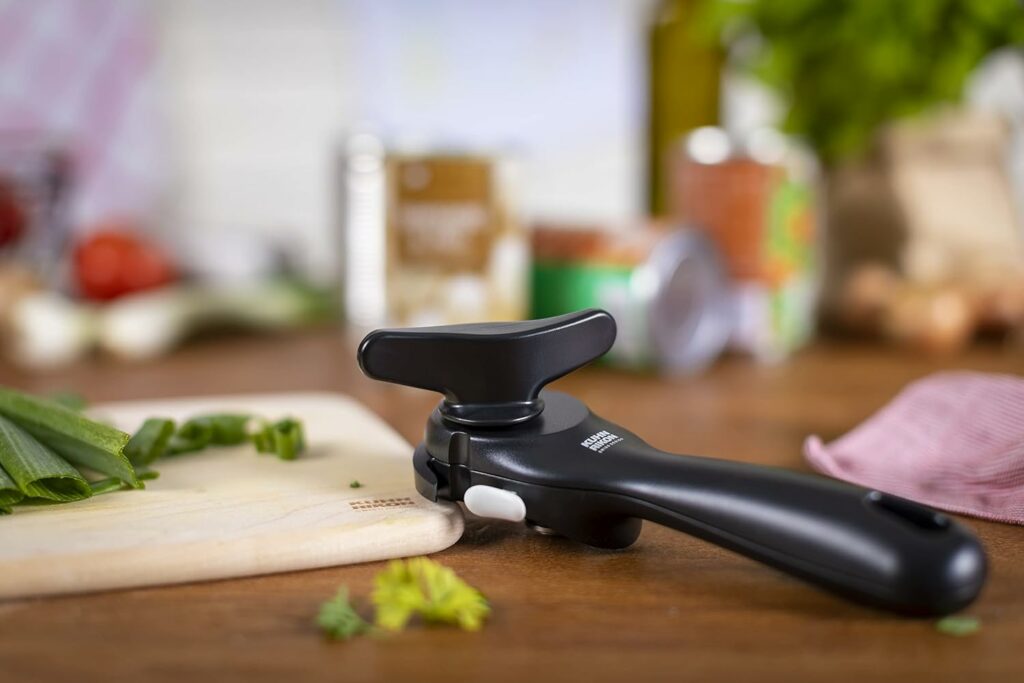
It may be a terribly long and unwieldy name, but it is far and away the coolest can opener I have ever used.
Why? The blade cuts into the can *below* the rim so the lid never falls into the food, and the blade doesn’t touch the food either. You can use it to open “pop top” lids as well. A can opened with this tool will have no sharp edges. Apparently, it works for both righties and lefties (not tried). Best of all you can challenge your friends by handing them the opener and a can and watch them figure out how to use it. — Marsh Gardiner
One-handed towel dispenser
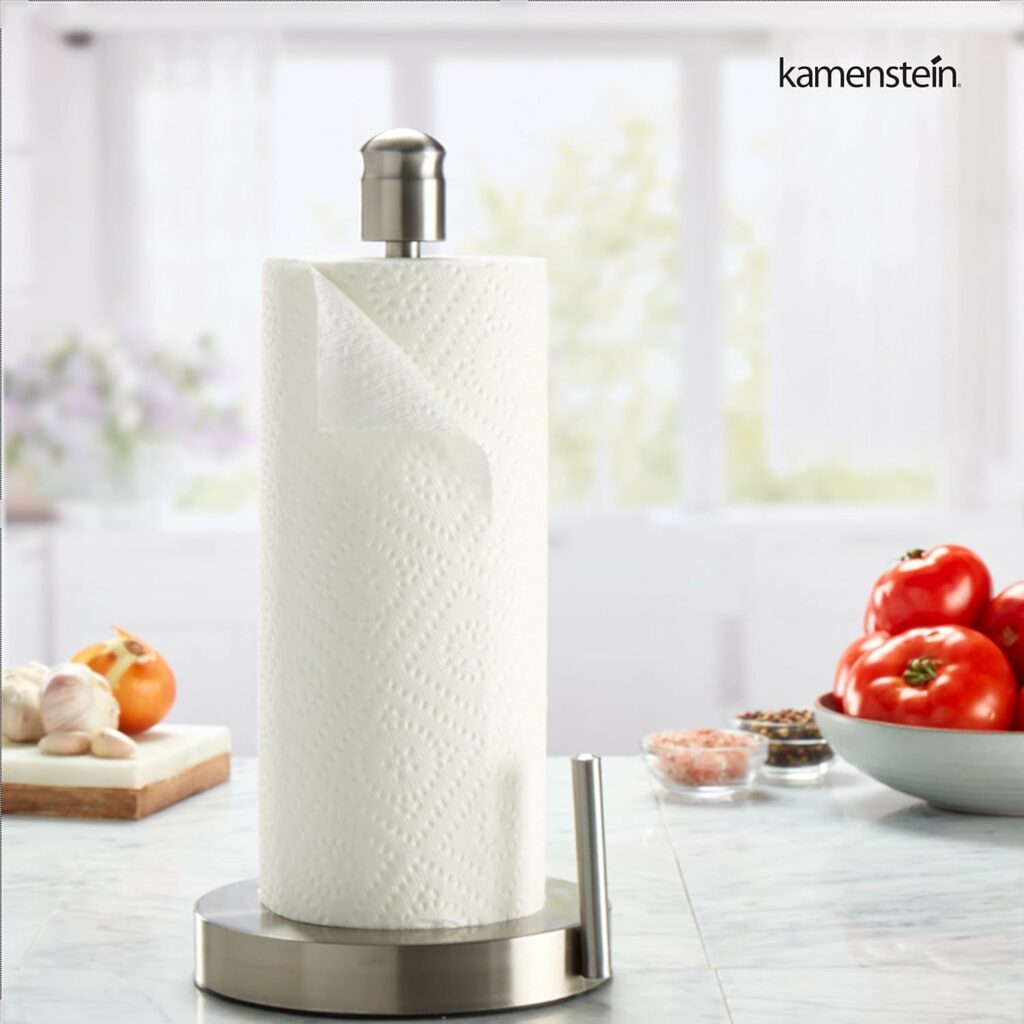
Most free-rolling paper towel dispensers just don’t work for me. Since I do a lot of food prep from my wheelchair, I can only grip with one hand. The genius of this “Perfect Tear” dispenser is how it allows enough freedom for the roll to unwind with a steady pull; yet, there’s still enough friction to prevent further unwinding when you pull to detach the sheet.
The secret? 1) The center post is a series of bowed wires that contract and hold the paper roll snugly in place; and 2) The base weighs about four pounds, which adds stability.
No more chasing unwinding rolls of paper across the kitchen floor. Or getting five sheets when I only need one. Better still, it works just as well at the end of the roll as it does at the start. When a roll is out of sheets, just unscrew the top cap, slide off the cardboard tube, push on another roll and replace the cap. All of this can be easily performed one-handed.
After a couple of years, it’s still well worth the precious space it’s claimed on my very limited counter. — Eric Eales
Once a week we’ll send out a page from Cool Tools: A Catalog of Possibilities. The tools might be outdated or obsolete, and the links to them may or may not work. We present these vintage recommendations as is because the possibilities they inspire are new. Sign up here to get Tools for Possibilities a week early in your inbox.
10/19/26ALL REVIEWS
 10/18/26
Yesterday’s weather / Quantify yourself science / Advice for parts work
Recomendo – issue #536
 10/16/26
Book Freak #227: The Perfume of Silence
A nonduality teacher’s dialogues on finding the freedom that is always already here

EDITOR'S FAVORITES


COOL TOOLS SHOW PODCAST
WHAT'S IN MY BAG?
21 October 2026

ABOUT COOL TOOLS
Cool Tools is a web site which recommends the best/cheapest tools available. Tools are defined broadly as anything that can be useful. This includes hand tools, machines, books, software, gadgets, websites, maps, and even ideas. All reviews are positive raves written by real users. We don’t bother with negative reviews because our intent is to only offer the best.
One new tool is posted each weekday. Cool Tools does NOT sell anything. The site provides prices and convenient sources for readers to purchase items.
When Amazon.com is listed as a source (which it often is because of its prices and convenience) Cool Tools receives a fractional fee from Amazon if items are purchased at Amazon on that visit. Cool Tools also earns revenue from Google ads, although we have no foreknowledge nor much control of which ads will appear.
We recently posted a short history of Cool Tools which included current stats as of April 2008. This explains both the genesis of this site, and the tools we use to operate it.
 Kevin Kelly started Cool Tools in 2000 as an email list, then as a blog since 2003. He edited all reviews through 2006. He writes the occasional review, oversees the design and editorial direction of this site, and made a book version of Cool Tools. If you have a question about the website in general his email is kk {at} kk.org.
 Mark Frauenfelder edits Cool Tools and develops editorial projects for Cool Tools Lab, LLC. If you’d like to submit a review, email him at editor {at} cool-tools.org (or use the Submit a Tool form).
 Claudia Dawson runs the Cool Tool website, posting items daily, maintaining software, measuring analytics, managing ads, and in general keeping the site alive. If you have a concern about the operation or status of this site contact her email is claudia {at} cool-tools.org.