21 September 2026
Hiring
Tools for Possibilities: issue no. 208
How to hire people
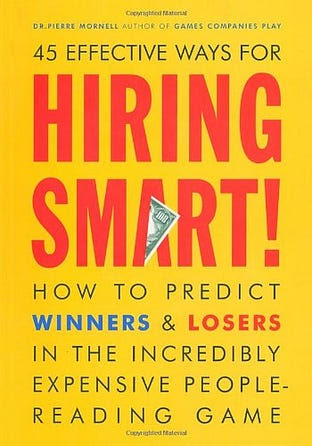
Hire smart, your company wins; hire dumb, you die. People are the scarce resource in the new economy, but no one teaches employees how to hire people. Successful fast-growing companies have caught on. They now hire people who are good at hiring others. Between these book covers is a million dollars worth of hiring advice, the best anywhere. If you are in business, ignore at your peril. — KK
- You can’t spend too much time or effort on “hiring smart.” The alternative is to manage tough, which is much more time consuming.
- The best predictor of future behavior is past behavior.
- Strategy No.3: Give an assignment before the interview. Ask the candidate to visit one of your stores, plants, campuses, offices, or Web pages before the interview. Then ask for the candidate’s observations.
- Strategy No.5: Read resumes in teams if possible. It’s helpful–and faster–to read the top candidates’ resumes in teams of three to five people. Teams that work well together are more accurate and insightful about potential employees than individuals are.
- Strategy No.6: Cast the widest net possible. Microsoft assumes that the best candidates are not looking for jobs. In fact, candidates who approach Microsoft are actually less attractive to the company.
- Strategy No.13: Ask all your questions at once. That’s right. Put all your initial questions on the table up front. This strategy accomplishes three things. First, in a manner of speaking, you pass the baton. You’ve asked the questions, now the candidate must respond. Performance depends upon the candidate, not selling yourself and the organization. Second, more importantly, this strategy directly confronts the most common problem in interviewing: not listening, and talking too much…Third, this technique forces you to listen. If there’s one practical tip you should try in your next interview, I suggest this one. Asking all your questions at once, and following up later in the interview, allows you to settle back and watch a candidate’s behavior as well as listen to his or her words.
- Strategy No. 15: Assign a mini-project to finalists. Three quarters of the way through the interview, give the candidate a task to perform. Not only does this demonstrate the candidate’s behavior–it also breaks up the monotony of most interviews.
- Strategy No. 32: Ask the references to call you back. Here is the simplest, most effective reference check that I know. It’s also fast and legal. Call references at what you assume will be their lunchtime–you want to reach an assistant or voice mail. If it’s voice mail, leave a simple message. If it’s an assistant, be sure that he or she understands the last sentence of your message. You say: “John (or Jane) Jones is a candidate for (the position) in our company. Your name has been given as a reference. Please call me back if the candidate was outstanding.”The results are both immediate and revealing. If the candidate is outstanding or excellent, I guarantee that eight out of ten people will respond quickly and want to help….However, if only two or three of the references selected by the candidate return your call, this message is also loud and clear. And yet:No derogatory information has been shared.No libelous statements have been made.No confidence or laws have been broken.
- Strategy No. 39: Invest in people, not ideas.
- Unfortunately, an employer’s ability to hear bad news about a potential employee is inversely proportional to the time spent courting that employee.
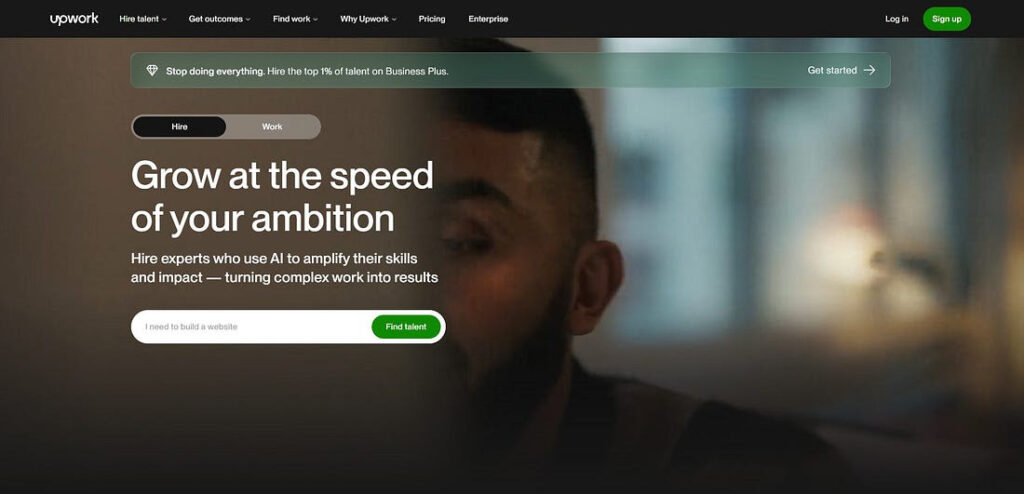
Personal outsourcing
Elance is a global marketplace for freelancers. You post a job you want done, and freelancers around the world will bid on it in a matter of hours. Once the price and deadline are agreed upon, the work will be delivered to you very rapidly. Because of its global nature, your costs may be very low.
Elance has a pool of 135,000 pros expert in programming, design, writing, and legal matters. People use them to design a logo, create marketing materials, tweak a database, code a website, create an iPhone app.
I’ve used Elance to outsource projects at least 8 times by now and have had fantastic results. I’ve been most surprised by the high quality and professional management, particulary from overseas workers. It’s indeed inexpensive, but also great work. For one scripting job I got estimates from US shops as high as $6,000; it would take months from specs to testing. We went on Elance, got a bid for $250 to do it manually (without scripts) and it was done perfectly in a week. I’ve used Elance for Photoshop work, to hire designers, artists, and proofers. A lot of the work on this book was done by free-lancers hired through Elance. You could start a company with them. In fact Kevin Rose hired an Elancer to code the first version of the now popular website Digg.
Elance’s escrow service holds the payment and protects both the work provider and you the employer. The site provides status updates on work done, and plenty of communication between the parties. Workers must pass a competency test to qualify to be listed. Some freelancers can also pass expertise tests in a mild form of certification, say for working on java or ajax, etc. Elance freelancers did about $200 million of work last year and less than 1% of the jobs had any kind of dispute, and most of those were self-resolved by the fact that the entire transaction correspondence is logged.
While I first went to Elance for cheap labor, I now also go to get jobs done in a hurry, or to find expertise I can’t find locally. (Fifty percent of Elancers live in North America.) If you have work, and you know what you want, this is a great service.
The real trick in using Elance, or its competitors like oDesk, is in being able to specify the deliverable you want without spending more time that it would take to do the project itself. This kind of outsourcing is best for bite-sized chunks of work. The more precise you can detail your job the better that Elance or the others will work for you. It’s not good for consulting, hand-holding, or mind-changing assignments. But it can be cheap enough that you can try lots of things. It costs you nothing to post a job on Elance.
The way this work is: If you accept a bid, you pay the amount agreed up front and the site places your fee in escrow. (You can pay with PayPal.) They pay the talent when you are satisfied the work is complete and good. This protects them and you. The site’s commission comes out of the talent side; The winning free-lancer will pay a 8.75% fee to Elance. (You don’t pay the site anything).
It works very well. BTW, the bidders are often small companies rather than just individuals. Fees I’ve paid for work have ranged from half to one tenth of what we might otherwise have to pay. And it is not just for coders. I hired a guy to run ethernet cable in our home, and others have found a videographer for their wedding, or a translator for their manual, etc. Some of the folks I have hired live in Turkey, or India, Argentina. Like any remote relationship, you get what you put into it.
It’s a great tool when you need to hire expertise.— KK
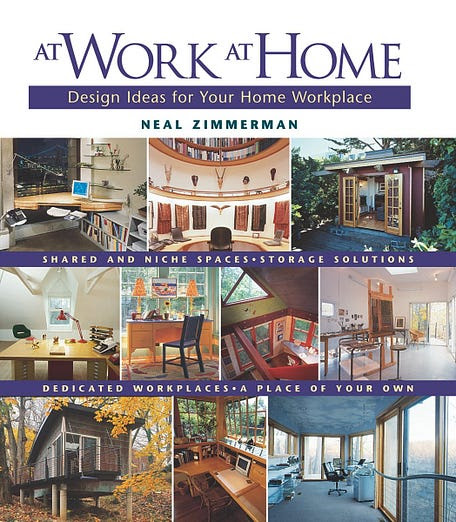
Tips for creating home workspaces
At Work at Home: Design Ideas for Your Home Workplace
Not all home-office work is typing at a keyboard. That’s why this home-office design book is heads above the others. Maybe you are a weaver, or a landscape architect, or antique toy restorer. When I had a chance to design my own home office attached to our house I found the clear advice, helpful design ideas and visual inspiration in this portfolio to be the best of the bunch. —KK
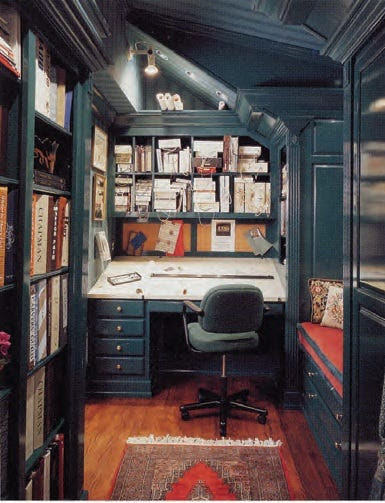
- Why do some of these spaces work and others fall short? I’ve reviewed hundreds of home workplaces, and I’ve concluded that those that are the most successful have three basic features in common. First, they help their occupants balance the two sides of their lives — work life and home life — in a way that is harmonious not just for them, but also for the people with whom they share their living and working space. Second, the workplace is well planned and well organized; it allows the user to work in a CEO environment — that is with Comfort, Efficiency, and Organization. Third, a successful home workplace has a personal spirit about it, which is a reflection of its occupant. It’s this personal spirit that stimulates home workers to do their best work.

Once a week we’ll send out a page from Cool Tools: A Catalog of Possibilities. The tools might be outdated or obsolete, and the links to them may or may not work. We present these vintage recommendations as is because the possibilities they inspire are new. Sign up here to get Tools for Possibilities a week early in your inbox.
09/21/2620 September 2026
DesignPatentDaily / Origin Myth Map / Magnifying Desk Lamp
Recomendo - issue #532
Technical art treasure
This Instagram account – DesignPatentDaily – simply posts one ink drawing from a US patent every day. The drawings are stunningly beautiful: functional and elegant. Crisp line diagrams, no fluff. Print out and frame. Much prettier than most modern art. — KK
A Map of Origin Myths
Origin Myth Map is an interactive world map of the stories cultures have told about where the universe, Earth, and humanity came from. There are almost too many ways to navigate it — you can move through time, filter by themes, or follow the lineages and relationships between myths. Every creation archetype, from primordial waters and cosmic eggs to world trees, opens another path, so I think the best way to explore it is simply to follow your curiosity. — CD
Magnifying Desk Lamp
I don’t know why I didn’t get a real magnifying desk lamp a long time ago. Amazon has many different models available. This is the one I got. It has a large magnifying glass with an LED illumination ring. It comes with a heavyweight metal stand and a clamp. My wife uses it to make collages, and I use it to draw and practice my cursive penmanship. You can adjust the brightness and color temperature with the control attached to the power cord. It uses USB power and comes with an AC adapter. — MF
Speed clamp
Here is a cool tool that will appeal to maybe 1% of this audience. The Jorgensen Ratcheting Bar Clamp is a new style of bar clamp that ratchets tight and then quickly releases with one hand. You squeeze it to tighten and squeeze another part to release. It’s the fastest clamp I’ve seen. Great for tasks that require a lot of clamping and unclamping. Comes in 4, 8, and 12-inch bars. About $15 each. — KK
When buying high-quality, name-brand tools pays
On r/BuyItForLife, a Redditor said he’d snapped the blade on a pair of Fiskars loppers from around 2010. He filed a claim on Fiskars’ website, telling them he didn’t have his receipt from Lowe’s after 16 years. Fiskars sent him a shipping address for the broken loppers, and 10 days later a brand new pair showed up — an upgraded design, judging from his photos. Commenters shared experiences with other brand names that also honored replacements without a receipt. One person got Calphalon to replace scratched 15-year-old nonstick pans. Moen sent someone free replacement faucet cartridges. Philips replaced an out-of-warranty Hue-Lite strip. And someone got a replacement pair of sunglasses from Maui Jim. — MF
Meeting yourself without fixing
Peter McEwen wrote a generous contemplative guide to meeting and metabolizing difficult emotions. The essay is structured into pith, concise, and elaborate versions of the same practice, so it’s worth returning to over time. But if you only have time for one takeaway, it’s this: when a difficult emotion shows up, you don’t have to resolve it. You drop out of the story and into the actual sensation in your body, and you stay with it in small doses, even if it’s only a few seconds. Practiced over time, this small, kind act builds your capacity to let conflicting feelings sit side by side without needing to fix them. For me, I know an emotion has metabolized when there’s no charge left, and I feel open and spacious inside, not tense or clinging. — CD
Sign up here to get Recomendo a week early in your inbox.
09/20/2618 September 2026
Book Freak #219: Aretha: From These Roots
Aretha Franklin on Faith, Music, and the Universal Need for Respect

Aretha Franklin (1942-2018) began singing as a child in the 1950s at her father’s church in Detroit. Reverend C.L. Franklin became her manager when she was 12, so she could sing on the “gospel caravan” tour circuit. She transitioned to jazz, soul, and blues in 1960 when she was 18, recording “Today I Sing the Blues” for Columbia Records.
By 1967, she was at Atlantic Records, where she released dozens of hits, including “I Never Loved a Man (The Way I Love You), “ “Baby I Love You,” “(You Make Me Feel Like) A Natural Woman,” and her smash single “Respect” (a cover version of Otis Redding’s 1965 song, which sounded a lot different!)
Aretha: From These Roots traces her journey from child prodigy to “Queen of Soul.”
Core Principles
1. Your Roots Are Your Power
Aretha developed her voice in the gospel tradition at her father’s church. She never forgot her roots, even when singing pop and R&B songs. Your foundation can be a source of power that makes you stand out.
2. Respect Is a Universal Need
When Aretha performed “Respect,” it touched something universal. As she wrote, “It was the need of a nation, the need of the average man and woman in the street, the businessman, the mother, the fireman, the teacher — everyone wanted respect.”
3. Humility Is the Sign of Greatness
Of Sam Cooke, Aretha wrote: “Some men can sing, charm, and shine; some are easy with their good looks, others radiate confidence. Sam had all of this and more. Yet for all his abundant talent, he exuded simple humility, the sign of a great person. He treated everyone with respect.” Great people don’t have to remind other people that they are great.
4. Balance Your Worlds
Despite being a global icon for whom the red carpet was rolled out whenever she stepped off a plane, Aretha was a homebody who loved cooking, crocheting, and gardening. She balanced single motherhood with a demanding career, and her public persona with her private self. If you have different “sides” in your own life, you don’t need to choose one over another — learn to accept and enjoy parts of who you are.
Try It Now
- Identify the roots of your gifts. How did your childhood experiences and influences shape who you are and what you are good at? How can you draw on them?
- Notice when you or someone else is asking for respect. What do you or they need to do to earn it?
- Think of someone you admire for their talent. Do they show humility? Is there a link between the two?
- What parts of your life feel disconnected? What would it look like to accept all of them instead of choosing between them?
Quote
“It was the need of a nation, the need of the average man and woman in the street, the businessman, the mother, the fireman, the teacher—everyone wanted respect.”
Book Freak is published by Cool Tools Lab, a small company of three people. We also run Recomendo, the Cool Tools website, a YouTube channel and podcast, and other newsletters, including Recomendo Deals, Gar’s Tips & Tools, Nomadico, What’s in my NOW?, Tools for Possibilities, Books That Belong On Paper, and Book Freak.
09/18/2617 September 2026
Asia Travel Apps/Cool Subway Stations/Visiting Belarus
Nomadico issue #224
Apps for Asia
If you will be traveling in Asian countries, research the apps you’re going to need before you get there and set up a payment method in advance. This is especially true with rideshare apps since Uber is far from universal. You may need Bolt, Yandex Go, inDrive, Grab, Didi, MuvMi, MyCar, K-ride, or something else where you’re headed. Then Yandex Maps was the best for getting around Kazakhstan and Uzbekistan when we were there and in Seoul where I’m writing from this week, Google Maps is useless for walking and public transportation. We needed to use an app called Naver.
Touring Subways in the Stans
While Soviet Union era architecture is known for being functional but far from beautiful, the metro stations built during Soviet times often have attractive underground stations that follow a theme. I toured the one in Almaty’s central core, which took 20 years to finish after the Soviet Union collapsed, plus the one in Tashkent that’s larger and has been open longer. See more about the Almaty metro here, with some of my photos.
Visa-free Belarus
If you’re from Europe and have had isolated, dictator-led Belarus on your country check-off list, now’s the time to book your train ticket. That’s because passport holders from 38 European countries can visit visa-free through the end of the year. That doesn’t mean it will be easy though. See this balanced article on the real dangers and the real hassles of being a tourist in a very strange land.
Loosening TSA Rules at U.S. Airports
As we hit the 25th anniversary of the terrorist attacks on NYC and DC, the Transportation Security Administration has been loosening up its rules. In July they dropped the requirement to take off your shoes in the security line and this week they announced that they will be testing a plan to let loved ones with TSA Pre-check into the gate area to meet arriving passengers. It’ll start with 13 airports first. Meanwhile, here are the airports with the fastest and slowest security lines (San Antonio under 4 minutes, JFK airport 23 minutes).
A weekly newsletter with four quick bites, edited by Tim Leffel, author of A Better Life for Half the Price and The World’s Cheapest Destinations. See past editions here, where your like-minded friends can subscribe and join you.
09/17/2616 September 2026
What’s in my NOW? — Mary Lucia Darst
issue #271
Mary Lucia Thao Darst is a filmmaker, writer, and musician. She holds a DPhil in Music from Oxford University and an MA from Columbia University. She is a writer with the Austrian Economics Center, has held three fellowships with the Moving Picture Institute, and is a classically-trained violist and songwriter-composer.
Mary’s substack / digital humanities project: www.oxforddawn.com.

PHYSICAL
- Wacom Intuos tablet. This is an old, and now discontinued, tablet that my Oxford college gave me for making the illustrations for my doctoral thesis. After I used it for that, I set it aside for several years. But then I started composing music again, and I realized that I could use the tablet and its pen to write music notation into my notation software in a more physically natural way than using a computer mouse. Because the tablet is discontinued, getting the drivers to work with my computer takes a bit of tweaking, but it’s all a learning experience.
- Richard Bassett’s book For God and Kaiser: The Imperial Austrian Army, 1619 – 1918. His book has been on my TBR for several years now. I’m finally getting around to it, after having read Bassett’s Last Days in Old Europe in the meantime.
- Audio Technica QuietPoint headphones. These headphones are old, and they’re in terrible shape cosmetically. They are in such bad shape that I’m not sharing a photo because I’m embarrassed by them. Because Audio Technica has discontinued the model, I can’t replace them. So I just keep repairing them. They’ve been a real workhorse set, surviving audition preparation, film sets, lots of travel, and even serving as adequate studio monitors.
DIGITAL
- Obsidian note-taking application. During my doctorate, I used Evernote since most people at my institution used it. Then I moved to Notion. However, recently, I had a bad experience of vendor lock-in, so I began moving my notes to Obsidian because I like that the underlying files are plain markdown, and I like the ability to link notes to each other.
- Nick Milo’s Linking Your Thinking YouTube channel. Once I realized I had to move almost ten years of notes from one application to another, I knew I had to take the time to learn how to use Obsidian before starting the migration. Milo’s channel has been invaluable for this. I haven’t taken any of his courses, but given the quality of his YouTube content, I’m open to doing so.
INVISIBLE
“Structure must be earned.”
Nick Milo quoted this in one of his videos. I don’t know where it came from, but I’ve been batting it around in my mind. I’m someone who tends toward making overly elaborate organizational structures, e.g. too many folders and sub-folders in my note-taking application, but then the structure is so over-engineered that I can’t find things when I need them. This quote has made me slow down and spend several days thinking of how I am using a note, document, music excerpt, etc. before filing it.
Sign up here to get What’s in my NOW? a week early in your inbox.
09/16/2614 September 2026
Hive Mind
Tools for Possibilities: issue no. 207
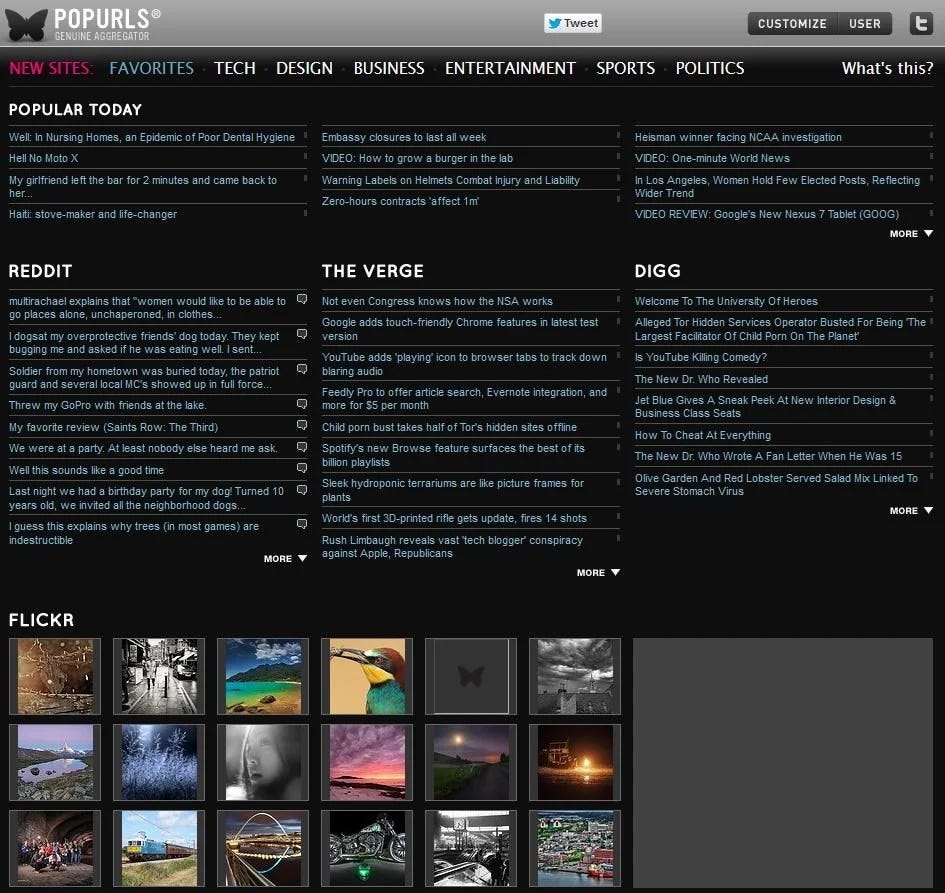
Dashboard for the hive mind
For the past 8 years Popurls has been my daily first stop on the web.
This single page now replaces my need to directly read Digg, Reddit, Delicious, Furl, Slashdot, BoingBoing, NewsVine, Metafilter and all the others that I subscribe too. This one page encapsulates up-to-the-minute headlines from 15 consensus filters, and top thumbnail images from the social sites Flickr, YouTube, and Google Video. The hive mind on one screen.
Here’s how I use it. On one page I can scan the latest headlines of what the web collectively thinks is either popular or interesting. A simple mouse over the headline will cleverly reveal a small box of expanded text on the article. If I want even more, a click will open the original entry in the filter. In five minutes I can scan 18 social site sources thoroughly. I get an excellent feel for what is new and what is worth following up (a small amount of overlap between sources helps).
The design of PopUrls is brilliant. There’s two flavors, black on white or white on black. Function drives form, buttons are minimal. It feels like a well-designed command post for a concise debriefing. Even on a large screen, like the 21-incher I use, there’s a bit of scrolling. But I’ve come to realize that I MUCH prefer this single fixed sheet to endless RSS feeds in a reader. In fact, the page is essentially an improved interface for multiple RSS feeds, which keep PopUrls constantly updated. The dashboard doesn’t move, while all the streams flowing into it keep it lively.
There’s no better way to watch the hive mind. — KK
Customized search
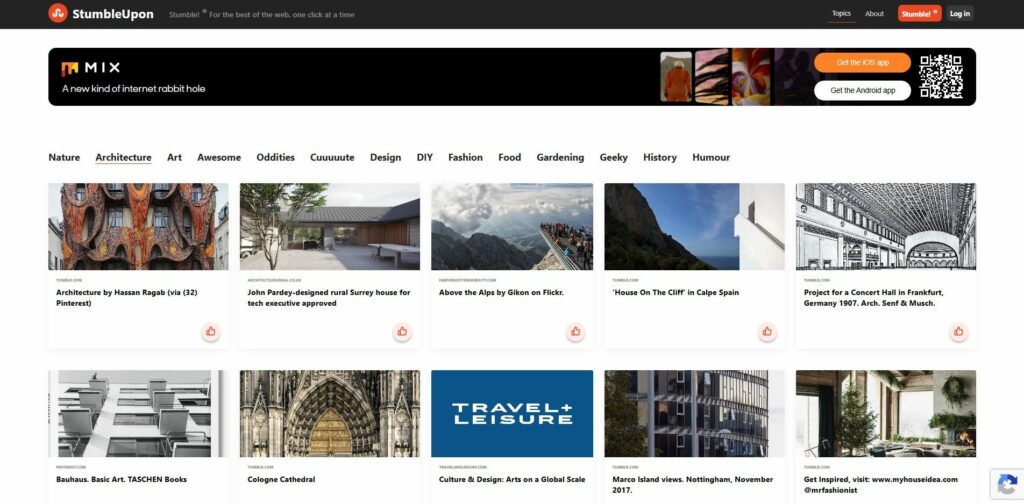
Stumble Upon is a community-based website recommendation engine that serves up fantastic random websites. Completely addictive, it still does that. But now that they have added search (including video and image search), it has moved from frivolous to useful, and Stumble Upon is beginning to replace Google as my primary search engine. You cannot yet add Stumble Search as the primary search engine in your browser, but the Stumble Upon tool bar makes it nearly as convenient.
Let’s say you are looking for a new dining room table. If you put “dining table” into Google you get a gazillion crappy tables. If you put the same search entry into Stumble Upon you get 100 of the coolest tables on the net. The same is true in its video and image search engine. For instance, when I wanted to find a video for my wife who was learning Roller Derby, I searched You Tube and got thousands of results, almost all of them below mediocre. But when I searched Stumble Upon Video I got only 10 results, and all of them were awesome.
The key to the system is that for every site that you “stumble upon” in your web surfing, you can give it a thumbs up or down (or tag or comment it). Really cool content propagates through the network fast, yet people trying to game the system to give their pages high stumble ranks get voted down very quickly. When I met the founders of Stumble Upon recently I asked how they managed to do this so well, and they said that they did not write a single line of code until they had worked out the anti-spam strategy. While there are several recommendation engines on the web like Digg, Delicious, and Reddit, Stumble Upon’s interface, huge active community, and easy tools make it the one that always delivers the highest level of cool stuff. It is basically how I find everything that I blog about. — Alexander Rose
Guide to the collaborative encyclopedia
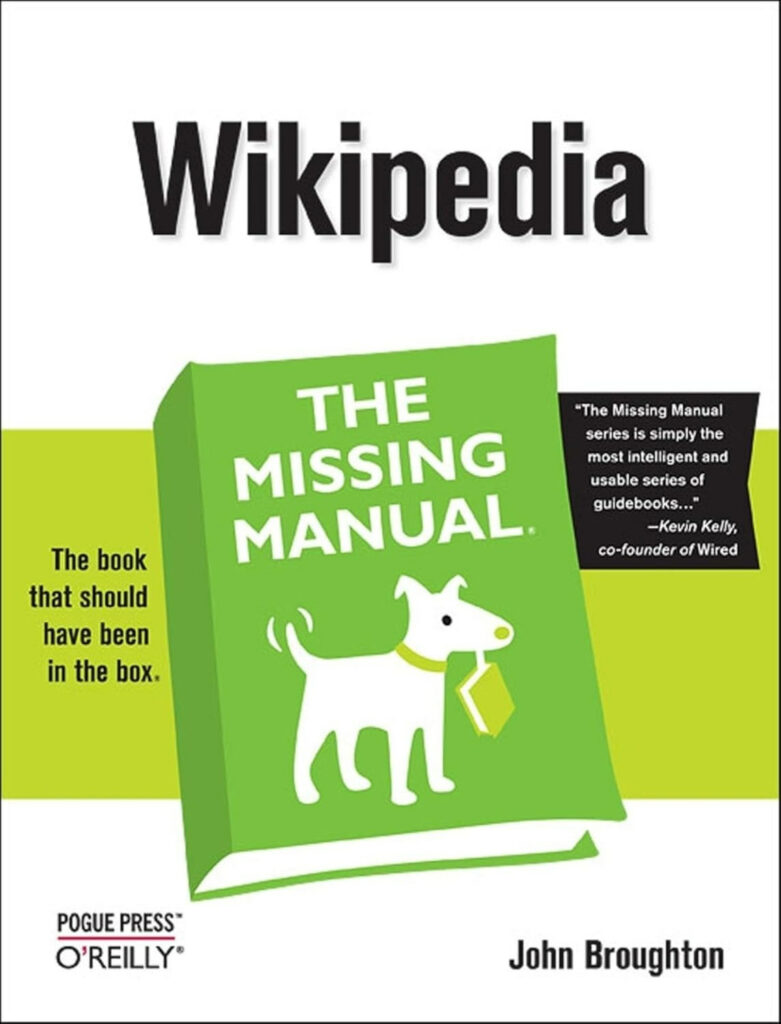
Just because anyone can edit Wikipedia doesn’t mean it’s easy. Sure, you can edit anonymously and say anything you like, but if you want to make edits that last and if you want to participate in a meaningful way that complies with community guidelines, well, there’s a lot to learn. Guidelines can be hard to find on the site, and for better or worse, they’re always evolving.
As the pull-quote on the cover of this book indicates, Cool Tools has previously-recommended other Missing Manuals from O’Reilly. Like the other books in the series, Wikipedia: The Missing Manual is logically structured, includes lots of screen-shots, and is infinitely skimmable. A great introduction and a handy reference, the manual starts out with the basics: editing, creating articles and maintaining them (yes, that’s just the start). More advanced topics include collaboration, advanced formatting, broader site structure, and interface customization.
Documentation at the website is not particularly searchable given the site’s relatively simplistic one-box-fits-all search interface; browsing through documentation and discussion can be difficult and, frankly, overwhelming. In addition to the quite readable, cover to cover flow, the book has a comprehensive index that allows for quick navigation that delivers precise answers to the myriad questions that inevitably arise, especially when you’re just getting familiar with this medium.
Make no mistake, community consensus is always the last (ever-changing) word. But John Broughton, who has also overseen the Editor’s Index to Wikipedia project, can help you ease into editing without committing any major blunders.
The Manual has been migrated to Wikipedia. Checkout the dynamic incarnation at Help:Wikipedia: The Missing Manual. — Camille Hartsell
- Wikipedia’s rate of change has presented a challenge in writing this book. It’s as current as it can be, but if you notice that a screenshot isn’t exactly the way Wikipedia appears to you on screen, the something (minor) has changed since just before this book was published. You will see mentions in a number of places in the book about where change may be just around the corner (a WYSISYG edit box, threaded discussions on talk pages, single sign-in across all Foundation projects, and more). These changes could happen just as you’re reading this book, or not for a year or two.
Nevertheless, you’ll find the core of Wikipedia changes very slowly–after all, it does have an established base of active editors, and a history of success that makes editors reluctant to chance processes that aren’t considered broken. So the changes that aren’t covered by this book won’t prevent you from gaining great Wikipedia editing skills. - You don’t need to know everything about Wikipedia to edit an article. Wikipedia has literally hundreds of pages of policy, guidelines, and how-to information on topics such as capitalization, categorization, citations, copyrights, disclaimers, foreign language characters, headings, indentation, links, lists, neutrality, pronunciation, quotations, tags, and templates, to name just a few. If you don’t get something exactly right, don’t worry–no one else gets everything right every time either.
You don’t need to know everything about your subject to edit an article. If you add something that’s constructive and 90-percent right, that’s far better than not doing an edit at all. As in sports, you don’t need to hit a home run or score a goal on every play to be a valuable contributor. If you don’t get something exactly right, someone else is likely to come along and help by fixing or finishing it.
You can contribute without editing at all. if you see a problem in an article, but you don’t (yet) know how to fix it, or you do know how to fix it, but you can’t edit the article (some articles are fully protected, typically for short periods of time), you can still help by posting a constructive comment on the article’s talk (discussion) page. If you don’t want to or can’t edit an article directly, you can still help to improve it. - A second role of WikiProjects is to maintain portals, mini-Main pages which are entry points for particular topics. … Note: If you want to search for text or information on a portal page, you need to modify your search to include the namespace Portal, because the normal Wikipedia search is only for information on article pages (pages in the Main namespace). You can do this by modifying your search on the Wikipedia search page by checking the box for the Portal namespace, after doing an initial search to get to the main search page. Another is to change your preference sos that your searches automatically include both mainspace and portalspace.
- The phrase “For factual and other kinds of questions” means that the Help desk is not the place to look for information contained in encyclopedia articles. For questions like, “How long do butterflies live?” use the search box to find the article Butterfly, which probably contains the answer.
Some questions aren’t answered in articles because they’re not really encyclopedic, like “What’s a good camera to buy for someone who wants to be a professional photographer?” Take those questions to the Rference desk (shortcut: WP:R), which is similar to a librarian service (and another place to put your question-answering expertise to good use). - What you see in the Wikipedia window in front of you isn’t fixed in concrete. Wikipedia has a surprising number of ways that you can modify its appearance when you view it. If you’re a registered editor, you have a My Preferences page, where you can change a number of settings that control how Wikipedia’s pages look on your screen.
- In late 2007, Wikipedia added a new, eleventh tab to the My Preferences page– the Gadgets tab. … The Gadgets tab lets you quickly implement JavaScript user scripts developed by other editors to add cool new features to Wikipedia. Chapter 21 describes how to implement JavaScript user scripts by copying them to a page in your userspace. Using the Gadgets tab is much easier; just select a gadget, and then click Save. Then, as the instructions at the bottom of the tab say, bypass your browser cache to see the gadget’s effects. … You can get more information about each item on the Gadgets tab by looking at the Special:Gadgets page.
Once a week we’ll send out a page from Cool Tools: A Catalog of Possibilities. The tools might be outdated or obsolete, and the links to them may or may not work. We present these vintage recommendations as is because the possibilities they inspire are new. Sign up here to get Tools for Possibilities a week early in your inbox.
09/14/26ALL REVIEWS


EDITOR'S FAVORITES

COOL TOOLS SHOW PODCAST
WHAT'S IN MY BAG?
16 September 2026

ABOUT COOL TOOLS
Cool Tools is a web site which recommends the best/cheapest tools available. Tools are defined broadly as anything that can be useful. This includes hand tools, machines, books, software, gadgets, websites, maps, and even ideas. All reviews are positive raves written by real users. We don’t bother with negative reviews because our intent is to only offer the best.
One new tool is posted each weekday. Cool Tools does NOT sell anything. The site provides prices and convenient sources for readers to purchase items.
When Amazon.com is listed as a source (which it often is because of its prices and convenience) Cool Tools receives a fractional fee from Amazon if items are purchased at Amazon on that visit. Cool Tools also earns revenue from Google ads, although we have no foreknowledge nor much control of which ads will appear.
We recently posted a short history of Cool Tools which included current stats as of April 2008. This explains both the genesis of this site, and the tools we use to operate it.
 Kevin Kelly started Cool Tools in 2000 as an email list, then as a blog since 2003. He edited all reviews through 2006. He writes the occasional review, oversees the design and editorial direction of this site, and made a book version of Cool Tools. If you have a question about the website in general his email is kk {at} kk.org.
 Mark Frauenfelder edits Cool Tools and develops editorial projects for Cool Tools Lab, LLC. If you’d like to submit a review, email him at editor {at} cool-tools.org (or use the Submit a Tool form).
 Claudia Dawson runs the Cool Tool website, posting items daily, maintaining software, measuring analytics, managing ads, and in general keeping the site alive. If you have a concern about the operation or status of this site contact her email is claudia {at} cool-tools.org.