Cool Tools

Backpacking

SteriPEN

Pocket UV-powered water purifier

SteriPEN.jpg

I took a SteriPEN to Africa for 3 months this summer and the verdict is in: it's the best water purifier you can carry without a tractor-trailer. It's basically a UV ray flashlight you submerge into your glass. The water stays cool and it doesn't change the water, except to kill all the living things in it, viruses included. It is expensive, but pays for itself quickly, as you don't have to buy bottled water. On my trip, often when I asked a waiter for a glass of tap water, my request would elicit a smile or a laugh. In some cases, they simply would not bring me a glass of water. Most of the time, though, I convinced them -- and then, to their amazement, I would take out the SteriPEN, push a button, and stir the water with the glowing purple UV light that always brought stares from other diners. After less than 60 seconds, I would take out the SteriPEN and drink the water, occasionally hearing gasps from other tables. Then I'd mention that UV light is how certain towns and companies now sterilize water.

Posted on September 3, 2007 at 5:00 AM | +del.icio.us +digg +reddit

Tarptents

Ultralight backpacking shelter

tarptent_sm.jpg

Lots of people on the PCT (Pacific Crest Trail) are using these kind of tents - including myself (I recently completed 560 miles). Many ultralight backpackers use a tarp instead of a tent and swear by it. That can be tricky to set up and doesn't keep all of the bugs off. The tarptent concept is based on the simplicity and lightness of a tarp, but made into a more traditional tent look. While Sierra Designs' one-person tent looks good, it weighs 2lbs 11oz. My Contrail tarptent is 24 oz. It's a single layer silnylon tent with a ground sheet and mesh all around the inside between the groundsheet and the tarp, top.

tarptent2sm.jpg

I use my trekking pole as the main upright. Set up took a while to figure out, but now I put it up and down in much less than 5 minutes. I can rig it for strong wind, too (it's designed to be storm rigged in need). It's great for the Sierras, but wouldn't be so suitable for wet climates. If you camp somewhere moist, like near a river, it can suffer from condensation. As such, I have learned to camp differently and now leave the door wide open all the time apart from the mosquito net. It hasn't rained much in the 2 months I have been hiking the PCT, but when it did, the tent was waterproof. You have to seal the seams yourself, but it is very easy to do so. The only modification I have done is to swap the standard 2 rear pegs for 9 in. ones, which work better especially in sand.

-- Carl Myhill

Tarptents
$170 - $255*
Available from Tarptent.com

[*Models are available with sewn-in floors or floorless; the latter is $30 cheaper and lighter -- sl]

BONUS TIP: Ultralight backpackers also frequently use a sheet of Tyvek as a groundsheet. This is the material used as a vapor barrier in house construction and as sails for boats. It is breathable and water-resistant. I could only buy lengths of 165 ft. in Home Depot, but you can often pick it up at construction sites. I use my Tyvek underneath my tent for added protection (which is redundant overkill really) or if I am cowboy camping just under the stars with no tent. I also have it handy in my pack and pull it out whenever I rest -- it's really nice to sit on and it keeps the ants off (a little). It is VERY lightweight and very tough. Some backpackers report theirs having lasted 3 years and going nice and soft in the washing machine. The only thing I have heard of that is lighter or stronger is spinnaker cloth, but that's expensive. Tyvek groundsheets are $12 via Tarptents. If you are going hiking and need a small piece of this stuff just call Henry at Tarptents -- he sent me a bit whilst I was on the trail - Carl Myhill

Posted on August 17, 2007 at 5:00 AM | +del.icio.us +digg +reddit

Rite in the Rain Notebooks

Water-resistant writing pads

rite_in_the_rain.jpg

Whether you're a hiker, biker, backpacker, camper, naturalist or simply someone who's ever been caught in the rain, you'll treasure these classic all-weather notebooks. The cover is Polydura and the pages are made with a substrate, giving the paper a wax-y feel. The effect: water beads off them, meaning no pulpy mess and no bummer over any lost thoughts or data. They are not a new invention by any means. Back in the 1920s, they were developed for Pacific Northwest loggers. These days, the manufacturer makes both bound and spiral bound books in an impressive array of sizes and types (e.g birding!). I keep a pocket-size, 24-page, staple bound mini-book in the small pack I take cycling and hiking. In the event of a downpour, all my ah-ha moments are safe. If you plan to be in really harsh conditions and want to go the extra mile, you might try one of their all-weather pens. Note: I have not used them -- a pencil or standard ballpoint does the trick for me.

-- Steven Leckart

rite_in_the_rain_logo.jpg

You can also buy waterproof paper for inkjet and laser printers. The laser prints are completely waterproof. The inkjet prints need to dry for about a day or so, and may still bleed a bit if immersed in water, or kept in close proximity to something wet for a prolonged period. Still, this is a useful way to make maps, forms, signs or any documents that will be outside exposed to the elements. As a bonus, the paper is also stronger and more tear-resistant, making it ideal for print-outs that you'll be using over and over (like maps).

-- Leszek Pawlowicz

Rite in the Rain Notebooks
$2
(Mini Notebook)
Available from Backpacking Light

$4+
Other sizes/types available from Amazon

Manufactured by J.L. Darling Corporation

Posted on August 13, 2007 at 5:00 AM | +del.icio.us +digg +reddit

Gossamer Whisper Uberlight Pack

Ultralight (4 oz.) weekend bag

gossamer-pack-sm.jpg

Going with an ultralight pack like this is the easiest way to start reducing weight. This simple nylon sack pack weighs 4 ounces. There is no frame. You make a frame by first loading your tent in the bottom. You place your folded sleeping pad so it rests against your back and that gives structure to the pack. If you use folding tent poles, they are inserted inside the folds of the pad to give more structure. On top of the tent goes your sleeping bag. Then you add a couple of zip lock bags on top of that for your food and other belongings. I put my water containers in the outside flap. Then you simply roll the top a few turns and fix it with the velcro straps. There are no zippers, no heavy belts or straps, no compartments, pouches or other extras.

Most people are hooked on features. But, do you really need a separate compartment for your compass and a special web pocket for your water and a map case and three main compartments? I only need one compartment in my pack. Place your things in a few plastic bags. When you want something, pull out the bag you need. It is a relief, actually, to give up on all those compartments, pockets, zippers, thick padded straps, carbon frame and pounds of extras.

When you go the ultralight route your total pack weight will be less than 10 pounds and at that weight, you don't need hiking boots either. They were designed for the olden days when packs were 40 plus pounds. Ultralight trail running shoes are a pleasure to wear.

Take a look at some of the features of some of the best selling, traditional weekend packs: carbon fiber frame, 4 pockets plus main compartment, dual-density padded shoulder straps, load lifter straps, cranial cavity (to make room for your head!), front bungee, tool loops, twin side water bottle pockets, removable lid doubles as a lumbar pack, interchangeable hip belt with fit zone, adjustable sternum strap with integrated whistle. Total weight: 6 pounds 9 ounces. That is 7 ounces less than my pack when it is fully loaded for a two-day trip!

-- John Aebi-Magee

Whisper Uberlight Pack
$60
Available from and manufactured by Gossamer Gear

[For longer trips requiring more pack room, check out the G4, also by Gossamer; and see this book for a primer on how to Lighten Up! -- sl]

Posted on July 9, 2007 at 5:00 AM | +del.icio.us +digg +reddit

Sierra Designs 1-Person Tent

Featherweight solo shelter

tent.jpg

Two ultra-light poles, rainfly, a nylon case and tent weigh in under four pounds. Packed up, this compact three-season tent is a little longer than a shoebox. Unpacked, it isn't spacious (about 20 sq. ft.), but there's more than enough room to stash a mid-sized pack in the event of a downpour or just to use as a headboard while reading -- try that in a bivy sack. Backpackers will also appreciate the quick, intuitive set up: clip the poles to eight hooks, insert the four pole ends into grommets at the base, and drive five stakes (the fifth is for the door). If you need the rain guard, the shape of this tent - as opposed to a dome - makes it obvious to surmise what goes where. Throw it on, fasten a couple Velcro straps to marry the fly to the poles, and be sure the stakes go through the holes at the base of the fly. Lastly, drive a sixth stake for the "entryway." All of this takes maybe three minutes and the learning curve is rapid.

tent2.jpg

I spent two months in the tropics crashing in this tent (i.e. escaping mosquitoes). Even on a sandy beach, a heavy rock or two worked great to maintain the tension needed to retain the door's shape. The tent also held its own in a number of windy rainstorms, and I've since used it for wintertime jaunts into the coastal hills of Northern California, which isn't exactly the High Sierras, but hey, there can be morning frost. To this day: no tears, no leaks, no busted seams. Since I purchased mine in 2000, Sierra Designs apparently added a more resistant silicone coat to the rainfly and knocked off a few ounces by switching to even lighter poles.

-- Steven Leckart

Sierra Designs 1-Person Tent
$140
Available from Amazon

Manufactured by Sierra Designs

Posted on February 2, 2007 at 5:00 AM | +del.icio.us +digg +reddit

The Barefoot Hiker

Walking naturally

barefoot1.png

Most of the hikers who have ever lived have gone barefoot. Throughout history shoes have been expensive or unknown. Naked feet quickly adapt to stones, twigs, and cold. I've hiked alongside thousands of barefoot hikers, and there's little terrain they can't comfortably negotiate. However the forced-shoeless will immediately adopt a pair of flip-flop sandals for a bit of cushion if given a chance. So why would the well-heeled give up shoes on the trail? Barefoot hikers answer: "The soles of our feet function as wonderful sensory organs and the myriad of sensations from earth, grass, moss, pine-needles and other ground textures can both fascinate and delight. Barefoot Hikers appreciate their "vistas" of ground textures as much as others hikers enjoy their vistas of hills, mountains, forests and plains. Walking barefoot adds a rewarding tactile dimension to any outdoor hike."

In short, hiking barefoot is a liberation and a sensual enjoyment -- the very reasons why people who can drive hike in the first place. Once you get over the fact that, like natural childbirth, barefoot hiking is not only possible, but preferable, you're halfway there.

Europe has more barefoot hikers than in the US, but one dedicated women recently hiked the entire rocky 2,000 miles of the Appalachian trail barefoot. Yet if we consider the indigenous tribes of old, she was probably not the first. (Then there's running barefoot, another whole subject.)

There's one book explaining barefoot hiking, a decent short how-to and why-to. It'll go over objections and practical advice on getting your feet toughened up and so on. Tells you how to avoid stares by the disbelieving, which you will get. The book is also available as a free text on the web, courtesy of the author. (I find the printed book form ideal to hand out to others. ) Of course there's plenty of websites for enthusiasts.

Because this ability is so primeval, no information is really needed. About all you need to know is that it is easy, natural and fun. Your feet will take it from there.

-- KK

barefoot2.png

The Barefoot Hiker
Richard Keith Frazine
1993, 98 pages
$8
Available from Amazon

Also freely available here

barefoot3.png

Barefooters

Sample excerpts:

The initial time and effort needed to condition bare feet for hiking is very much less than anyone who has not had experience in the area would tend to suppose. Two or three miles of walking barefoot on good forest trails, two or three times a week, for two or three weeks will prepare almost any hiker to set off quite confidently barefooted on almost any hike that might be included in the programme of any hiking group provided only that the weather be relatively mild.

*

What comes the most to mind at Autumn's mention, are mountains of dry leaves. Take a walk in the woods on one of those delicious days when Autumn deigns to step aside for a late Indian Summer and the leaves are several inches deep on the forest floor and let your bare feet feel them -- sometimes crackling with all the crispness of the Autumn air -- sometimes whispering sensuously back to your bare soles with what seems a slightly soapy softness.

*

The Brief Rules

1. Always step straight down! Never allow your feet to kick, shuffle or drag along the ground. This is more important than all the other rules together. This may require some conscious effort at first.
2. Always watch the path ahead of you. Learn to keep your eyes on the path a few yards ahead and pick the spot for each footfall a few paces ahead.
3. Try to keep your weight on the balls of your feet and not on your heels.
4. Never forget that you are going barefoot. Always devote a part of your attention to the soles of your feet.
5. Try to walk barefoot on as many different things as possible to sensitize your bare soles. A well developed sense of touch is very important both for safety and enjoyment. You must consciously work on developing this sense.
6. Be especially careful when you cannot clearly see the ground itself because of grass, leaves and snow. Step lightly and carefully under these conditions and be prepared to retract a step if you don't like the feel of what you are stepping on. Never run barefoot unless you can both see the ground surface and have walked over it before.
7. Be especially careful at styles and fences - especially metal ones that have been abandoned. Stubs of former metal fence posts just protruding through the ground are very dangerous. If you see one of these, watch carefully for others which may be in line with it.
8. By all means, try walking barefoot in snow - it is extremely pleasant, but only if it is no more than an inch or so deep and melting.
9. You can walk barefoot on dry ground in freezing weather, but never past the point where your feet become numb and in no case for more than one or two miles, especially on rough ground which is many times as punishing to cold flesh as to warm.
10. Once properly conditioned, your bare feet will give you a great deal of pleasure, but only if you care for them. Bathe them and remove any small thorns after each hike, rub them each day with oil, lotion, or lanolin - especially in winter. Take the time to keep them in the very best condition and take pride in them.

Posted on October 19, 2006 at 5:00 AM | +del.icio.us +digg +reddit

GustBuster Umbrella

Unflippable umbrella

gustbuster_sm.jpg

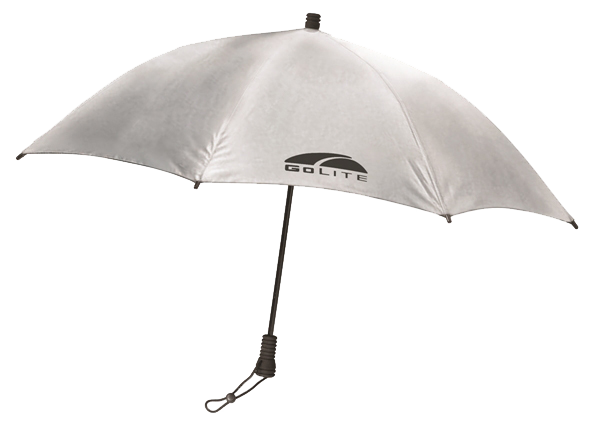
The GustBuster is a cool-looking, lightning resistant umbrella with a patented system of vents that is, the manufacturer claims, "wind tunnel certified to 55+ mph." The other night it started blowing up a storm -- winds to 20 miles per hour. Just for giggles I tried turning the GustBuster sideways and it just would not pick up any air -- it really does work amazingly well. The holes in the inner surface seem to neutralize all of the typical suction.

The version I decided on for my all-weather walking is labeled a "golf umbrella" and is big enough for a small wedding reception. (I exaggerate but 62 inches is certainly big enough for me and the dog.) The price is right, $40 -- a bargain for a good umbrella. If you're concerned about weight (this super-sized version weighs close to two pounds) there are smaller, lighter versions. On their website they say the GustBuster is very popular with professional golfers -- seemingly, a good indication of long-term quality and performance. Also comes with a limited lifetime warranty. I'm impressed -- very cool tool.

-- Chuck Green

GustBuster Golf (62 inches)
$40
Available from Amazon

gustbuster2_sm.jpg

GustBuster Metro (43 inches, foldable)
$30
Available from Amazon

Also available from Uncle Sam's Umbrellas

Manufactured by GustBuster

Posted on October 10, 2006 at 5:00 AM | +del.icio.us +digg +reddit

GStone Butane Burner

Compact portable hot plate

Gstone_burner_sm.jpg

These stoves are great for backyard cooking, partying, tailgating, car camping, and/or power outages. They're too big for most backpacking, but for most other uses they're much more convenient than larger propane and or liquid fuel stoves. They come in their own lunch box sized plastic or nylon carrying case. The hair-spray-sized butane cannister is contained within the stove instead of sticking out on the side like most propane stoves, and it just drops in. They all have piezoelectric ignition. Most models are dirt cheap. I bought mine at Target a few years ago for $30, but Big 5 had them on sale for $16 a few weeks ago.

-- Bruce Bowen

GStone Butane Burner
$18
Available from Amazon

Posted on September 13, 2006 at 5:00 AM | +del.icio.us +digg +reddit

Digital Compass

For precision uses, better than an analog one

For recreational orienteering, or survival, all you need is an inexpensive analog compass. For sea navigation, and for trail making, surveying, wildlife monitoring, or anything else where consistently exactitude is require, this scope is probably what you want. Waterproofed, and illuminated at night with fiber optics, these compasses can supplement GPS finders.

-- KK

datascope.jpg

Traditional compass designs for hikers are unreliable and hard to use. A magnetized needle wobbles on a primitive bearing, and its accuracy is affected by local mineral deposits. Enhancements of this basic design are still unsatisfactory; for instance, you may find yourself peering into a hinged mirror, trying to focus simultaneously on the wobbling needle in front of you, and a distant object reflected in the mirror, upside-down.

After much searching I found that marine supply companies seem to make the most advanced compasses. I bought a KVH Datascope for about $300. It is designed as a monocular; you look through the unit, which provides 5x magnification, crosshairs, and a digital readout superimposed, accurate to +/- half a degree. This is a sighting compass, meaning that you sight a distant object in the direction in which you wish to travel, walk toward that object, taking another sighting, and so on. The fact that the compass is still accurate if you don't hold it level (it has a 20 degree tolerance) is a big plus; traditional compasses are useless unless you manage to hold them almost precisely level.

Calibration of the compass is very simple, after which you dial in the deviation of magnetic north from true north in your area. (This information is available on any topo map.) Supposedly the compass is smart enough to compensate for local deposits of ferrous metal, power lines, etc. All I know is that I was finally able to locate the small metal pegs marking the corners of my 40 acres in the middle of nowhere. A professional surveyor's compass had not enabled me to do this.

The Datascope requires three button-type batteries, and must be recalibrated each time you change the batteries, because each new set of batteries has slightly different magnetic characteristics. My first set has lasted two years so far. The compass comes in a nice padded carrying case, includes a digital clock, is supposedly "totally waterproof," and weighs 11 ounces. If you're tempted to buy one, check Froogle; I found online prices varying by as much as $150.

-- Charles Platt

KVH Datascope
Manufactured by KVH

$350
from Boater's World

Posted on August 27, 2006 at 5:00 AM | +del.icio.us +digg +reddit

Sierra Stove

Lite-weight stove burns fuel found along trail

Sierrastove.jpg

There I was, in driving rain, cooking breakfast under a tree over an intense, portable fire. Fresh coffee and scrambled eggs.

It was a Sierra Stove I got for $52. It's a mini-forge, forcing air into a small insulated chamber where a double handful of twigs (or dung or whatever) can heat water in a couple minutes---just a little longer than a butane stove, but with NO fuel or fuel containers to carry. One enthusiast hiked from Mexico to Canada cooking with one, claims Chip in *The Compleat Walker IV.* Chip himself now claims to camp largely solar--with backback solar charged batteries running his flashlights and his Sierra Stove.

The basic unit I got weighs 18 ounces and is clever and well-evolved. Accessory goodies can be found at the manufacturer's site. The newest item is a titanium version that weighs only 10 ounces, for $130.

I was impressed at how little fuel was needed, and how funky it could be. A switch offers high or low speed on the fan, driven by one AA battery. No igniter--my Bic failed me in the rain, but a Lifeboat match and lil' firestarter saved the day. Unlike butane, the Sierra Stove does blacken your pots and pans, which is the main nuisance--they go in ziploc bags anyway though. All in all an impressive little rig.

We'll all want one when the economy collapses completely and we have to live homeless.

-- Stewart Brand

Sierra Stove
$57
Available from ZZ Manufacturing

Posted on August 26, 2006 at 5:00 AM | +del.icio.us +digg +reddit

Adventure Medical Kits

Full medical station in a pouch

medkit.jpg

During an emergency, instilling order, confidence, and calm is the major assignment of the first aider. Over the years of running a large household I've found that keeping medical supplies together in one handy place helps me provide that stability in those early moments of panic. My highly-evolved first aid kit has become extremely refined, but also slightly less portable. I could no longer get all that I needed quickly out to the yard, or in the car, or packed into a backpack.

After some experimentation, I found what works best is a pre-packaged medical kit. They appear to be expensive, but are really not when you tally up the costs of the components -- most of which have a pretty long shelf life.
The kits from Adventure Medical Kits are highly praised in search and rescue fields. Expeditions carry larger versions. The case is hardy, lightweight and quick to navigate through. An amazing amount of stuff is squirreled away inside, all easy to reach.

The kit I prefer, the AMK Fundamentals, contains a full spectrum of basic first aids, burn materials, CPR mouth barrier, scissors, tweezers, syringe, plenty variety of bandages, a SAMS splint (which I wish I had earlier when my wife broke her wrist), a decent small emergency medical book (Wilderness and Travel Medicine), and extra containers for personalized pill transport. With this kit you'd be prepared to handle most injuries a non-doctor could manage. It is rated for 1-8 people and is one of the more complete versions available.

AMK offers all manner of kits customized to particular outdoor sports like kayaking or biking. This one is perfect for a family on the go. I'll pack it along when we go on vacation. (I also carry one of AMK's ultralight kits in my briefcase bag.)


-- KK

Fundamentals Medical Kit
(in their Mountain series)
$87
Manufactured by Adventure Medical Kits

Available from Chinook Medical

Posted on August 20, 2006 at 5:00 AM | +del.icio.us +digg +reddit

Low Rise Cot

Lightweight backpack cot

luxurylite_cot1.jpg

luxurylite_cot2.jpg

This is one of the lightest, and most comfortable sleeping "mats" I have ever found. When rolled up and compacted it is smaller than all the other mats out there, so it takes up less room in a pack or pannier. Only drawback is how to use it effectively in a winter climate. In the summer in a tent, cooler is good most times as you can sleep better since you are not sweltering in the heat. It takes no more time to take down and set up than inflating a thermorest or other compact mattress. Lastly, for larger guys like my self, it distributes my weight better. The stiff feeling I get after a sleep on most foamies, thermorests, and mattresses does not come about on this cot. For these reasons the Low Rise Cot is getting popular with the cycling crowd.

-- Ben Eadie

LuxuryLite Low Rise Cot
$190
Available from LuxuryLite

Posted on July 20, 2006 at 5:00 AM | +del.icio.us +digg +reddit

Wall Tent Stoves

Portable wood heat

Portable wood stoves are for tents, tipis, huts or other temporary shelters. More efficient than a campfire, and more powerful than a backpacking stove, they are often used by ranchers, hunters, fisherman, and other trail groups who need to set up a moveable camp. These little guys will heat a large tent/small room, and cook meals. It's overkill for overnight use, but quickly becomes beloved in cold weather, large groups, or extended summer camps. Once upon a time you needed a pack horse or off-road vehicle to carry one -- and the stove pipe it requires. Now there are lightweight versions. The Kifaru, for instance, will fold into a backpack. However the heavier ones will last longer and warp less due to high heat and burn-out of the stove bottom.

The best single source for information, comparison evaluations and ordering various brands and models of these stoves is the Wall Tent Shop. (And yes, they also sell traditional wall tents.)

-- KK

Wall Tent Shop

walltent_stove_sm.jpg
Snowtrekker
7 lbs
9" x 10" x 12"
$175
Empire Canvas Works

kifaru_sm.jpg
Kifaru Foldable Tipi Stove
4.5 lbs.
8" x 9" x 12"
$270 (stove only)
Kifaru

kincove_stove_sm.jpg
KniCo Stove
12.5 lbs.
10" x 10" x 23"
$200
KniCo Stove

Posted on July 14, 2006 at 5:00 AM | +del.icio.us +digg +reddit

Day Trips with a Splash

Desert swimming holes

swimming_holes_coverweb.jpg

A swimming hole
in the desert
is heaven.
Splash! Splash!
Here are 100 heavens.
And how to get there, without prayers
With GPS coordinates, topo maps, summaries.
No excuses.

-- KK

Day Trips with a Splash: Swimming Holes of the Southwest
Pancho Doll
2000, 216 pages
$13
Available from Amazon

Sample excerpts:

the_jugweb.jpg

The Jug

Smoothest water east of the Sierra Nevada. Water pouring out of the Salome Wilderness cuts through an exposed portion of the batholith, a large intrusion of granite that underlies many of the ranges here. It creates a sinuous channel of intriguing shapes. Directly at the bottom of the first access to the creek is a rock that so resembles the torso of a reclining woman that a crack runs directly across her back and shoulders where the bra strap would be. The rest of this miniature canyon has so many sinusoidal curves worn into the rock that you might think yourself in Yosemite except for the saguaro on the canyon walls.

Above the "sleeping lady" is one of the best late season spots I know of. I say late season because the water is awfully cool in the spring. Also because low levels let you appreciate the beautiful lines of this tub. It's a near-perfect rectangle, twelve feet long, seven feet wide and just as deep. Water exits via a narrow spout etched exquisitely in the rock lip at the bottom of the tub. There is a two-person slab adjoining the pool to the right. An overhanging rock is there if you need some shade.

Warm days in spring can attract as many as one-half dozen cars to the trailhead. Consequently, the canyon can seem busy.

*

cave_creekweb.jpg

Cave Creek

The sweetest place to sit in the whole state of Arizona. There's a perfectly flat stone the size of a park bench right next to a tiny waterfall. A juniper provides a low, dense canopy of shade that'll keep you cool when the surrounding vegetation is at the flash point. The adjoining pool occurs where a handful of large boulders have tumbled across the stream. As it rushes over the boulders, the water accelerates just enough to scrape a modest pool out of the sand and gravel streambed. The pool is circular, about 30 feet in diameter, but none too deep, maybe six feet in the center although this will vary with water level and the amount of cobble in the creek bed.

Lots of people with side arms, it seemed. Rationally I know that the reason people carry combat automatics into the mountains is because they are more afraid of you than you should be of them… this or they believe that rattlesnakes attack in packs. Still, I got a kind of weird vibe and I'm a gun owner myself.

Aside from the firearm notice, be advised to bring something to sit on because the rocks are dark and will get very hot during midday. Also, it's a short steep descent with loose rock. A walking stick is recommended.

Posted on April 25, 2006 at 5:00 AM | +del.icio.us +digg +reddit

Allen & Mike's Really Cool Backcountry Ski Book

How to hike and camp in the snow

Allen and Mike, two wise hikers, have penned an admirable series of primers that feature cartoons and pithy advice for backpackers. This, the third, is the best of the series so far (see also Lighten Up and Allen & Mike's Really Cool Backpackin' Book). Its subject is winter backpacking, which often intimidates fair-weather hikers. Their great advice will not only keep you safe, but also warm and happy. There's a fantastic chapter on making snow shelters, presented in such accessible detail that I'm astounded that it was all new to me. Allen and Mike become your best friends as they giggle and chuckle while they give you the straight dope on what you need to live and prosper in the snow. Trust them.

-- KK

 backcountry.web.jpg

Allen & Mike's Really Cool Backcountry Ski Book
Traveling & Camping Skills for a Winter Environment
Allen O'Bannon & Mike Clelland
1996, 114 pages
$10
Available from Amazon

Sample excerpts:

*

sleep_warm.jpg

*

Sidecut is the difference between the width of the ski at its fattest points (the tip and tail) and its narrowest point at the waist (middle of the ski). The more side cut a ski has, the faster it will turn. On the other side of the coin, skis with less side cut are better for touring since they will hold a straighter line.

*

pocket.jpg

*

Careful! Liquids that don't freeze at low temperatures, such as alcohol and white gas, ca cause frostbite damage because they will be the same temperature as the air.

*

oatmeal_snot.jpg

*

hypothermia.jpg

People in the earliest stages of Hypothermia will feel cold and clumsy. They will exhibit improper behavior, such as not putting on a hat. Their personality will show changes, and they will become apathetic, listless or emotional. They may show signs of shivering, although there are many cases where people have passed through this stage without shivering. This is especially true when people have been exercising beyond their normal point of endurance. As hypothermia progresses, a person will start to lose his or her coordination and start to stumble. The person will be unable to do simple tasks, such as zip a zipper. He or she will show more marked personality changes and may become belligerent and irrational.


*
sleep_stars.jpg

*

snow_shelter.jpg

Posted on January 4, 2006 at 5:00 AM | +del.icio.us +digg +reddit

McMurdo Fastfind Plus

Find-me anywhere personal locator

mcmurdo.jpg

It's not that often you run across a piece of gear that can actually save your life. Whether you're backpacking, backcountry skiing, scuba diving, or flying in the wilderness, the McMurdo Fastfind Plus is a must-have in the event you find yourself in a serious emergency situation. Up here in Seattle every year hikers, mountain climbers, and backcountry skiers get lost and don't return. Whenever I read about them in the paper I kind of sigh and think of how easy it would've been to be rescued.

When a person activates the Fastfind Plus, it uses its integral GPS to provide a 406 MHz alert signal via the COSPAS-SARSAT satellite system. You see a visual indicator of GPS acquisition. Fastfind Plus also transmits on the International Aircraft Emergency Frequency of 121.5 MHz providing a homing signal for the Search And Rescue (SAR) services. With the combination of an integral GPS and satellite transmitter, Search and Rescue authorities can be notified of your emergency along with your pinpoint location within minutes, anywhere in the world.

The Fastfind only weighs 10 oz, which isn't bad considering that it can save your ass. For scuba divers, a waterproof aluminum canister is also available. I might mention that these devices are only to be used in the most dire, life-threatening emergency. It is a violation of Federal Law to misuse the device and is subject to a $250,000 fine.

-- Curt Nelson

McMurdo Fastfind Plus
$550
Available from
Star Marine Depot

Manufactured by
McMurdo

Posted on October 27, 2005 at 5:00 AM | +del.icio.us +digg +reddit

Lighten Up!

Easy intro to ultralight backpacking

pad.jpg

This is a companion to the previously reviewed Allen and Mike's Really Cool Backpackin' Book--- same droll cartoonist, different author: Don Ladigan, teacher of light backpacking at the University of Oregon.

The revolution started by Ray Jardine in his Beyond Backpacking (2000) continues. Every year sees drastically lighter and cleverer gear, and the savvy to match also grows apace, as you'll find in this book. "Ultralight" even has a definition now: it's when your pack and everything in it (except consumables such as water and food) weighs 10 pounds or less. Backpacking becomes a jaunt instead of a slog, and that liberates the whole experience.

How about a luxury breakfast with minimal kitchen gear and zero clean up? See the example below...

-- Stewart Brand

lighten_up.web.jpg

Lighten Up!
A Complete Handbook for Light & Ultralight Backpacking
Don Ladigin
2005, 99 pages
$10
Available from
Amazon


Sample excerpts:

hot_food.jpg
Boil-in-bag Cooking

If you want to cook an omelet but don't have a frying pan, you can always use the boil-in-bag method of cooking. Put the eggs and other ingredients into a plastic freezer-storage bag, close the bag securely, and heat the bag in boiling water until the eggs are no longer runny. When it's done you can eat the omelet directly from the bag with a spoon. This method makes no mess and generates few cooking smells to attract animals.

*
weigh.jpg

*
stealth.jpg

Posted on September 26, 2005 at 8:32 AM | +del.icio.us +digg +reddit

Orikaso

Fold-flat campware

orikaso.jpg

While looking for a mere flexible plastic cutting board suitable for backpacking, I discovered Orikaso plastic-oragami campware. Made of flexible and durable plastic, pre-scored for folding with small plastic snaps, this proved to be a very useful, light, affordable ($6) and cool tool. It serves as cutting board, plate, bowl, pasta strainer, melitta-style coffee maker, and funnel. After three weeks of daily use in Iceland it'll never leave my kit again. Available at REI as well as online.

-- Brad Hill

Orikaso Fold-flat Dish
$6
Available from
REI
Also from
Amazon

Manufactured by
Flatworld

Posted on July 26, 2005 at 5:00 AM | +del.icio.us +digg +reddit

Backcountry Bear Basics

Nice bears

bear_basics.jpg

Bears are back in the woods. There's lots of folklore about what to do around them. Most of it wrong. Here, in a small book, is the latest straight dope about what you should do if you meet one -- and how not to meet one.

-- KK

Back Country Bear Basics: The Definitive Guide to Avoiding Unpleasant Encounters
David Smith
1997, 109 pages
$8
Availabile from Amazon

Sample excerpts:

There are three key behaviors you need to be aware of:
1. The bear that approaches is usually in command of the situation.
2. The subordinate bear does not end an engagement with a dominant bear; the dominant bear is the first to leave.
3. Merely standing still has signal value; standing still will often alter the ongoing behavior of an approaching bear.

*
The magic circle around every bear is different and constantly changes in size and shape. As an example, the magic circle of a female grizzly with spring cubs will probably be larger than the magic circle of the same bear when she doesn't have cubs. ... Don't forget that you have a magic circle, too. A seasoned black bear biologist might be comfortable with a bear that's only 10 yards away, but you or I might be nervous about a black bear that's 40 yards away.

bear_box.jpg
Years of experience in Denali and other national parks have proven that properly secured bear resistant food containers work.

*
For some reason, bears are interested in petroleum products. When they come across a spot of oil or gas on the ground, they sometimes roll in it like a dog rolls on a carcass. After the Exxon Valdez oil spill, some bears looked like they'd been using Brylcream. My friend Hod Coburn, a bush pilot who's flown all over Alaska, told me that a black bear once got into a case of oil he stashed at a remote runway in the western part of the state. It didn't bite one can and assume there was more of the same in the others - it bit into every can.

*
What about tree-climbing? You startle a bear that's 100 feet away and decide to run and climb a tree that's only 10 feet away. The bear will arrive in about 3 seconds. You wouldn't have time to climb a stepladder, let alone a tree. Even full-grown black bears can scoot up any tree with astonishing speed. An adult grizzly can "ladder" its way up a tree if the limbs are right, with a known record of 33 feet high.

*
Bears key on movement and quickly notice a silhouette on a ridgeline. Steve French, an M.D. and bear researcher who's co-director of the Yellowstone Grizzly Foundation, has an excellent rule of thumb regarding the vision of bears; If you can see a bear, you should assume it can see you.

*
Black bears are creatures of the forest, so in response to a threat they've always had the option of slipping into the underbrush and hiding or climbing a tree. When threatened, black bears flee. Even when black bear biologists hold squalling cubs while mama bear is just yards away, the females almost always retreat. They may make a blowing sound and clack teeth and make a rush or two toward the biologists, but ultimately, they retreat.

Not so with grizzlies. Grizzlies evolved in more open terrain. At times, there wasn't enough cover for a female and her cubs to hide from other bears or mammals. There were no trees to climb. When threatened, a female had to defend her cubs.

Posted on May 3, 2005 at 5:00 AM | +del.icio.us +digg +reddit

Allen & Mike's Really Cool Backpackin' Book

Backpacking bootcamp

Spot-on cartoons make this crash course in backpacking incredibly effective. No matter how much you think you know about trail living, you probably can't teach it as well as these guys do. The humor is geeky, the advice is excellent, the presentation unforgettable. It is simply the best introduction to the art of living off your back. This is the book you want to hand to the friend, sibling, significant other who has never been backpacking, but is ready to try. If it doesn't click with them, they probably shouldn't be on the trail with you. [Recommended by Ari Bader-Natal]

-- KK

weight.jpg

spices.jpg

pee_rag.jpg

bivy.jpg

goals.jpg

backpackin.jpg

Allen & Mike's Really Cool Backpackin' Book: Traveling & Camping Skills for a Wilderness Environment
Allen O'Bannon & Mike Clelland
2001, 161 pages
$10
Available from
Amazon

Posted on April 11, 2005 at 5:00 AM | +del.icio.us +digg +reddit

Zipka LED Headlamp

Hands-free micro headlight

zipka.jpg

I've been using these little micro headlamps for years, and thought I reviewed 'em long ago. But a check of my archives told me I hadn't mentioned them individually (they are reviewed in Stewart Brand's roundup of ultralight backpacking gear), so here's a chorus of recommendations by readers for this tiny, supremely hands-off light. I use them on my bike, or while exploring a camp at night; my daughter uses hers for reading in the car.

-- KK

It's small enough to fit easily in your pocket but bright enough to light up a dark garage. Its self contained headband (retracts into itself like a vacuum cleaner cord) can fasten the headlamp around your head or around your wrist. The LEDs promote long battery life out of the 3 AAA batteries. With a street price around $25 it's cheap enough to keep one in the car and the toolbox as well as making it a permanent part of your camping gear.

-- Mike Ditullio

A small torch to wear on your head, leaving your hands free. Beam is directed by where you are looking, which is great and allows you to fix a puncture or whatever (not so good having conversation around a campfire because you blind each other when you look at each other). Yet get 150 hours in only 70g. Enough light to be seen by, like if you are cycling. And just enough to see by, when walking around and fixing things. These are so useful I think they should be issued at birth!

-- Carl Myhill

Petzl E44P Zipka LED Headlamp
$25
Previously available from Amazon

[a newer, comparable version: $40 from Amazon -- sl]

Manufactured by Petzl

Posted on March 25, 2005 at 5:00 AM | +del.icio.us +digg +reddit

TropicScreen Mosquito Tent

Premium freestanding net

mosquito_tent.jpg

Do you know someone going on a government-paid excursion to the middle east dressed in Army fatigues? Mosquito netting is a must. There's a misunderstanding that the Army supplies you all you need in the field. Nope. I may have been able to get my hands on an Army issued net a few months AFTER mosquito season... but instead we used the Epco TropicScreen II, the cadillac of mosquito nets. The Tropicscreen is the only freestanding mosquito net we found that would work with an army cot. It has a floor too! It also turned out to be far easier to pack than the standard "mosquito bar" such as the backpacking nets reviewed in CoolTools. Weight wasn't a huge issue (since we were never too far from vehicles), but speed of assembly/disassembly was crucial. I bought a TropicScreen from Campmor, who conveniently ships to APO addresses.

-- Frank Black

Epco TropicScreen II
$70
Available from Campmor

Manufactured by Epco Design

Posted on February 25, 2005 at 9:24 AM | +del.icio.us +digg +reddit

Thommen Altimeter

thommen.web.jpg

The universally acknowledged best analog altimeter is the Thommen Classic. Accurate to 10 feet elevation, it's intuitively easy to set and read, and it has none of the tiresome trickiness of digital altimeters. Altitude is work; altitude is location. It's good to know exactly where you are.

-- Stewart Brand


Thommen TX-20 Altimeter
Good up to 27,000 ft.
$399.00
Sonoma Outfitters

Posted on January 31, 2005 at 5:00 AM | +del.icio.us +digg +reddit

Leatherman Wave

State-of-the-art multi-tool

leatherman_wave.jpg

I bought this tool about four years ago in preparation for a backpacking trip around Australia and it has been on my belt ever since. I have used it in every camping situation imaginable. Between the locking straight-edge and serrated blades, I have been able to cut everything from thin sheet metal to steak to wrist thick hemp rope. This tool was a first for me in that the saw blade actually cut wood with ease. Unlike many other models, the blades are on the outside of the tool so you don't have to unfold the whole thing to get to them. This makes it less awkward to use and even allows one-handed use in a pinch. Another nice feature is that the edges of the plier handles are rounded, so they don't dig into your hand when you need to apply a little force. The scissors, can opener and screwdrivers have never let me down. I have found the Wave to be just as useful indoors. I take apart computers on a daily basis, and it is usually all the screwdriver I need, although it is generally too clunky for tight spots. After four years of heavy use it's still going strong.

-- Travis Seay

Leatherman Wave
$60
Amazon

Posted on October 19, 2004 at 2:42 PM | +del.icio.us +digg +reddit

Garmin 60C

All around best GPS unit

garmin_60c.jpg

The Garmin e-trex Legend (reviewed earlier here ) is still the best GPS unit per pound. It is small and light. I continue to use mine for mountaineering when I want to log a trip while carrying the absolute least amount of weight.

Recently however Garmin has come out with a host of new large color screen models with unbelievable battery efficiency. The GPSmap 60C and 76C have nice large color screens, faster satellite acquisition, much improved button and software interfaces, and these will run for 30 hours on a set of AA batteries. While the e-trex can load in topo maps just like the 60c can, it lacks color, and a color screen is really the only way to look at complex data -- such as a topo map -- on a hand held. I have used my 60C all summer on a host of mountain biking, hiking, climbing, and driving trips and consider it well worth the $350 (street price) price tag.

(Note: The "CS" versions of the 60C and 76C have an electronic compass and barometer, as well as some extra software features around glide path and vertical speed etc. These extra functions cost extra money and eek out 30% less battery life when activated making them not worth it to me.)

So while the 60C is significantly larger, which makes it tougher to wear, and a bit heavier, the added functionality and especially battery life have made it the one I use almost exclusively. If you are going to buy one GPS unit, the Garmin 60c is the one to get.

-- Alexander Rose

Garmin GPSMAP 60C
$175
Amazon

Manufactured by Garmin

Extra tip: make sure you update the "firmware" in your GPS and the CD-Rom software periodically on the Garmin Website. They are always making improvements to the internal software and PC interface and its well worth the trouble of updating.

Posted on August 19, 2004 at 8:57 AM | +del.icio.us +digg +reddit

Adventure Medical Kits Pocket Survival Pak

One highly evolved survival kit

survival_pak.jpg

I was eagerly awaiting this kit designed by survival equipment guru Doug Ritter and ordered as soon as it was available. I was not disappointed, it is just as good as promised.

At only 3.9 oz. and 4 x 3.25 inches folded it is light and small enough that I don't even notice that I am carrying it. It really does fit in my pocket -- even a shirt pocket as well.

I tried out the signal mirror and it's the best plastic mirror I've ever used, better by far than the mil-spec mirror from Ultimate Survival. Very easy to aim and gives a very bright concentrated signal flash. The whistle sounds as loud as the Fox40 Classic I used to carry, but much more compact. I've had a Spark-Lite for years and it's a top notch fire starter. The compass works well, I made a lanyard loop out of a short piece of brass wire, you could use the stainless wire in the kit, but I had the brass wire from an older kit.

I am really impressed by the survival instructions. Doug really did a great job with those, there is all the detail you could possibly expect in such a small piece, practical and easy to follow and no stupid BS and the drawings are very well done. You can tell that he's anal about stuff like this and understands how to instruct someone who doesn't know anything about survival. I'd prefer more medical stuff, but I recognize why he didn't include it -- he has a good point that there's really not enough room to do it justice, so stick to only the survival stuff.

The rest of the gear (fish hooks, line, scalpel blade, needle, duct tape, magnifier lens, steel wire, etc) is all first rate and well thought out. I'll add some matches myself and a Photon LED microlight, but that's really all it lacks. It's not cheap, but I feel that you more than get your money's worth and it's gear that will not let you down when you need it the most.

I just ordered three more kits so everyone in my family will have one and I'll probably give them away for stocking stuffers this Christmas. Yes, it's that good!

-- Steve Black

Be sure to check out the kit's content and Doug's logic for inclusion of pieces at his FAQ

Adventure Medical Kits Pocket Survival Pak
$25
Available from Amazon

Or $30 from Campmor

Posted on July 6, 2004 at 11:53 AM | +del.icio.us +digg +reddit

SealSkinz Gloves

A wetsuit for your hands

sealskinz.gif

I wear them walking in the rain, camp cooking in the rain, chopping mega-weeds in the rain, piloting a boat in the rain (or even just wind), and groping in underwater silt for hours cleaning up debris. The layering is thick enough for warmth but not too thick to affect touch and dexterity. Rubber-like dots on the working surface give traction even on our tugboat's stainless steel "destroyer wheel." It takes a while to rinse dirt out of Sealskinz, but that is their only flaw. Some suppliers have a gauntlett form that reaches almost to the elbow. Price $25 - $30.

--Stewart Brand

SealSkinz Waterproof Gloves
$25 from
Yahoo.com
More selections, $30 from Benmeadows.com

Or from Amazon


Manufactured by SealSkinz

Posted on July 6, 2004 at 11:47 AM | +del.icio.us +digg +reddit

Kestrel 3000 Pocket Weather Meter

Pocket weather station

A marvel of compact engineering, this brilliant little device now accompanies me wherever I travel, not just in the wild any more. Two buttons. One is on/off. The other cycles the readout through current wind speed, maximum wind speed, average wind speed, temperature, wind chill, relative humidity, heat index, and dew point. It is shockingly sensitive. Once when I was hiking up into a fog layer, I tracked--while I was walking--the decrease in temperature and rise in humidity, with indicated dew point ever closer to the ambient temperature. As I entered the fog, humidity reached 100 percent and the ambient temperature and dew point temperatures were identical. Precisely! Pocket-small, the Kestrel's slide-on case can't be lost because it's on the lanyard.

-- Stewart Brand

Kestrel 3000 Pocket Weather Meter
$130
Amazon

k3hand400.web.jpg

Posted on June 22, 2004 at 2:34 PM | +del.icio.us +digg +reddit

Colibri Xtreme Lighter

All-conditions flame-maker

colibri.jpg

I don't smoke, so what am I doing with a butane lighter in my pocket? My life has no end of candles, lanterns, and fires to light, that's why. I had one of Brunton's "Stormproof" Helios lighters until it turned out to be worthless at altitude on a mountain, where making a fire might be important. Besides, the Helios opens so wide you can't reach it down into votive lights or fat candles or into the thick of kindling.

Solution: the Colibri Quantum Xtreme CX lighter. It's nice and narrow---fits anywhere. Its "Electro-Flame" ignition has proved fully reliable. And you can dial in the altitude you want it to light at; it changes the fuel/air mix to suit, good up to 15,000 feet. No other lighter does this.

It lists at $100. The lowest price I found was at eLighters, $80---available in black, white, pearl, and blue. REI has a gaudy orange model with what looks like a clear fuel container and maybe lighter weight, but full price: $100. The weight of my black one is 1.85 ounces.

-- Stewart Brand

Colibri Xtreme Lighter
$80
eLighters.com

Also available from
REI

or from Amazon

Posted on June 3, 2004 at 11:58 AM | +del.icio.us +digg +reddit

GI Can Opener

Minimalist emergency knife

The classic GI Can Opener is an excellent tool. Small enough for a key ring, or worn on a lanyard around the neck, it has been of assistance in repairing a fuel pump, tightening screws, and yes, opening cans. All for 99 cents. It is sold at many locations online, as well as most Army/Navy stores. In years past I have given them as gifts. Invariably I have heard similar stories from friends, of trueing pins on cell phones, adjusting fishing gear, stripping wire, etc. The URL below gives its extensive history.

-- Christian Chambers

gi_can.jpg

GI Can Opener (P-38)
50 cents each from, among others, BudK

History at Georgia Outfitters

Posted on May 20, 2004 at 1:15 PM | +del.icio.us +digg +reddit

Pak-Lite LED

Ultra-lightest camp light

pak_lite1.jpg pak_lite2.jpg

The ultimate lightweight backpacking camp light. A tiny 4 gram chip sits atop a regular alkaline 9-volt battery which acts as body, handle, stand and power source. Two modes: high (75 hours) and low (600 hours). High mode produces about as much light as a candle, only steadier, harsher and whiter. The Pak-LIte is an ideal tent light. You can set down and let it burn hour after hour, night after night. I once ran mine for 48 hours continuously and found no drop off in power. One battery should last the longest thru hike. You can make it last years by substituting a 9-volt lithium battery (200 hours on hi, 1,200 on lo). It's easy enough to grab it and use it as a torch or map reader as well. Since the 9-volt battery has a long shelf life it makes a pretty good hurricane/emergency light too.

-- KK

Pak-Lite LED Flashlight
$20
Available from Amazon

Also from X-tremegeek.com

Posted on May 12, 2004 at 2:44 PM | +del.icio.us +digg +reddit

Aloksaks

Super strong waterproof zip lock bags

aloksaks.jpg

These are zip lock bags made from especially thick plastic with a special seal that guarantees waterproofness (and odor-proofness). They are good for separating clothing and food for camping and traveling. We keep everything from socks and underwear to cameras and passports in them. In monsoon season in Vietnam they held up quite well and kept our gear dry and tidy.

-- Alexander Rose

Aloksaks
Come in a variety of sizes
4 x 7" (pack of 3)
$6
Backpacking Light

12 x 12" (pack of 3)
$10
Amazon

Manufactured by
Watchful Eye Designs

Posted on May 5, 2004 at 10:03 AM | +del.icio.us +digg +reddit

CamelBak Hydration Systems

Constant access to water

classic.web.jpg

The closest thing to the Still Suits worn by the Fremen desert people in Frank Herbert's Dune world, set 10,000 years in the future. You hydrate more often with these because you don't have to reach for anything; the containers can carry up to about two liters. Also they don't bang around on the outside of your pack; the new backpacks often build in pouches to accommodate them. They make insulated ones that don't freeze, which I use for snowboarding.

-- Alexander Rose

camelbakwalkeron.jpg

Camelbak Classic (updated 2007)
$36
CamelBak Products, Inc.
1310 Redwood Way, Suite 200,
Petaluma, CA 94954
800/767-8725,707-792-9700
Amazon

Posted on April 27, 2004 at 2:21 PM | +del.icio.us +digg +reddit

JetBoil

Ultra efficient stove system

jetboil.jpg

It's the quickest, handiest, most efficient hot water maker yet. It takes the piezo-ignited butane trail stove to maybe a 50% overall improvement---worth converting for many.

The main tricks are: fin-like heat exchanger ("FluxRing") where the flame meets the pot; pot attaches to stove (vastly less fiddly); pot has a cozy on it to hold heat and make gripping the pot easy; the plastic lid of the pot doubles as a cup lid for sipping direct from the pot; and the stove stows inside the pot. The weight is 12 ounces, the same or less than other light butane stove systems, but you save on weight of fuel, small pack volume, and overall convenience.

The heat exchanger means you can heat 2 cups of water in about 2 minutes, with significantly little fuel expended. So little heat escapes that you can hold the whole thing in your hand while it cooks, and the cozy never burns. The pot works better for eating from than for drinking from---I still prefer an insulated Alladdin cup (with the meaningless handle sawed off), but it's manageable for drinking if you want one less implement.

It's fine for dinner for two, or an instant cup of coffee or tea under way. You could use it riding in a car (open a window). Danny Hillis plans to use one on his desk for tea making. Alexander Rose wants it for melting snow to drink while dangling on belay.

-- Stewart Brand

JetBoil
$80
Fuel cannisters (JetBoil or others) are $3.
Available from Amazon

Manufactured by Jetboil

Posted on April 6, 2004 at 5:19 PM | +del.icio.us +digg +reddit

Air-Cooled Day Packs

No sweat, nice comfort

I have become enamored of new European packs which allow for complete back ventilation. I picked up one by Deuter in Amsterdam last fall and it has become my favorite day and cycling pack. Since I sweat a lot, I generally try and avoid wearing packs while exercising, but this pack has eliminated this problem. The new packs are suspended off your back with a nylon mesh fabric. This web also makes the pack the most comfortable I have ever worn, as weight distributes itself across your back, and the trampoline effect of the mesh absorbs the shock loads you usually get from packs while exercising. 

I have found three companies that make them (interestingly all German). I am using one by Deuter called the AC Lite 15. A professional cyclist friend uses one of the small Vaude packs like this and swears by it as well. They all seem to have good allowances for hydration systems, and some have integrated rain covers and helmet holders. The down side is that because of the frame it is not the lightest pack you can get for its size, but even for an ultra-light weenie like me the trade off has been worth it. They are somewhat difficult to find in the US, but I have seen them for sale in some mountaineering and cycling shops. You can get catalogs from the websites and do mail order as well. Each company that makes them also makes traditional suspension pack systems, so inspect the catalogs carefully for the buzzwords like Air Comfort and AeroFlex suspension.

-- Alexander Rose

aircomfort.jpg

Deuter AC Lite 15
$70
from among others
Altrec
or from Amazon


Vaude AeroFlex packs

Deuter AirComfort packs

Jack Wolfskin packs

Posted on March 17, 2004 at 12:33 PM | +del.icio.us +digg +reddit

Mosquito Netting

Cheap worry-free sleeping

mosquitobar1.web.gif

I hate mosquitoes. Serious gut-tightening allergic aversion. One bite at night and I am awake for hours, and I'll itch for days. They'll always find me, too. I've learned to ignore what natives say; there are mosquitoes around, and they do bite. When I travel in any remotely warm place, I pack my own mosquito netting. It weighs only a few ounces and can scrunch up small. It's cheap, and lasts forever. I'm still using one I bought 30 years ago for $2. I like the boxy four-cornered variety to fit over a bed or sleeping bag. I tie a 6-foot long string to each corner; that usually enables me to attach the string somewhere to keep the net elevated at night. I tie it to trees if I am camping without a tent.

I haven't figured out why more people don't pack their own. Mine has saved my life more than once. Mostly by allowing me to sleep soundly, but also because with it I avoid mosquito-borne diseases in areas they are common. Studies have shown that sleeping in a net is more effective at preventing malaria than taking prophylactic drugs. I insist my family use netting while we travel in the heat overseas. A quick search led me to Coleman as the least expensive source for a one-person camp-style box net.

There are new self-supporting varieties of mosquito netting, which would be useful where there is little outside support but lots of mosquitoes (tundra, everglades). They are more expensive, but still lightweight. I haven't tried these. Let me know if you do.

-- KK

Coghlan's Double Wide Mosquito Net
$22
Available from Scout Gear
or from Amazon


MSRBughut2.web.jpg
Self supporting Bug Hut. Fits around your sleeping bag. Weighs 1 lb., 1 oz., costs $50 from Back Country Gear

Posted on February 19, 2004 at 8:44 AM | +del.icio.us +digg +reddit

Pepsi Can Stove

Free homemade super lightweight

pepsi-g.jpg

This little stove is amazing; it's made from pepsi and guinness cans, using things that can be found around most households. It takes about an afternoon to make (plus some time waiting for the epoxy to set), weighs only a few grams, and is sufficient for most backpacking trips. I made my first one a few years ago, and I've been handing them out as gifts ever since. The stove is powerful enough to boil a quart of water in a reasonable amount of time, it's MUCH quieter than other camping stoves, if you lose it you're not out $80.00, and you can get the fuel for it (denatured alcohol) at most hardware or paint stores. Mine fits nicely inside of the mug I use for cooking and eating, with room to spare. I usually stuff a spare pair of socks in with it to keep it from rattling around.

The site provides detailed instructions and photographs, as well as a message board with feedback and suggestions from other stove builders.

-- Galen Pewtherer

Scott Henderson's Pepsi-G Stove

Posted on February 5, 2004 at 9:26 AM | +del.icio.us +digg +reddit

Light Backpacking

World's most ultralight gear

By Stewart Brand

Patagonia Duckbill Cap

It was originally designed for kayakers before helmets took over, so it dries in a trice. Super-light, it can be wadded up in a pocket like a handkerchief, but it does all the duties you want from a hat in terms of shade for your eyes and sun protection, while providing maximum ventilation. Mine goes everywhere with me.

duckbill.web.jpg

Patagonia Spoonbill Cap
$6
Blue Ridge Mountain Sports
800-290-1920

*

Maxit Beanie

This is what professional football players wear under their helmets for games in Green Bay in December---very thin, very light, lots of warmth. I always have one in my pocket along with the Duckbill (which it goes comfortably under) and am ready for anything hatwise (except rain, where an OR Snoqualmie Sombrero does best, or the Golite umbrella)

beanie.jpg

Maxit Beanie
Item #6016
$13
Stretching Inc.
800-333-1307
or from Amazon

*

"Survival" Ground Sheet

I long sought for an ideal ground sheet to go with the ultralight tarp. Other "space blankets" are either too heavy or too fragile, but this one of augmented tyvek is perfect. If you've nothing better to read, you can read the survival instructions on it.

blanket.web.jpg

Thermo-Lite Emergency Survival Blanket
Item #89034 for Campmor
$5
Campmor
888-226-7667


*

Kelty Cloud Pack

Extravagant but wonderful---birthday fodder. It is superlight (the Spectra cloth is so tough it won't even take a dye, so all models are white) and super adaptable---nearly every component can be subtracted or added, so you take only as much pack as you want for the occasion. The waist belt molds to you, and can also be left behind. It's a pack for going out and staying out.

kelty.web.jpg

Kelty Cloud 4500
$400
Amazon

*

Petzl Zipka Headlamp

LED bulbs changed everything in light flashlights (the Photon Micro-Lite 2 is still the best for keychains). Longtime headlamp maker Petzl came up with a new level of ingenuity in this version, which reels in its own strap. For making camp in the dark, reading in a tent, or exploring new trails at night, there's nothing better.

Petzlzipka.web.jpg

Petzl Zipka Headlamp
$33
Back Country Gear, 800-953-5499
Or $40 from Amazon


*

Z-Rest Pad

Now the best sleeping or loafing foam pad. The accordion fold means that it lies flat instantly without curling, nests its cells for greater compactness, can be simply halved for double the padding for a seat, and folds up quickly. Wet mossy log, rocky ground, burr-filled grass? Drop this and all is comfy and dry. No reason to get larger than the 3/4 length.

CascadeZRest.web.gif

Z-Rest - 20x72x0.75 in
$34
Back Country Gear
800-953-5499
or from Amazon

*

Royal Robbins Expedition Shirt

There are plenty of non-cotton hiking shirts that dry quickly and disperse sweat. This is the best I've found for that, but the winning feature is the side-opening "document pockets" on each side---you can stash a map in one side and your light binoculars in the other, both instantly accessible while wearing a pack. The shirt used to have a dorky look and colors, but that's been fixed.

royalrobbinsshirt.web.jpg

Men's L/S Coolmax� Expedition Shirt
$60
Royal Robbins Outdoor Travel Clothing
800-587-9044

*

Pilot's Finger Light

When you want to keep your night vision, a red flashlight is essential. For a long time I've used a red Photon Micro-Lite. This thing from an extreme-gear new supplier is better. It fits on your finger (or can be mounted on glasses) and directs all its bright LED light forward in a sharp cone---designed specifically for reading maps or text in the dark, but also useable for travelling a known trail. When sleeping under the stars, I prefer it for reading because it doesn't light up the night or blind me. Nifty item.

2finger.web.jpg

S-LITE LED Finger Light
$15
S-Lite
239-498-8923

Posted on February 3, 2004 at 11:31 AM | +del.icio.us +digg +reddit

GPS Made Easy

Good introduction

As idiot-proof as the newest GPS units are, I still needed assistance to make sense of all those lat-long numbers in relation to navigation. Several sources recommended this guide (third edition) which has indeed been most helpful.

--KK

gps.web.jpg

GPS Made Easy, Third Ed.
Lawrence Letham
2001, 208 pages
$8
Amazon

Excerpt:

The best use of a GPS receiver is to complement your present skills, so do not abandon the navigation techniques you have already acquired. For the beginning navigator, a receiver can help you improve your present skills because it can verify the measurements you make using manual techniques.
*
After a spectacular flight, the helicopter lands near the lake and you disembark with plenty of time to set up camp. Just as planned, you are fishing the lake the next morning at 4:00 am and catch a fine breakfast. When it is time to go, you turn the receiver on, but it seems to take much longer than usual to lock onto the satellites. When a receiver loses its memory, has not been used for a few months or when it is moved more than 300 mi. from the location where it last locked, it can take up to 12.5 minutes for a single channel receiver to get a position fix. The time between turning the receiver on and locking on to the satellites is known as Time To First Fix (TTFF).
*
Altitude Profiling. One of the best features of topographical databases is altitude profiling. After the user draws a route on the map, the computer instantly produces a cross-section showing all the changes in altitude along the path. Try profiling a trail on a paper map and you will see the power of this feature. Profiling allows you to see in advance which sections of the trail will be challenging and which will be easy.

p30map.web.jpg The three circles are each 30 m (98.4 ft.) in diameter.

p163profile.web.jpg Generating a profile of a trail is one of the most useful and powerful features of a topographical map database.

Posted on February 2, 2004 at 2:06 PM | +del.icio.us +digg +reddit

Extreme Alpinism

Going light by going fast

I’m struck by any book on a dangerous subject that looks as though it escaped the inspection of lawyers.Extreme Alpinism (with the exception of the title) is the best book I have read on any outdoor subject. It’s devoted largely to author Twight’stheory and practice of alpinism — his drastic gear weight reduction methods go far beyond simple ultralight camping. Twighthascombined new ways of using clothing, equipment, nutrition, and training to survive impossible situations and achieve incredible feats. The sections on Twight’s own failures are a rarity and probably the best part. While I’m not an alpinist myself, this book has been inspirational in all my outdoor activities.
–Alexander Rose

extreme.web.jpg

Extreme Alpinism: Climbing Light, Fast, & High
Mark F. Twight
2001, 238 pages, $28
The Mountaineers
Seattle, WA
Amazon

Excerpt:

Extreme alpinism can mean different things to different climbers. In this book, we define it simply as alpine climbing near one’s limits. We use “extreme” to denote severe, intense, and having serious consequences. To survive in the dangerous environment where ability and difficulty intersect, the climber must visualize the goal and the means to realize it. After training and preparation, the climber tackles the route, moving as swiftly as possible with the least equipment required. For a fully trained and prepared athlete at the top of his or her game, only the hardest routes in the world offer sufficient challenges to qualify as extreme.

We look upon both the preparation for climbing and climbing itself as a process of self-transformation, of character building. Character means more than strength or skill. We will belabor this notion because it is the core truth at the heart of hard climbing. Extreme alpinism is a matter of will. We all know this to be true. In every endeavor, people who concentrate and refuse to quit become the elite.

An alpinist needs to acquire facility in rock climbing, ice climbing, weather forecasting, snow safety, approach methods, retreat techniques, bivouacking, energy efficiency, nutrition, strategy and tactics, equipment use, winter survival, navigation, and so forth. The more you know, the safer and more efficient you will be in the mountains.

In a dangerous environment, speed is safety. Climbing routes at the edge of the possible is akin to playing Russian roulette. Each time the cylinder spins, the chance of firing a live cartridge increases. Therefore, “Keep moving” is the mantra of the extreme climber. The idea of speed permeates this book.

It’s impossible to stay fully hydrated while actually climbing, so rehydrating at the end of the day or during breaks between hard effort is essential. Because of the climbing, your body will be dehydrated, your stomach and your entire system will be highly acidic, your muscles will be holding onto metabolic waste, and your glycogen reserves will be gone. First and foremost, you must drink. Plain water is fine. Once you are a quart ahead, start adding your recovery foods and supplements. Avoid acidic food and drink. Your body already is in an acid state, so look for foods that buffer it. Acidic foods also are more difficult to absorb. Citrus juices, for example, are acidic and the high sugar content will impede gastric emptying.

Light and fast as a style results in the ultimate autonomy and self-determination – but any time you decide to pare food, fuel, and gear down to a marginal level, you accept great risk and must therefore accept great responsibility. If your style is too light, or you drop a crucial piece of gear, or the weather turns bad, you must retreat. Or if you are too high on the mountain, then you have to fail upward as quickly as possible. You must keep moving at all costs. Movement is your only safe haven.

On the other hand, there may be no way in hell to do the route without sleeping on it. If that’s the case, live with the minimum. Do not pursue comfort. Aim for success only. On a one-bivy route, don’t plan on a good night’s sleep. Never take a cup and a bowl. The water bottle and the pan for the stove will do. Each climber may carry a spoon – that’s it. Forget your manners. Forget the Ten Essentials. No matter how long the intended route, carry only the genuinely essential.

bivyledge.web.jpg Nancy Feagin and Mark Twight preparing for a bad night on a bad (small) ledge. Mont Blanc Massif, France.

Posted on January 16, 2004 at 11:43 AM | +del.icio.us +digg +reddit

Conterra

Rugged packs for first aid items

This is a specialized catalog for Search & Rescue, ski patrol and other (e.g. Military/ arcane law enforcement) professional