How clean is your air?

Gary Wolf

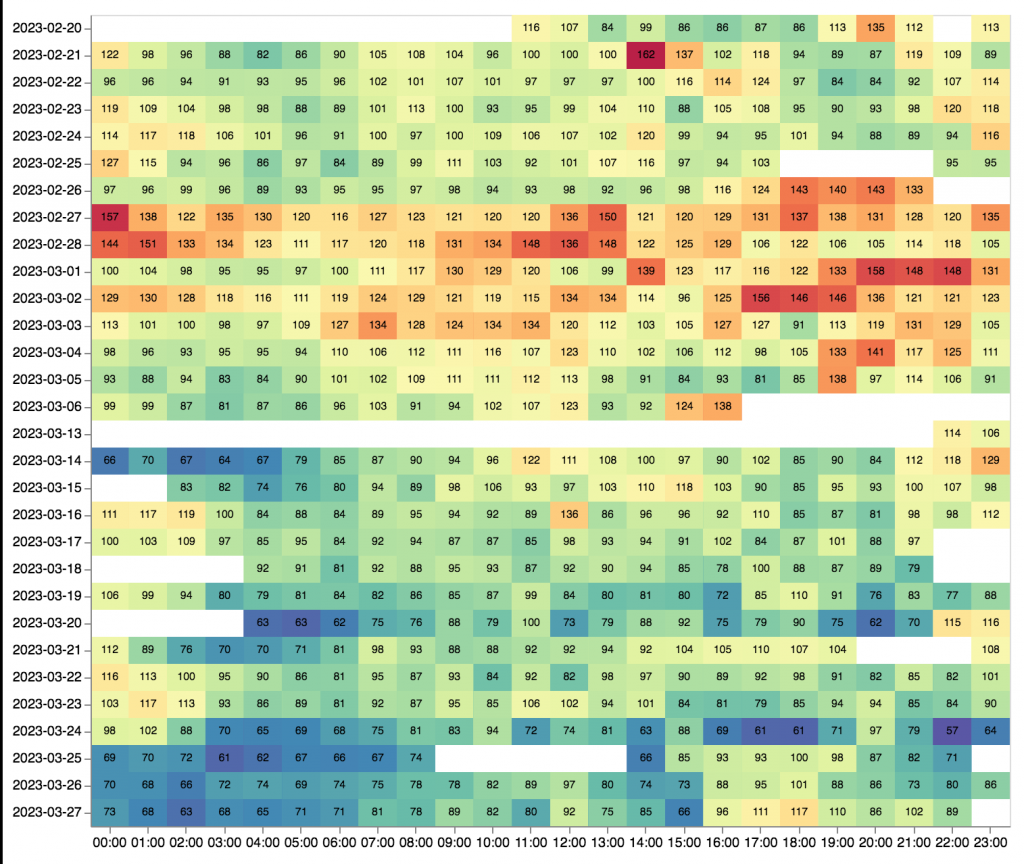
I was catching up on reading Seth Roberts blog this morning and I noticed this post he made in January about seeking cleaner air in his apartment in Beijing, where he was working for several months. Seth describes a couple of different cleaning approaches, and makes the point that measuring your personal environment is not only about "cleanliness," but also about the trade-offs you make in acquiring cleaner air. Cleaning power per dollar is one possible graph. But cleaning power per decibel is another.

VOCSensor.pngHere in the Bay Area, where ocean breezes help wash the outdoor air, our indoor environment may actually be more harmful due to high concentrations of volatile organic chemicals (VOCs). Here are some instructions for a very inexpensive ($14) DIY sensor device for VOCs, designed by Sunyoung Kim, at the Living Environments Lab of Carnegie Mellon University. The link instructions are clearer and more complete than the video, but I've posted the video for the sake of flavor. Very few of us gather numerical data on our indoor environment, but Sunyoung Kim's project makes clear that the technical capacity to do this cheaply is already here, awaiting only a convenient package..


Leave a Comment

Your Name:


Thanks for your comment. The words in the CAPTCHA box come from old book texts that are being scanned and stored by the Internet Archive. By entering the words in the box, you prove you are not a bot and also you help proofread the books. If the sample you see is too hard to read, simply click the recycle button to get another two. Don't forget to put a space between the words.


Archives - This site operates under a Creative Commons License.