Cool Tools
Login  |  Register

September 2003


World Stompers

We used to call ourselves drifters, or freaks, but "stompers" works just as well. Stompers are young, nomadic travelers having a great deal of fun meandering around the world, hanging out, partying in run-down grass shacks in exotic places, hooking up with each other, paying attention to the local scene, while ignoring boundaries. It is more a lifestyle than a vacation. Once centered mostly in Europe during the summer, the entire world from Ghana to Laos is now stomping grounds. This book is subversive, irreverent, bombastic, self-published, and full of the best advice I've seen in print for global vagabonds. It assumes you have very little money, but a whole lot of time and are open to new experiences. Average trip of a stomper: one year. What I like about the author, Brad Olsen, is that he seems to have made every possible mistake, but learns quickly from them.

Here's the acid test: If you need to sleep in a bed on your world tour, The Practical Nomad is more your speed (and mine, too, these days). If you don't care where you lay your sleeping bag down for the night, and you intend to be on the road for more than a month, this is the owner's manual for you.

--KK

World Stompers
A Guide to Travel Manifesto
Brad Olsen
2001, 269 pages, 5th Edition
$18
Amazon

World Stompers Online

Excerpts from the book:

One Summer when Tommy P. and I lived in Lake Tahoe, we made a bet. We bet five bucks on whether he could last a whole month without spending a single cent on food. He worked as an usher for Caesar's Showroom and was allowed free meals. Security was laid back and lax, so he would munch hard before and after his shifts and smuggle out pocketfuls of fruit, yogurts, puddings, cereal, milk and fruit drinks. I would barter meals with him on his days off to give him a variety, but never any freebies. The bet was only to pay for food.

Well he lost the bet a few days short of a month because he was fired from his job. He got the ax because he got up on stage and danced with Diana Ross during the encore. His boss did not believe she pointed at him for a dance.

* * *
The World's Top 10 Best Stoner Meccas:
10. The whole country of Laos
9. Dahab, Egypt (page 220)
8. Nimben, Australia (page 179)
7. The ski mountains of Lake Tahoe, CA USA (page 151)
6. Tuk Tuk Peninsula, Lake Toba, Indonesia (page 189)
5. Pokhara, Nepal (page 241)
4. San Pedro, Guatemala (page 158)
3.The Whole Country of India (excluding the cities) (page 244)
2. The state of Alaska, USA (page 153)
1.The whole country of The Netherlands (page 206)

* * *
Trevor also kept records of his ultra-budget days when he was trying to spend the bare minimum (and still have a great time). An example of one such day in India. Orange juice - $.20; vegetable, rice, and sauce lunch - .33; bike parking fee - .03; all-you-can-eat supper - .80; chocolate bar - .20; bungalow on the beach - 50 cents. Total expenses for the day - $2.06.

* * *
Rip-offs are rampant for people commando-crashing outdoors, particularly in Europe. Backpacks are taken, money belts being used as pillows are unzipped and cleared of contents, and even shoes are swiped. If you are going to Europe on a low-budget and plan to sleep outdoors part of the time, consider a few tips. First, it is always best to sleep in a group. There is definitely safety in numbers. Second, sleep with your money belt inside your sleeping, but not all the way at the bottom. There have been incidents of thieves feeling the bottom of a sleeping person's sleeping bag for a money belt, then cutting the bag open with a knife and removing it. Third, chain your backpack to something, lock all the zippers, and try to use part of it as a pillow. Lastly, wherever sleeping with a group, lock all the packs together in the middle and position yourselves like spokes around a wheel hub. Detour thieves by making it hard for them to steal anything.


The Practical Nomad

Round-the-world travel was my occupation for many years. It's an admirable vocation ignored by the travel industry and travel media. They think in terms of two weeks not two months or two years. Ignore the country-specific info in this thick tome as out of date, but do pay attention to his airline ticketing advice, and his general wisdom about long-term travel. To anyone planning to take some serious time off to explore the far world at a cut above Stompers, start with this book. And then leave it at home.

--KK

The Practical Nomad
Edward Hasbrouck
2000, 652 pages, 2nd Edition
$14
Amazon


Urban camouflage

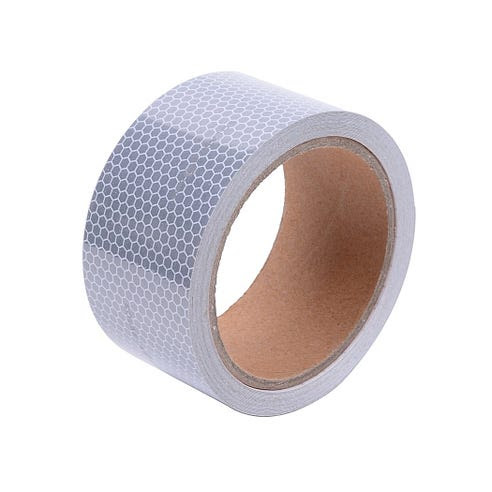
My Jeep is camouflaged to look like a commercial fleet vehicle. I made up a fake company name, appropriated a 1950s-era logo that once belonged to a nuclear energy mutual fund, painted safety stripes on the back, and plastered a fake vehicle number all over the place. I also added flashing yellow lights in the rear window, and a police-style spotlight and rubberized push bumper to the front. VERY FUN accessories ... and useful too (when used with discretion). The spotlight is incredibly versatile -- you can point/rotate it while sitting in the driver's seat -- and it's come in handy countless times for roadside emergencies, setting up campsites, or finding house numbers on dark streets.

This urban camouflage guise is very useful for parking in yellow zones, urban/industrial exploration, and crime deterrence. And the thing is... it really works!

The spotlight, bumper, and rear flashers came from my *all-time favorite* mail order catalog: Galls, "The Authority in Public Safety Equipment and Apparel."

It's a gold mine, full of handy things that you didn't think you were allowed to buy.

-- Todd Lapin

Galls catalog

The Unity spotlight

Vehicle warning lights & flashers

Unruly crowds? Need riot gear?


iTrip

My iPod is a constant companion. It comes with me every time I leave the house. Except, until recently, when I'm driving somewhere. The iTrip has changed all that.

This barrel-shaped add-on turns your iPod into a tiny FM radio station. This means that you can play music from your iPod anywhere there's a radio, like in your car. Using an iPod playlist, you just tune your device to a unused radio frequency, tune your radio to the same frequency and you're ready to go.

The configuration process is a bit finicky, and the iTrip doesn't fit as snugly as I'd like into my iPod, but once you get going, there's no complaints. I've gone on a couple of long drives with it, and it's
invaluable. When optimized, the quality is, predictably, as good as a clear FM radio station. It'd be of particularly use to anyone who drives a great deal.

-- Darren Barefoot

Note:
The iRock, a similar device which I had recommended before the iTrip came along, is easier to configure, and it can be used with any device with a earphone plug; the iTrip, however is made specifically to augment the iPod. But as Darren notes: "the iRock only offers four FM frequencies to choose from, while you can choose any frequency you want with the iTrip. Additionally, the iRock requires its own batteries. Plus, of course, the iTrip's a lot niftier looking."

My own experience and that of many others is that neither the iRock nor the iTrip will work well consistently in areas where there is dense radio broadcasts -- like much of the Bay Area. Some find the iRock doesn't work, but the iPod does, others the reverse. Also some newer cars have problems because of the location of their antenna. Most people are happy with these devices when used outside of cities. In Europe the Smart Car is available with the smart-idea of a clean built-in dock for your iPod; I suspect other cars will follow. Until that happy day, or a USB port in all cars, this is one of those things I would borrow first, or be sure you can easily return it.

There are now several flavors for iTrip: the original for "original" iPods, a newer one for iPods with a dock connector on the bottom, and others. This page will sort them out for you.

--KK


iTrip
$14
Available from Amazon

Manufactured by Griffin Technologies


Science Toys You Can Make With Your Kids

cannon_pre_launch.web.jpg

Probably the coolest source of educational science demonstrations I've encountered is this very book-like website written and run by Simon Field. Field has 30 nifty toys and gadgets that can be made quickly, cheaply and will amaze adults as well as kids. This is the only place I've seen that tells you how to make a magnetic linear accelerator, also known as a Gauss Rifle - it uses magnetism to shoot tiny steel balls. The secret to Field's method is that his demos are very small, requiring small amounts of material, energy, or money. Most of his experiments can be assembled - even if you buy the stuff - for a few dollars, and can fit in your palm. His instructions and visuals are simply the best I've seen in any how-to-book. Most wonderful of all, it's entirely up on the web for free. Hats off to you, Mr. Field. (He does sell kits, and parts, which may help pay for his server, I guess.)

-- KK

Science Toys You Can Make With Your Kids


Self-Healing Cutting Mat

You razor-cut things on this mat, and unlike other materials it won't accumulate a field of cut marks to misguide your blade. The self-healing rubber keeps the surface uniformly smooth, clean, and firm. And protects your table. Get the largest one you have room for and can afford. A large mat also says: don't pile stuff here.

-- KK


Staedtler Cutting Mat
12 x 18
$16

Available from Office Depot


Firetowers, Lookouts & Rustic Cabins for Rent

The last wilderness romance: a funky old-fashion shelter with minimal comfort and maximum views. You can rent these remote cabins for about $25 per day, and sleep 4 or 5 people. The 145 described here are all located in the west. The best are difficult to reach. Most are approachable by 4-wheel drive. All need advance reservations. The little-known details and full getting-there instructions, are here.

-- KK

Firetowers, Lookouts & Rustic Cabins for Rent
Carolyne Ilona Gatesy
1997, 226 pages
$15
Available from Bear Mountain Press (This book may be out of print)
Used copy from Amazon


Eyewitness To History

Most of what you read about what happened in the past is written by someone who read what someone else read about it. Here is a diverse collection of short first-hand, eyewitness accounts of what proved later to be important events. Vivid, uncensored, naked testimony from someone there at the time. Make up your own mind.

-- KK

Eyewitness To History
John Carey, ed.
1987, 706 pages
$15
Avon Books
Amazon

Here is a companion site to the book


Griptwist

I picked up four of these at my local Container Store, not knowing exactly how I'd use them, but guessing they'd come in handy. Within 48 hours I'd already used them twice-once to secure the barrel of my telescope to its collapsed tripod for easy transport to a remote location, and then to stabilize a table and chairs in the back of my car for a trip across town-both times with great success. These giant, rubberized "twist-ties" were much more efficient and easier to use than a bungee cord in both cases.

Griptwists offer several advantages over bungees in particular. First, they provide "point-to-point" stability, rather than "tie-down" or "net-like" attachment. For example, when moving dining room furniture in the back of my car, I was able to use four Griptwists to connect the legs of chairs to each other, etc., at critical points, so that the entire mass (i.e., of one table and four chairs) was stabilized from within, rather than essentially trying to "net" or "wrap" the mass together from the outside, with bungee cords. Second, with bungee cords, there's always a certain amount of "give," unless you stretch them to their maximum, which isn't always practical; bungeed objects will often move a bit more than you want them to. Third, if you do stretch bungee cords to their maximum, they exert great pressure on the object being contained. I wouldn't have wanted to use bungees around the barrel of my telescope, for example. The Griptwists remain as tight (but only as tight) as you tie them, with no inherent potential energy to give or take along their own length like elastic bands. Which brings to mind a fourth benefit: no danger of "snapback" when it's time to unload or unpack.

Some things will always have to be netted down, and sometimes the stretchiness of bungees provides a benefit in and of itself (like the ability to squeeze one more last-minute object under the cords, without having to repack). Moreover, from the outside, to the extent they lack handy points where a Griptwist could be employed (e.g., a couch, a canoe, a stack of luggage or boxes). But for temporarily affixing one object to another in point-to-point fashion, with stability, I see more everyday utility in the Griptwist.

--Adam Zaner

Griptwist
$8
(17", 4-pack)
Available from Amazon

Also from Griptwist
17", $10 for 4
34", $10 for 2
68", $10 for 1


Duluth Trading Suspenders

suspenders.web.jpg

I'm a big fan of the work clothes from Duluth Trading Company. My lastest score is a set of $16 suspenders that I can highly recommend. They are uncommonly comfortable, because the straps are two inches wide. They attach to your pants with buttons, not clamps. I hate clamps. They loosen, they break, and they're ugly. The harnesses that hold the straps onto the buttons of your pants are nicely made of leather that is a good balance between handsome and sturdy. My galluses are an attractive red. (They also come in navy.) These braces are best used with a $4 set of brass buttons to attach to your pants. And best of all -- best of all -- these buttons are actually rivet-like affairs. You don't sew them on. You put them on your pants by taking a little nail that comes as part of the kit, pushing it through the waistband of your pants from the back, then sticking that nail into the brass button that you wear on the front, and whamming it home with a hammer. I can't tell you how entertaining I find it to tailor my clothes with a 16-ounce hammer. I wish all my clothes were this satisfying.

These suspenders are best used, I think, with the Skillers 12-oz. Brown Duck Work Pants with the removable knee pads and the nail pouches that fit inside your front pockets when empty. (I think they�re better than Carhartt -- how's that for heresy?)��

I wonder how pissed my wife will be when I hammer my next set of buttons into my suit pants.

--Joel Garreau

Duluth Trading Button Suspenders
Item No.90107

Eight-pack of Brass Buttons
Item No.90203

Skillers 12-oz. Brown Duck Work Pants
Item No.20993


Stretch Wrap

stretchwrap.web.jpg

The genius of this product is that it sticks to itself. You just roll it around the boxes or posters or lumber that you want to wrap and it sticks tight. I use it for a bunch of things, as in the garden to stake trees to stakes or to tie say tomato plants to a frame, or as shown in the photo, to keep some nuts together with ball bearings (and have them be visible). It's the same material they use to wrap boxes of books on pallets so that they're one tight bundle for shipping. Also cool is that it is such a strong yet ultra-thin plastic membrane, not using a ton of resources to produce. They sell them at U-Haul stations. They're cheap!

-- Lloyd Kahn

Above is a pic of stretch wrap I bought at a U-Haul location. At left is a tube of skateboard ball bearings, with some loose nuts wrapped to the tube. Not only attaches them, but keeps them visible.

Stretch Wrap
5"w x 1000 ft, single roll
Available from Amazon


Revolution in Cannabis

* * *
Ask Ed: Marijuana Gold- Trash to Stash
Ed Rosenthal
2003; 178 pages
$11
Amazon


This is a very important book, but it's mistitled. It should be called "The Cannabis Revolution." Three very important things have happened in the marijuana world in the last decade or so: vaporizers, home-made hash, and sophisticated marijuana cookery. It's amazing that imbibers know little or nothing about say, vaporizers. Their pot consciousness is where mine was in the '60s -- the "toke and choke" mentality.

VAPORIZERS refer to vaporizing the cannabinoids (the active ingredient) in the plant at a much lower temperature than smoking, without combusting the leaf. The essence of the high is extracted and the lungs are not being subjected to hot tars. No carcinogens1 Various devices are used to produce a temperature of around 350?. Ed reviews a bunch of vaporizers.

HASH can now be made at home in a very simple process using a number of screens in a 5-gallon bucket and ice water. Voila! (Thus the "trash to stash" subtitle.} You can use "shake" (what's left over after manicuring buds) for the process.

POT COOKING. There's a hash butter recipe using a crockpot, "Mystic Muffins, "Wamm's Mother's Milk," plus many others. Even if you're only an occasional smoker, get this book and listen to Uncle Ed. It's a whole new ball game.

* * *
The Big Book of Buds
Ed Rosenthal
2001; 214 pages; 4-color, soft cover
$14
Amazon


Another advance is the categorizing of pot varieties for effect. In very general terms, sativa for cerebral, high-energy high, indica for stonier, body, buzz high. Growers are dialing in genetics to produce the desirable effect.This 4-color book is a small encyclopedia of the different varieties and the sophisticated breeding going on. "Flo has an energetic, motivating buzz with unusual clarity. This is a true wake and bake pot, great to start the day off right without losing sight of your intentions. The flavor has a floral quality similar to Nepalese temple hash..."

* * *

The Eterra Tulip Vaporizer
I am a long-time (40 years) cannabis user. Since discovering vaporizers I seldom "smoke." My lungs feel a lot better. The taste of the herb is like the essence of the flower and resin. Once the cannabinoids are vaporized, you throw out the herb. This means you're not pulling all that foliage through your lungs. It's a revolution and especially beneficial for those using herbs for medical purposes. A vaporizer that is simple and that I recommend is the Eterra Tulip. It takes a bit of getting used to, but once mastered it's rather elegant, as well as less expensive and complicated than other vaporizers:

Eterra Tulip Vaporizer
$122
Lightwell

Ed Rosenthal, who has been in the news for his efforts to legalize medical marijuana, runs a website with yet more books on cannabis here.

--Dan K. Holly


Jeweler Screwdrivers

Probably the most used tool in my office is a set of tiny screwdrivers sometimes sold as precision screwdrivers. Hardly a week goes by when they aren't needed to disassemble or repair a gizmo or tool.

-- KK

Stanley 6-piece Precision Screwdriver Kit
$5
Available from Amazon


Flea Market Canopy

Truck-Tent-Tarp.web.jpg

Cheap portable shade from the sun in hot climates, flea market canopies are used by surfers and fishermen in Baja California. I used this 10' x 12' "peak unit" from Jenkins for several years on Baja beaches. Framework is 1 1/8" electrical conduit put together with special fittings and wingnuts. Tarp is attached with ball bungees, fantastic fastening devices. Mine was held down by 4 canvas sacks filled with sand, hanging from the corner posts (rather than stakes). It all folded up and fit in the Yakima Rocket Box on top of my truck. The guys at Jenkins Crafted Canopies were great to deal with; good products, good service.

--Llyod Kahn

Canopies
$64-$323
Jenkins Crafted Canopies
909-594-1349

Also try discounters such as Northern Tool. They have deals on cheap Carport Canopies that are similar.
A large (8' x16' ) goes for $99. -- KK


Car-top Tent

About 10 years ago I came across a Toyota jeep with European license plates parked by Bowman Lake in the Sierras. It was obviously a world-traveling vehicle. On top of the jeep�s roof was a tent. I could see the owner down swimming in the lake. Fascinated by this approach to sleeping while on the road, I wrote down the name of the manufacturer: Air Camping in Milano, Italy. Some months later I tracked down the company and ordered one. It was expensive, about $2000 including airfreight, but the expense turned out to be worthwhile.

The unit folds up and can be mounted on a truck or car top. Closed it measures about 4 x 4 feet, and about 14" deep. When you stop for the night, you remove the waterproof cover and unfold it -- whereupon the tent pops up. The cantilevered section is supported by a telescoping ladder. There's a mattress inside, as well as blankets and pillow, so your bed is ready as soon as it's set up. I've spent 100s of nights in it, usually in the desert or on Baja beaches with the opening facing the ocean. Its got mosquito netting, is well made and it's great to be up there for the view and breeze. It�s comfortable, and the tent does not take up storage space in bed of the vehicle. I don't believe Air Camping is still in business, but a German company, Autocamp, makes what appears to be a similar product.
�Llyod Kahn

Autocamp-Kn�ller (in German)
130x220 cm, for 1-2 people incl. mattress,
mosquito net, covering tarpaulin, cotton
$600-900

Also, here are similar models from North American and UK manufacturers, but none we�ve tried out yet:
Lofty Shelters (US)
Top Bunk (US)
Outdoor Equipment (Canada)


At Work at Home: Design Ideas for Your Home Workplace

atwork-athome-sm.jpg

Not all home-office work is typing at a keyboard. That's why this home-office design book is heads above the others. Maybe you are a weaver, or a landscape architect, or antique toy restorer. When I had a chance to design my own home office attached to our house I found the clear advice, helpful design ideas and visual inspiration in this portfolio to be the best of the bunch.

-- KK

At Work at Home
Design Ideas for Your Home Workplace
Neal Zimmerman
2001, 234 pages
$23
Available from Amazon


Schoeller Softshell Fabrics

My latest revelation in gear: all the new outdoor clothes I really like share this common thread, that they are made of hi-tech softshell fabrics produced by the same Swiss company, Schoeller. Softshell outdoor clothes are more than just stretchy. They mark a better way of constructing the clothes that you wear while exerting energy. Essentially the Schoeller fabrics are similar to GoreTex but they are more permeable and they stretch. This allows much more free motion, more breathability, and allows the clothes to fit tighter saving material weight.�Softshells shed moister/heat/sweat *much* faster than GoreTex and they are super comfy at the end of the day around camp or even in your sleeping bag. However my favorite characteristic of these new fabrics is that they act similar to fleece so that they keep their ability to insulate and feel good against the skin even if they are saturated with water, whereas hardshell fabrics just feel like wet plastic bag against your body. These Schoeller fabrics are super good for cycling, climbing, and mountaineering... basically sports where you sweat. I still like hardshell garments for sailing and snowboarding where for the most part you are being eaten by the wind and weather.�

-- Alexander Rose

The best softshell clothing companies I have found:

Cloudveil
Excellent pants and tops

Arcteryx
Bad web site, amazing gear all around. They also have hybrid soft/hardshell clothes that I have yet to try but look very promising.

Beyond Fleece
Allows you to customize the gear you order. Add pockets, hoods, waterproof zippers etc...

Much of this gear is prohibitively expensive, like $300 for a jacket. I usually go to local dealers and figure out the sizing and then shop around on the outlets.

Try Sierra Trading Post or Schoeller


Phone Headsets

Long live this neck saver! Hail to the hand-freer! I've been using a headset on my phone for a decade now, and I continue to be puzzled why everyone else doesn't. A headset lets me make two-hour teleconferences without a bit of discomfort. Having to grip a phone for any length now feels unhealthy. Mine is a pretty typical set with one ear piece and a tiny boom microphone, that altogether weights a few ounces, if that. It takes no extra effort to slip it on when the phone beeps. My hands are completely liberated. With a comfy headset I can take notes, search for a paper, look up a number on my computer, or just stretch, without neck crinks, sore elbows, or squashed ears. You can choose from dozens of models including cordless sets, ear buds, ultralights, or cheapies. Radio Shack has a low end for cost $20 while Hello Direct has a complete selection of the fancy goods, and a line of headset accessories. I've seen some go for $6. A lot of people used to refuse them because they thought it made them look dorky, but I see more and more executives sporting them now, and with cellphones it's become fashionable to have a set in your ear.

But because a headset is so much better for your health I wouldn't be surprised if companies began to mandate headsets strictly for health reasons. Do your body a favor and use one.
-- KK

Over-the-Head Headset
Model: 43-1951
$25
RadioShack

Hello Direct
800-444-3556


The Penguin Companion to Food

Maybe it's just me, but when I cook I keep getting derailed at the bookshelf. Lists of ingredients cry out for explanation: what *is* couscous really, or semolina wheat, or ladyfish? What about gum arabic, marshmallow, or cream of tartar? Where do these stuffs come from, not just long ago, but now, and why are they in my dish? And please tell me again what's so extra about "extra virgin" olive oil -- I mean it is or isn't, yes?

I've longed for a single source of answers to my endless gastronomic questions and after years of scouring libraries and bookstores, I've found my guru. The Penguin Companion to Food is a 1,000-page behemoth of concise information about several thousand types of food and ingredients. It lets me cook smart, guiding substitutions, and illuminating the logic of a recipe. And eat smart too. In a global market, cuisine varieties are booming; here's a who's who.
--KK

The Penguin Companion to Food
Alan Davidson
2002, 1024 pages
$21
Amazon


Snorkle Hot Tub

Our neighbor has one of these which we've used with great appreciation and delight. It's your basic wood-fired, fresh water, aromatic wooden hot tub. Takes two or three hours to heat up, but it's pretty thrifty with the fuel. The gut is a marine-grade aluminum stovebox, which you can purchase alone (choice of large or small) or in a cedar/redwood tub and stove combo that costs about half of a modern fiberglass version. Even the small one is roomy enough for three. Bathers are safely protected from the submerged stove by a metal and wood shield. A drip of Clorox between soaks keeps the water tame. Discounting your labor in making firewood and keeping the firebox stoked, the upkeep is free. This tub is ideal for a remote cabin, cottage or hideout anywhere off the grid -- precisely the kind of place where a steaming hot bath with an open view is most welcomed.
--KK

Snorkle Stove
$750

6 ft diameter by 4 ft high Cedar Tub with Snorkle Stove
$2600

Snorkle Tubs
800-962-6208


EZ-CD Opener

I raved about these gadgets last time. They make opening shrink-wrap CDs a joy instead of a trial. But I didn't know where to buy 'em because all mine were giveaways. Here's where to get them.
��KK

EZ-CD Opener
Plastic CD-301 $1.50 each
Metal CD-306 $5 each
Mac Tech Products: CD Essentials
800-622-8321
818-702-6979


Rebreathers

Rebreathers are underwater life support systems that permit you to stay longer at deeper depths. It�s not hard to make a normal scuba tank last for an hour (or more) very near the surface. At 60 feet, this duration drops to less than half an hour. At a hundred feet, maybe 15-20 minutes. A recreational-grade rebreather, however, will give you several hours at any depth in the 0-100 ft. range. So the deeper you dive, the more advantageous the rebreather becomes. Rebreathers always give you more time, but especially give you more time at greater depths.

You would need hundreds of lbs of conventional scuba tanks to get as much breathing gas supply as you get with a 60 lb. rebreather with a small tank of oxygen. The equivalent of one scuba tank's worth of oxygen could provide as much as 30-40 hours of sport dive time. This extension also plays into the psychology of a dive. A flustered scuba diver might huff and puff when exerting and burn though the contents of a scuba tank in no time. A rebreather diver, however, can huff and puff all he or she wants, but because none of the exhale is wasted, there�ll usually be more oxygen left than they probably have time to use � they�ll get cold or hungry first. A rebreather can be much more relaxing to dive therefore because your margin for error in breathing gas supply is measured in hours, rather than minutes.

How it works: Most scuba divers breathe in air from a pressurized scuba cylinder, through a regulator, then breathe out the exhaled gas into the surrounding water (resulting in a column of bubbles). The gas in those exhaled bubbles includes a significant amount of oxygen; thus, scuba is inherently inefficient. The idea of a rebreather is to recapture some or all of that exhaled gas, process it, and return it back to the diver, with little or no waste. Instead of breathing through a regulator, rebreather divers breathe from a "loop" that directs the exhaled gas into a "counterlung" (a flexible bag that expands to receive the diver's exhaled breath, and collapses when the diver inhales again), through a "scrubber" (a canister containing a granular chemical such as calcium hydroxide, that removes the carbon dioxide from the exhaled gas), and back to the diver to be inhaled again. At some point in the loop, oxygen is added to replenish that which is metabolized by the diver. In short, a diver consumes oxygen and expires carbon dioxide; and a rebreather chemically removes the carbon dioxide, replaces the oxygen that was removed, and returns the gas to the diver. One advantage of these loops: it is much more pleasurable to breathe warm moist gas (recycled) than to inhale cold dry gas.

The three main advantages of rebreathers are: 1) Better gas use efficiency (especially down deep, where they can be more than 100 times more efficient than scuba); 2) Better decompression optimization in the case of fully-closed systems; and 3) Quieter operation (useful for observing or photographing marine life). In short, rebreathers allow for deeper, longer, and quieter diving. The "quieter" part is not just nice; it can be quite important because of the absence of the usual noisy and visually startling exhaust bubbles allows a diver to observe underwater life much less obtrusively.

There are two different kinds of rebreathers: "semi-closed" rebreathers, which are entirely mechanical but waste some gas; and "fully-closed" rebreathers, which use sophisticated electronics to control oxygen levels in the breathing mixture and waste almost no gas.

Thousands of "semi-closed" rebreathers are currently used by recreational divers. They are designed for shallow use (i.e., less than 130 feet deep). These usually cost less than $5,000. If you are mostly interested in doing quieter dives at "normal" scuba depths, for no more than 1 or 2 hours at a time, you're better-off getting one of these. The two most popular are built by Drager: the DragerDolphin and the DragerRay.

Then there are a series of mid-range units, These allow for more dynamic breathing gas mixtures, and incorporate electronic control systems. Most of these are used at shallow water diving as well, but some intrepid divers have modified them in ways to get down several hundred feet. These usually cost in the range of about $8,000-$15,000. The 4 most popular units on the market include:
- The "Inspiration" at Ambient Pressure Diving
- The "Megalodon" at Custom Rebreathers
- The "PRISM Topaz" at Steam Machines
- The "AURA CCR2000" at Rebreather

Another class of semi-closed rebreathers built by Halcyon have been used successfully on some of the world's most extreme deep cave exploration dives. This particular kind of rebreather can be thought of as a "gas extender" for conventional scuba cylinders, and costs around $7,000-$8,000.

At the high-end are models designed with ultra-reliable components and incorporate multiple layers of equipment redundancy, to assure the highest probability of continued function even in extreme circumstances. Only the military and a few members of the lunatic-fringe (like me) are willing to fork over the $15,000-$50,000 for this class of rebreather. The model I use is built by Cis-Lunar Development Laboratories, and is manufactured only in limited batches when sufficient demand warrants it.

There are downsides to rebreathers, which should be stated clearly. Whereas on scuba, the most potentially life-threatening problems are very-much self-evident (can't breathe, hose burst causing bubbles, etc.); on rebreathers the big potentially life-threatening problems are extremely insidious (i.e., too little oxygen, too much oxygen, too much CO2). This means that on scuba, you mostly need to know how to *solve* problems when they arise. On rebreathers, you have to not only know how to solve them, but also you need the discipline and awareness to recognize that you have a problem that needs solving in the first place. When a regulator fails on a scuba diver, it's obvious to the diver that he/she has to go to a backup regulator or borrow air from a buddy. When an oxygen addition system fails on a rebreather diver, he or she can very easily drift off to unconsciousness without ever knowing anything was wrong (I've seen it happen).

But this technology is changing fast. The possibilities for underwater exploration using rebreather technology are amazing. Bill Stone, an engineer who has designed some of the world's most sophisticated closed-circuit rebreathers, famously conducted a 24-hour non-stop dive using one of his early prototype designs. In truth, he used up less than half of the total capacity of the unit, meaning that he could have gone for at *least* another 24 hours, and perhaps as much as an additional 48 hours. Yup, that's 3 days of life support underwater from one self-contained pack.

The web is the best place to start for more info. One of the best sites on the web is here. Mastering Rebreathers is the most comprehensive book on rebreathers, and is also the most recently published (important for a field that is almost as dynamic as the computer industry).
-- Rich Pyle

Mastering Rebreathers
Jeffrey E. Bozanic
2002, 548 pages
$30
Amazon


SAM Splint

A super light-weight (only 4 oz.) foam-padded aluminum splint that can be unfolded and bent into almost any shape to conform to almost any part of the body (around the neck, at the elbow, etc.). Re-usable and transparent to X-Rays, which means it can be kept on during scanning. Every expedition doc and EMT crew packs one of these as a standard item. It�s a great thing to have in your car�s first aid kit, or at home, camp, or vacation where you have active people.

SAM Splint
4 1/2� x 9� folded, 36� extended
$16
Chinook Medical Gear
800-766-1365
970-375-1241


False Colors: Art, Design and Modern Camouflage

An exhilarating kaleidoscope of artists fooling around, making visual puns, tricking society, and conjuring up novel solutions - all tucked into the margins of this astonishing untold history of military camouflage. I had no idea that both Picasso and Matisse assisted their navies in designing new camouflage patterns. This collection of visual wit is really a how-to book on the best way for serious people to employ artists.

-- KK

False Colors
Art, Design and Modern Camouflage
Roy R. Behrens
2002, 223 pages
$28 postage paid
Bobolink Books
Dysart, IA
Amazon


Hand-drawn metamorphosis in which Beethoven becomes a clarinet


StylusReach Flexible Flashlight

My brother-in-law, who's a tool salesman, gave me one of these lights for Christmas. It's a natural white super bright LED light on a flexible, shielded cable. The LED has a rated life of 100,000 hours. The light is extremely tough. My bro-in-law likes to whack the crap out of 'em to demonstrate how durable they are. Waterproof too. Two settings on the light: blinking and steady. There's also a blue LED version, which is easier on the eyes. The StylusReach is pen-sized (when the shaft is folded over and clipped to the battery tube) and 14 inches long when extended. It has a pocket clip (and you thought that Fisher Space Pen made you look like a geek!). I use mine for all sorts of hardware hacking and around the house stuff (like looking under the burner on our stove to try and find out why the stovetop heated up to the point where it shattered the tempered glass stovetop inset!) Inside computers, you can actually clip it to the side of the case to direct the light where you want it. It's also really useful for seeing behind furniture, etc. The light lets me clearly see what I'm going for before I reach and grab.
--Gareth Branwyn

StylusReach Flexible Flashlight
$19 available from
Amazon


Extreme Duck Tape

As part of my ultra-lighting up of my backpacking gear, I stumbled across this cool repackaging of duck tape, perfect for hikers. The tape is "flat-packed" to save space, and the extreme version has super-bright write-on colors. A (nerdy) backpacker's dream, certain to become a fixture in my fix-it kit.
-- Paul Saffo


Extreme Flat Duck Tape
Available at Wal-Mart


Hennessy Tent Hammock

An ultralight gear item which I've been trying out is the Hennessey Tent Hammock. Part tent, part mosquito mesh, part hammock, the thing is pure genius and a pleasure to use -- very light, ingeniously designed, and actually provides a comfortable backcountry sleep. Perfect for wet areas. You do have to worry a bit more about insulation under yourself, but not a big minus especially given the comfort of the shelter.

-- Rex Ishibashi

Hennessy Hammock is a brilliant fine-tuning of the hammock concept into a tent substitute. It means I never have to sleep on the ground again! Being asymmetrical it allows me to lie relatively flat for a very comfortable night's sleep. There is a large rain-fly that cocoons around the hammock in cooler weather, a fine insect/dust mesh enclosure, and an entrance that my weight closes behind me. You can even set it up on the ground like a bivvy-bag if there are no trees (or lamp posts, or bumper bars). Great for tropical camping.

-- Toby Gibson

Hennessy Tent Hammock
$79 (basic model)


Saunders Clipboard


My Saunders aluminum clipboard portfolio is the best personal organization investment I've ever made. It looks great, and for anyone who regularly carries a messenger bag or briefcase, this little thing is a godsend. It's the size of a legal pad, and just as thin, but it provides a fantastic place to store and protect the various pieces of paper I want to keep close at hand. (At the moment, mine contains an itinerary for a flight I'm taking in two weeks, a construction contract I need to sign, a guest list for my wedding, and a manuscript I'll edit tonight.) It even has a place to store a pen beneath the clipboard clip.

I've been using my portfolio nonstop for four years, and it's virtually indestructible. (Saunders makes the aluminum clipboards used by police and building contractors.) The outside of mine has acquired plenty of scratches and battle scars, but the inside still looks like new, and my papers stay undamaged and uncrumpled, even after months of shuttling from my house, to my messenger bag, to my office, to my car, to anywhere else I might wander. And for just $18, it's a bargain! Saunders makes a variety of other aluminum form holders, including the cop-friendly "Cruiser Mates"
--Todd Lappin

Saunders Clipboard
$18
Amazon